
For sixteen years, Swiss photographers Mathias Braschler and Monika Fischer have documented the human cost of climate change across twelve countries, creating one of the most comprehensive visual records of climate displacement ever assembled.
The Human Face of Climate Crisis
What began in 2009 as The Human Face of Climate Change has evolved into Displaced (2025), a sweeping multi-year project featuring over sixty portraits of people forced from their homes by drought, floods, desertification, sea-level rise, wildfires, and collapsing local ecosystems.
"In 2009, you still had people who denied climate change," Braschler recalls. "People said, 'This is media hype.'" Today, the conversation has shifted dramatically toward solutions, but the photographers have identified a new focus: the major effect of climate change will be displacement.
Global Stories of Loss and Resilience
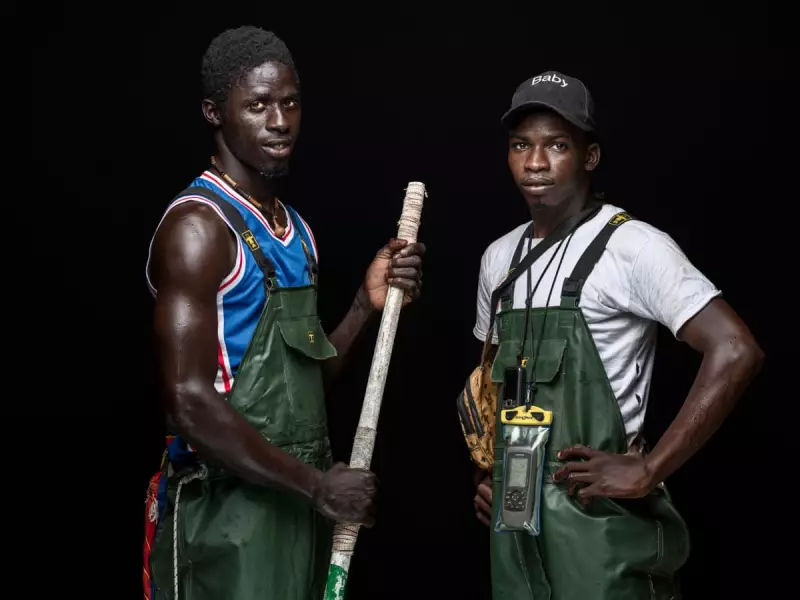
From Senegal to Mongolia, Brazil to Germany, the pattern repeats with devastating consistency. In Saint-Louis, Senegal, the ocean steadily consumes the shoreline, forcing fishing communities inland.
"Our house was the ancestral family home," says Doudou Sy, who now lives in the Diougop relocation camp 10km outside Saint-Louis. "We were born here and only knew this place. This painful ordeal forced us to leave our land."
His fellow fisher Khadim Wade adds: "Not to live by the sea is truly sad. Our greatest wish is to wake up by the sea."
In Mongolia, where temperatures have risen by 2.1°C over seventy years - about double the global average - former herders mourn animals lost to increasingly frequent dzuds, the extreme winter conditions devastating their livelihoods.
"We battled with snow from morning until night," says Nerguibaatar Batmandakh, now working as a security guard after losing his herds. "Every morning, there would be a dozen animals dead, another dozen in the evening."
Women Bear the Brunt of Displacement
Fischer notes that displacement disproportionately affects women. "Displacement seems to be very much a woman's story," she observes. "Losing your home, making those decisions. It's very much in women's hands."
The photographers' method involves slow, meticulous work with portable studios and careful lighting. "We take time," Fischer explains. "We sit and talk with people. It's not about getting a quick photo."
This approach has yielded remarkably raw and dignified portraits that reveal both the particularities of each loss and their collective reach across continents.
In Brazil's Porto Alegre, where catastrophic floods displaced approximately 580,000 people in 2024, single father Pedro Luiz de Souza worries about explaining their loss to his daughter. "She still thinks she can go back and pick up that doll, or pick up that drawing that she liked."
Meanwhile, Raquel Fontoura, standing with her three teenagers in a humanitarian reception centre, speaks of losing her sense of purpose. "I also lost a piece of myself."
Wealth Offers No Protection
Even wealthy nations aren't immune. In Germany's Ahr valley, severe 2021 flooding killed 134 people and damaged or destroyed at least 17,000 homes.
Walter Krahe, whose house stood next to the Ahr River, warns: "If we don't start taking real action, well, what shall we call it? Decline? Downfall?"
Retirees Christian and Sylvia Schauff lost their home in Erftstadt. "I feel uprooted - torn out of the ground that once held me," Sylvia says.
In Louisiana, USA, high-school student Alaysha LaSalle recalls watching Hurricane Laura destroy her town in 2020: "All we've seen were our poles that our house was standing up on, and that was all that was left. No house."
The Quiet Catastrophes
While dramatic disasters capture headlines, Fischer finds equally upsetting the slow-onset catastrophes: "when people lose their lifestyle - hundreds of years of tradition is lost now in our generation."
In Iraq's marshlands, considered the cradle of civilisation, the great wetlands of the Tigris and Euphrates rivers are drying. Construction worker Rasul Aoufi mourns his former farming life: "We had animals and we could care for them - there was water and there was food to feed them. But now, there's no water left, no birds, nothing."
Across twelve countries, from the Philippines to Bangladesh, Guatemala to Kenya, the message remains consistent: climate displacement is already here, affecting millions, and these portraits represent the brave first responders to a global catastrophe that will eventually reach all our doors.



