
Satellite Data Reveals Europe's Looming Water Crisis
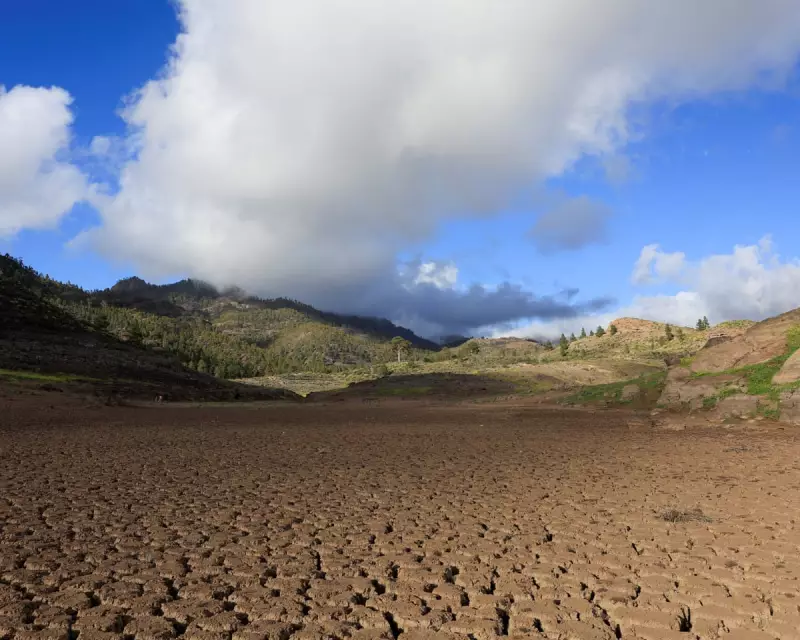
An alarming new analysis of two decades of satellite data has revealed that vast swathes of Europe's freshwater reserves are drying up, providing stark evidence of climate breakdown's immediate impact. Scientists from University College London (UCL), working with Watershed Investigations and the Guardian, examined data from 2002 to 2024 that tracks changes in Earth's gravitational field to effectively 'weigh' continental water stores.
The research reveals a dramatic continental divide: while northern and north-western regions including Scandinavia and parts of the UK and Portugal are becoming wetter, extensive areas across southern and central Europe are experiencing significant drying. This pattern affects nations from Spain and Italy to Poland and even parts of the United Kingdom.
The Stark North-South Divide
The satellite analysis measures changes in groundwater, rivers, lakes, soil moisture and glaciers by detecting subtle shifts in gravity caused by water's mass. Professor Mohammad Shamsudduha, an expert in water crisis and risk reduction at UCL, confirmed the trends directly correlate with climate datasets. "We're no longer talking about limiting warming to 1.5C, we're likely heading toward 2C above preindustrial levels, and we're now witnessing the consequences," he stated, describing the findings as a crucial wake-up call for politicians hesitant about emissions reduction.
Doctoral researcher Arifin isolated groundwater storage from the broader data and found these more resilient underground reserves are being depleted in parallel with surface waters, confirming the comprehensive nature of Europe's freshwater decline.
UK's Complex Water Future
The situation within the United Kingdom presents a complex picture. Western regions are generally becoming wetter while eastern areas, particularly south-east England, are drying at an accelerating rate. Professor Shamsudduha explained that although total rainfall may remain stable or even increase slightly, the pattern is changing dramatically. "We're seeing heavier downpours and longer dry spells, especially in summer," he noted.
This shifting rainfall pattern poses particular challenges for south-east England, where groundwater supplies approximately 70% of public water. Heavy summer rainfall often leads to increased runoff and flash flooding rather than replenishing aquifers, while the critical winter groundwater recharge season may be shortening.
The Environment Agency has already issued warnings that England must prepare for drought conditions to persist into 2026 without significant autumn and winter rainfall. Professor Hannah Cloke from the University of Reading expressed concern that "next spring and summer, if we don't get the rainfall we need, there will be severe consequences for us here in England. We will face severe water restrictions and that will make everybody's life very difficult."
European Response and Global Implications
Across the European Union, data from the European Environment Agency shows that while total water abstraction decreased between 2000 and 2022, groundwater extraction actually increased by 6%. This increase is largely attributed to public water supply demands (up 18%) and agricultural needs (up 17%). Groundwater remains a critical resource, accounting for 62% of total public water supply and 33% of agricultural demands during 2022.
The European Commission has responded with a water resilience strategy aiming to help member states adapt water resource management to climate change. The strategy promotes a "water-smart economy" and calls for improving water efficiency by "at least 10% until 2030". With pipe leakage rates varying from 8% to 57% across the bloc, modernising infrastructure represents a crucial priority.
However, Professor Cloke criticised the UK government's focus on new reservoirs, noting that "promising very large reservoirs that won't come online for a few decades is not going to solve the problem immediately." She advocated for accelerated implementation of water reuse systems, reduced consumption, nature-based solutions, and smarter urban planning.
The consequences of Europe's drying trend extend beyond immediate water shortages. Professor Shamsudduha warned of "far-reaching" impacts on food security, agriculture, and water-dependent ecosystems. Spain's shrinking water reserves could directly affect UK consumers, given the nation's heavy reliance on Spanish fruit and produce.
Globally, drying hotspots are emerging across the Middle East, Asia, South America, and North America, with particularly dramatic situations developing in regions like Iran, where Tehran faces potential "day zero" scenarios that might necessitate city evacuation.
Professor Shamsudduha concluded that climate impacts once associated primarily with the global south are now "much closer to home," requiring acceptance of climate reality and openness to innovative solutions, including widespread rainwater harvesting in countries like the UK.



