
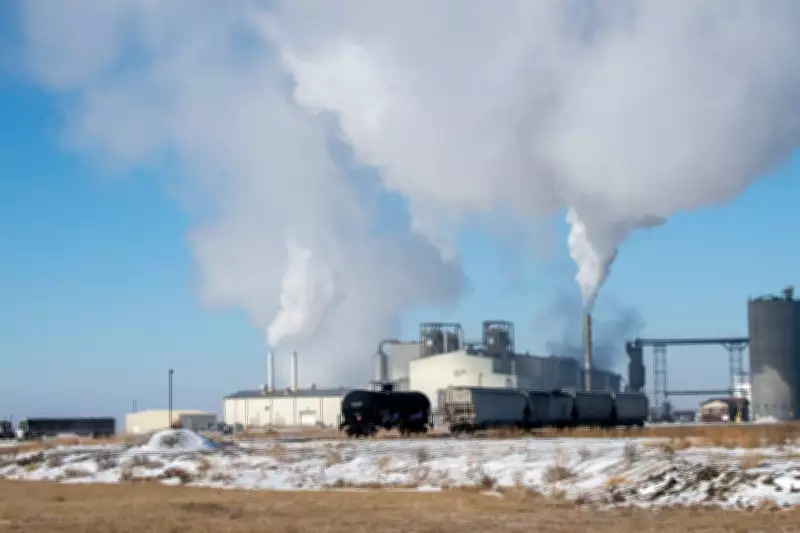
EPA Temporarily Authorizes Higher Ethanol Fuel to Address Gas Price Surge
The US Environmental Protection Agency announced on Wednesday a temporary waiver permitting widespread sales of E15 gasoline, a higher ethanol blend, in an effort to curb escalating consumer fuel costs linked to the Iran war. This decision marks a significant shift, as the blend had previously been restricted during warm months due to fears it could exacerbate smog and air quality issues.
Political Support and Agricultural Implications
US Agriculture Secretary Brooke Rollins emphasized the move's alignment with American energy dominance, stating it aims to lower pump prices and boost demand for domestic biofuels. The waiver for E15 during summer has become routine in recent years, with bipartisan calls to make it permanent year-round to provide ongoing relief at the pump. Currently, E15 is legally available in several states, including Iowa, Illinois, Minnesota, Nebraska, Missouri, Wisconsin, and most of South Dakota, as noted by the Renewable Fuels Association. Additionally, it is permitted in cities requiring reformulated gasoline for cleaner combustion.
Political figures like Democratic Representative Sharice Davids of Kansas have secured emergency waivers for E15 under various administrations, while Senator Amy Klobuchar of Minnesota urged immediate action to mitigate domestic fuel costs. However, the policy's effectiveness is debated, with concerns over infrastructure limitations and supply chain constraints in some regions.
Economic and Environmental Trade-offs
Experts warn that the benefits of E15 may be offset by significant drawbacks. Kenneth Gillingham, a professor at the Yale School of the Environment, points out that E15 is not universally available, and many areas lack the necessary infrastructure or sufficient ethanol supplies to scale up usage. He also highlights risks associated with higher ethanol content, which can be corrosive and potentially damage older vehicles, boats, and all-terrain vehicles.
Jason Hill, a professor at the University of Minnesota, adds that increased corn usage for ethanol production could reduce availability for animal feed, potentially leading to higher grocery prices. He suggests that consumers might face a trade-off between lower fuel costs and increased food expenses, questioning the overall benefit to US consumers. Hill further speculates that the announcement may be strategically aimed at supporting farmers impacted by rising diesel and fertilizer prices due to the Iran war.
Health and Industry Reactions
Gillingham raises serious health concerns, noting that the waiver could worsen ozone levels in summer, potentially leading to earlier heart attacks and respiratory issues, with fatal consequences in some cases. Despite these risks, the oil industry, which has historically opposed E15 expansion due to cost and price concerns, expressed support for this temporary measure. Will Hupman, a vice president at the American Petroleum Institute, stated that easing summer fuel requirements helps ensure affordable and reliable energy access for American consumers.
This EPA decision underscores the complex balance between economic relief, environmental protection, and public health, as policymakers navigate the challenges of rising fuel prices in a volatile geopolitical landscape.



