
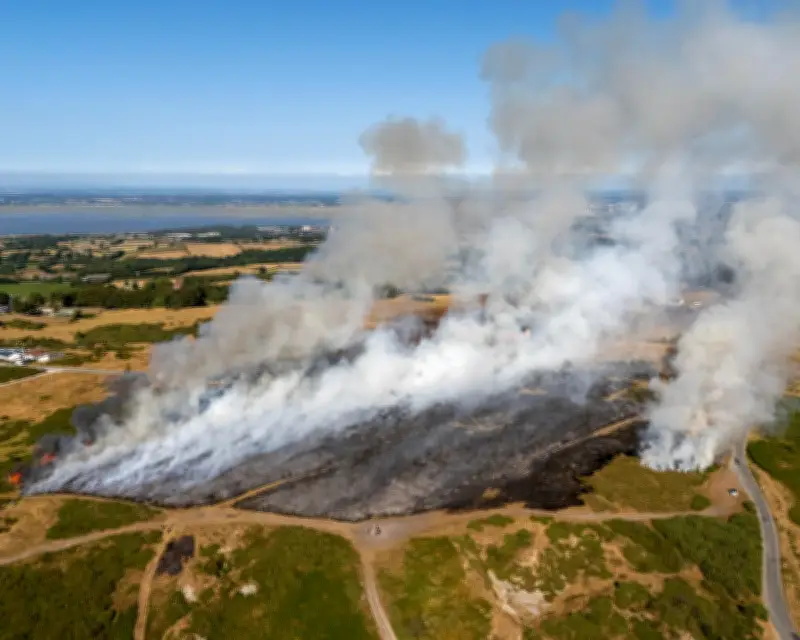
Parts of Wales are now officially in drought, with July on track to become the driest month in nearly 200 years, according to Natural Resources Wales (NRW). The agency declared drought status in north Wales and the Upper Severn region on Thursday, citing record-low river flows, consecutive heatwaves, and widespread wildfires.
Record-low rainfall and river flows
The affected areas have received less than 2% of expected July rainfall so far. Rivers including the Clwyd, Alwen, Alyn, Clywedog, Dyfi, Conwy, and Wye have recorded new monthly minimum flows or are approaching record lows. Several fires continued to burn across the country after more than a week, prompting the Welsh government to activate crisis plans due to a lack of firefighting helicopters.
Broader UK and European context
The drought declaration in Wales follows a new scientific analysis showing that extreme heat, intensified by human-caused climate change, is exacerbating drought conditions across Europe. Deadly wildfires have raged in Spain and France, and rivers are running low continent-wide. In England, the National Drought Group declared parts of southern, central, and eastern England in prolonged dry weather earlier this week. England has received only 3% of its long-term average July rainfall, with southern and eastern areas experiencing no rain at all—the longest dry spell since the mid-1990s.
Environmental and agricultural impacts
Rhian Thomas, sustainable water and nature manager at NRW, said the hot, dry spell is “having serious impacts on the environment across parts of Wales,” adding: “We have seen rivers fall to exceptionally low levels, groundwater continuing to decline, and increasing reports of environmental impacts affecting wildlife, fisheries, farming and sensitive habitats. The recent wildfires across north Wales and south-east Wales are one of the clearest and most visible signs of how dry our landscapes have become.”
July is on course to be the driest on record in Wales for nearly 200 years, causing problems for fish, wildlife, and crops. Farmers have begun harvesting early, with warnings of lower cereal yields. In England, rivers such as the Dart and Tor in the south-west and the Coln and Soar in central and south-eastern England show lower flows than this time last year.
Water restrictions and future outlook
Welsh Water has implemented a hosepipe ban in parts of west Wales, though reservoir levels remain healthy overall. About 23 million people across England and Wales will be banned from using hosepipes by this weekend. The Met Office predicts that climate change could make UK summers 1–6°C hotter and up to 60% drier by 2070.
Hannah Cloke, professor of meteorology and climate science at the University of Reading, warned: “Unless the UK collectively gets its act together, and builds greater resilience into its water system at every point, we face a more uncertain future in which the tap could run dry. There is a better future, where we use water better where it falls and don’t waste as much. But we need a fundamental shift in understanding from almost everyone to get there.”



