
Democrats Urged to Link Clean Energy to Affordability Amid Iran War Price Hikes
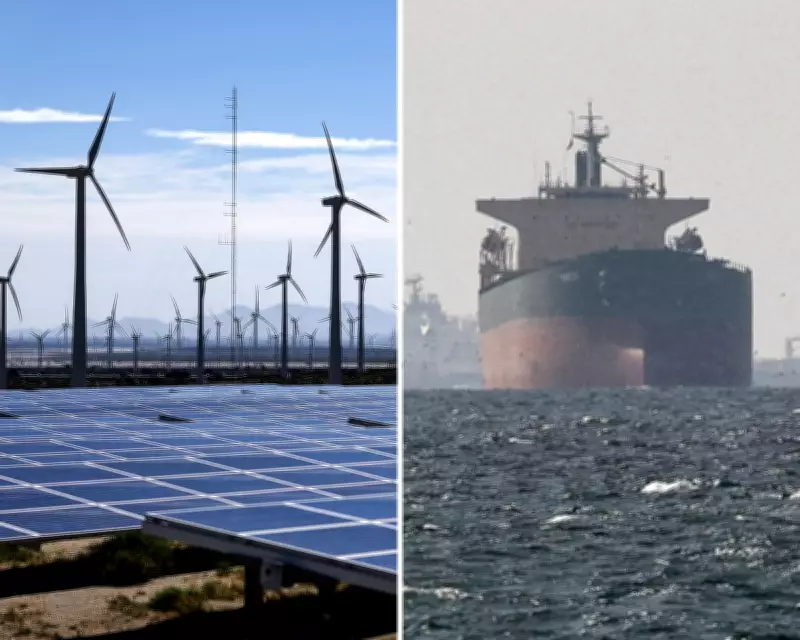
As the Iran war disrupts global economies by escalating oil and gas prices, nations worldwide are accelerating their transition to cleaner energy sources. However, the United States stands as a notable exception, with former President Donald Trump actively opposing alternatives to fossil fuels. Democrats, meanwhile, have been hesitant to connect the conflict to climate action, despite rising costs for Americans.
Global Energy Shifts and U.S. Resistance
The closure of the Strait of Hormuz, a critical passage for one-fifth of the world's oil and gas, following attacks by the U.S. and Israel on Iran, has triggered a spike in energy expenses globally. In the U.S., gasoline prices have surged above $4.10 per gallon nationally, with Trump acknowledging potential further increases by November. This situation has led Democrats to criticize Trump's unfulfilled promises to reduce living costs, yet few have advocated for a decisive shift away from volatile fossil fuels toward clean energy in response to the war.
Senator Sheldon Whitehouse, a prominent Democratic voice, emphasized the opportunity for his party to champion clean energy's affordability and resilience. "There's a timely clash on climate and costs that Democrats can win, as long as we have the nerve to actually show up to the fight," he stated. Whitehouse added that true energy independence relies on renewable sources, which are unlimited, free, and unaffected by geopolitical events.
Political Challenges and Missed Opportunities
Climate "hushing," where politicians and businesses downplay the need to cut emissions, has become prevalent in the U.S. during Trump's second term. Following a tough 2024 election loss and ongoing inflation concerns—with polls indicating gasoline costs are a top worry for Americans regarding the Iran war—Democrats have struggled to balance affordability critiques with climate action. Paul Bledsoe, a former climate adviser to Bill Clinton, noted that the Iran war presents a "unique moment of opportunity" for Democrats to promote lower-pollution options like electric cars, focusing on reducing consumer costs rather than solely climate protection.
Ro Khanna, a leading Democratic member of Congress, argued that Democrats missed a similar chance during the Ukraine war. "We should have been linking the clean energy agenda to Americans' economic security and our national security, and we should do that again," he said. Khanna called for a "moonshot for clean technology" to reduce dependence on petro-states.
Trump's Fossil Fuel Agenda and Global Contrasts
Trump has implemented a "drill, baby drill" approach to oil and gas extraction, even amid the Iran crisis, and has taken steps to halt domestic clean energy generation, which he labels a "scam." He has suggested that rising oil prices benefit the U.S. economically, though profits largely flow to major fossil fuel corporations. In contrast, other countries are rapidly reducing their exposure to the conflict. For instance, electric vehicle sales have surged in South Korea and Malaysia, while Pakistan has seen electric rickshaws sell out. Indonesian President Prabowo Subianto announced plans to convert all motorcycles and vehicles to electric models, calling it a "wake-up call."
The European Union is also accelerating clean energy deployment to lower electricity bills, with a draft proposal warning that delayed investments risk greater future societal costs. This aligns with a United Nations perspective, where climate chief Simon Stiell stated, "Clean energy is the antidote to fossil fuel cost chaos, because it is cheaper, safer and faster to market." He highlighted that renewable sources like solar and wind are not disrupted by wars or vulnerable shipping routes.
Climate Impacts and Public Perception
Advocates stress that the mounting toll of the climate crisis, including record-breaking heat, drought, and wildfires in the U.S., underscores the urgency of transitioning from fossil fuels. Despite the Trump administration's dismissal of climate science, polls show two-thirds of Americans are worried about global heating, though many underestimate others' concerns due to reduced media coverage. Anthony Leiserowitz, a Yale University academic, noted a "surprising silence" from Democrats and activists on clean energy's cost benefits and local control advantages, which also reduce carbon pollution.
In summary, as the Iran war exacerbates energy price volatility, Democrats face a critical juncture to reframe clean energy as an affordable solution, contrasting with Trump's fossil fuel-centric policies and aligning with global efforts to mitigate climate risks.



