
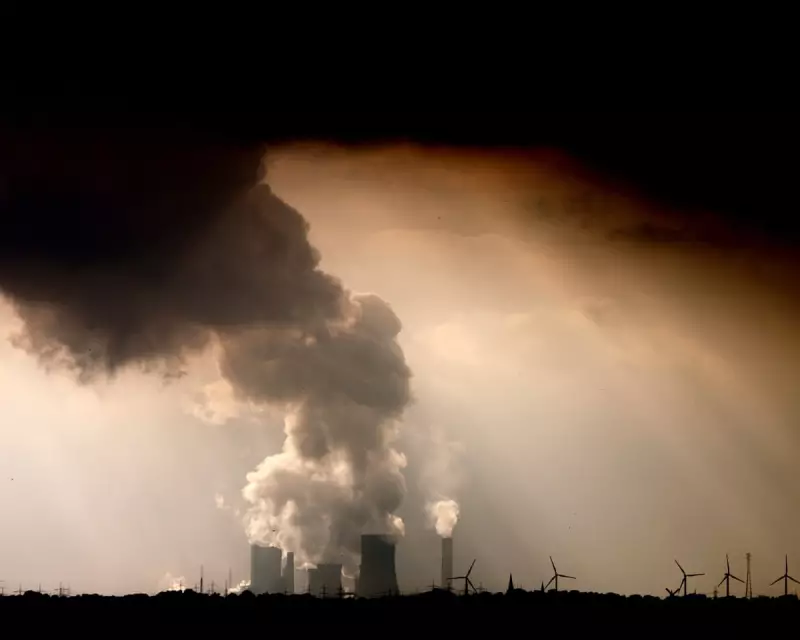
The recent COP30 climate talks in Brazil have concluded with what can only be described as a collective shrug of global shoulders, as the fossil fuel industry once again demonstrated its overwhelming influence over international climate policy.
The Failure of Global Climate Governance
While Pacific Island nations made desperate pleas for their survival, more than 1,600 industry lobbyists descended upon the negotiations, joining forces with Saudi and Russian delegations to successfully block meaningful commitments to phase out fossil fuels. UN General Secretary António Guterres acknowledged the widening chasm between scientific necessity and political action, highlighting governments' failure to bridge this critical gap.
According to the latest Guardian Essential report, this outcome comes as little surprise to most voters, with widespread scepticism about the potential for international climate talks to deliver substantive change. The survey revealed that only a quarter of older Australians maintain belief that climate change can actually be prevented.
The Modern Goliath: Stateless Corporations and Algorithms
Australian academic Luke Kemp from Cambridge University's Centre for the Study of Existential Risk provides a compelling framework for understanding this dynamic. He conceptualises the "Goliath" as a hierarchical structure that dominates labour and energy through coercion and violence throughout civilisational history.
Whereas traditional empires like Rome projected power from geographical bases, today's global Goliath represents a network of stateless corporations and algorithms that rampage across the Earth, with trade deals and international treaties bending to their will.
In this context, Australia may have fortuitously avoided hosting next year's COP31 talks in Adelaide, with survey data showing tepid public support for such a bid. With the United States retreating from climate leadership and scientists growing increasingly pessimistic about reversing global heating, a palpable sense of defeatism permeates Australia's climate mitigation efforts.
Australia's Outsized Carbon Footprint and Potential Influence
While Australian voters generally support climate action, enthusiasm for greater ambition is waning, with many viewing domestic emissions as marginal compared to major international polluters. This perspective is reinforced by a global climate framework that measures a nation's net contribution based on consumption within its borders, rather than accounting for the carbon corporations extract and export worldwide.
If net carbon contribution became the standard measurement, Australia would transform from climate minnow to major player, ranking among the top three fossil fuel exporters globally and within the top ten overall emitters. Presenting these facts clearly isn't about inducing national guilt, but about recognising Australia's significant agency in a global effort that many consider futile.
Despite not hosting COP31, Australia will maintain considerable influence in next year's proceedings, with Climate Change and Energy Minister Chris Bowen assuming the lead negotiator role. Embracing this position with the authority of a nation serious about its global impact could enhance his capacity to drive international ambition and champion Pacific neighbours' interests.
The Polycrisis and Seeds of Hope
Climate campaigners face an additional challenge in the growing competition among existential threats, including pandemic risks, nuclear warfare, sentient artificial intelligence, and unprecedented inequality. Kemp argues these don't represent isolated challenges but rather form a "polycrisis" where each element feeds the others.
Climate collapse drives human displacement, AI systems guzzle energy while exacerbating inequality, and approximately 10,000 nuclear warheads remain stockpiled as global temperatures continue their inexorable rise. "These threats are not unavoidable," Kemp writes. "They are consciously created by powerful groups who profit handsomely from the endeavour. Global catastrophic risk is the product of the worldwide system of extraction: the Global Goliath."
The Essential poll illustrates how the climate crisis has become subsumed within this maelstrom of interconnected disasters, transforming from a standalone concern to just one of many existential threats dominating our collective doomscrolling.
Amid this bleak landscape, Kemp's research into fallen empires reveals that Goliaths inherently contain the seeds of their own destruction, cursed by the very qualities that grant them power—the unsustainable nature of their domination and the systematic destruction of the resources they plunder.
Projecting existential risk trajectories beyond current horizons, perhaps a century forward, only two outcomes appear possible: the Goliaths self-terminate, or humanity organises to collectively slay the giant.
Kemp's prescription involves recognising that governments have been captured by these Goliaths and mobilising into an army of Davids, redistributing power through open democracy and citizen juries. While this might seem a monumental leap from our current state of powerlessness, promising developments are emerging.
Recent research from the Australian Resilience Democracy Network examines efforts to leverage technology for greater citizen involvement in decisions shaping our collective future. These nascent attempts to re-plumb democracy involve flattening hierarchies and constructing more dynamic feedback loops with genuine consequences.
Whether addressing renewable energy rollout, AI diffusion, public service provision, or planetary survival, we must reclaim control before hope evaporates entirely. Because when no Davids remain to challenge them, the Goliaths will have truly won.



