
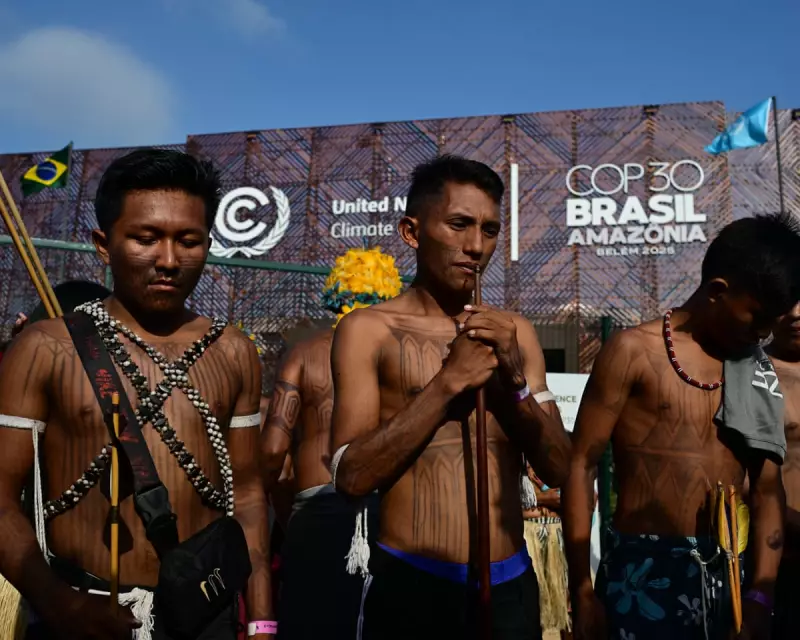
Thousands of diplomats, activists, and lobbyists have converged on the sweltering city of Belém at the Amazon's mouth for the Cop30 climate talks, but the event begins under a cloud of controversy and protest.
Indigenous Protest Greets Summit Opening
As delegates arrived, Indigenous people from the Munduruku group staged a dramatic protest at the Cop30 entrance, demonstrating against infrastructure projects they believe threaten their ancestral lands. The powerful visual of their demonstration sets the tone for a summit facing serious questions about its effectiveness and purpose.
Why Critics Say the Climate Summit is Broken
Despite high hopes that this Amazonian Cop could mark a turning point in climate action, there are growing fears that this 30th edition of UN climate negotiations will repeat previous disappointments. Patrick Galey, head of fossil fuel investigations at Global Witness, voiced a common concern: "The main problem, I would say, is the lack of urgency."
This assessment is far from fringe thinking. Last year, an influential group including former UN secretary general Ban Ki-moon and former UN climate chief Christiana Figueres declared the Cop process "no longer fit for purpose."
Albert Norström, associate professor at Stockholm Resilience Centre, explained the fundamental problem: "The Cop process has delivered what it was designed for: diplomacy and consensus. It gave us the Paris agreement, methane pledges, and finance mechanisms. But the world has moved into the implementation decade, and here the Cop is lagging badly."
Structural Inequalities and Fossil Fuel Influence
The conference of the parties was intended as the supreme decision-making body of the UN framework convention on climate change, designed to give all nations an equal voice through consensus-based decision-making and rotating leadership.
However, significant inequality between nations means some voices carry more weight than others. Asad Rehman, chief executive of Friends of the Earth England, Wales and Northern Ireland, highlighted the disparity: "If you're the US or the UK or the EU, you'll have people working 365 days a year on climate negotiations. Then let's say you're Lesotho. You're sending one negotiator or two negotiators."
Compounding this imbalance is the overwhelming presence of fossil fuel interests. Cop28 hosted nearly 2,500 fossil-fuel lobbyists – more than the combined delegations of many vulnerable nations and scientific institutions. Norström noted this presence "dilutes ambition, slows progress, and undermines trust."
Yet as critics acknowledge, the fossil fuel industry wouldn't bother sending representatives in such numbers if they didn't see Cop decisions as a genuine threat to their profits.
The Human Cost of Failure
The consequences of these systemic failures are felt most acutely by developing nations. Last year, less-developed countries left Cop describing its outcome as a "staggering betrayal." Cibele Queiroz, director of knowledge at the Global Resilience Partnership, acknowledged some progress but warned: "The process is being too slow and inefficient, and not able to properly address the striking inequalities on who bears the responsibility and the burden of climate change."
For Rehman, the problems reflect wider global power dynamics: "It's not the structure of the Cop that is the problem; it's power which is the problem. When decisions are gavelled through against the will of a country, you think it's against the will of the US or the EU? No, it's gavelled through against the will of Bolivia."
As the Munduruku protest at Cop30's gates demonstrates, the communities most affected by both climate change and the solutions being proposed are increasingly making their voices heard, even as the summit process itself faces existential questions about its ability to deliver meaningful action.



