
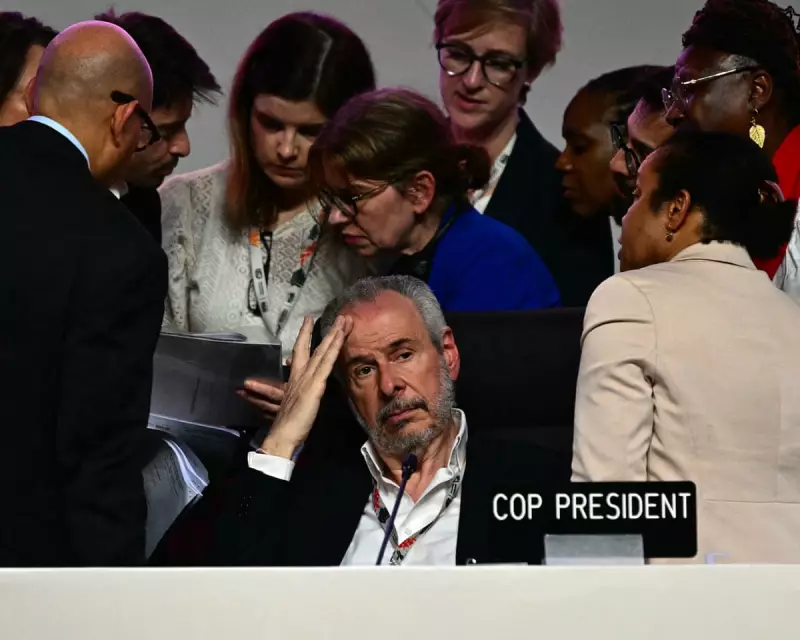
The world is not winning the fight against the climate crisis, the UN's climate chief has declared, following a bitterly contested Cop30 summit that ultimately reached a fragile agreement in Belém, Brazil.
Simon Stiell stated that while the global community is undeniably still in the climate fight, progress remains insufficient. The summit, held against a backdrop of divisive geopolitics and the notable absence of the United States under Donald Trump, was on the verge of collapse before a compromise was finally struck on Saturday after overnight negotiations.
A Fractured Path to Agreement
The negotiations were marked by significant opposition from several countries, led by Saudi Arabia, which successfully blocked efforts to formally plan a transition away from the fossil fuel age. Furthermore, a flagship ambition to chart a definitive end to deforestation, forged in the heart of the Amazon, was underdelivered.
Despite these setbacks, the fact that a deal was reached at all was seen by many as a victory for multilateralism in a fraught global era. Stiell emphasised this point, noting, "Denial, division and geopolitics has dealt international cooperation some heavy blows this year. But Cop30 showed that climate cooperation is alive and kicking."
He pointed to a key section of the final text as a critical signal: "The global transition towards low greenhouse gas emissions and climate-resilient development is irreversible and the trend of the future."
Key Outcomes and Glaring Omissions
The Cop30 package included decisions on several important issues. Notably, countries agreed to a promise to triple adaptation funding to help communities withstand climate impacts. The summit also established an agreement for a just transition mechanism and formally recognised the rights and knowledge of Indigenous peoples as a fundamental climate solution.
However, the final text faced strong criticism for what it lacked. Proposals for concrete roadmaps to phase out fossil fuels were notably absent, as were robust plans to end deforestation. These contentious issues were pushed to processes outside the UN framework, to be advanced by coalitions of willing nations. The impacts of the global food system on climate change were also largely ignored.
Anna Åberg from Chatham House reflected the mixed feelings, stating, "A 'Cop collapse' would have been a big and harmful blow... It is positive that a deal was reached in Belém, even if many will – legitimately – be disappointed with the level of ambition."
Reactions and the Road Ahead
The outcome was met with deep frustration from climate activists and scientists. Jasper Inventor of Greenpeace International called it a moment that "slipped" away, stating, "Cop30 started with a bang of ambition but ended with a whimper of disappointment."
There was also specific discontent with the adaptation finance deadline being pushed back to 2035, and despite Brazil styling the event as the "Indigenous Cop," participants reported continued exclusion from critical negotiations.
Despite the underwhelming official outcome, the summit was notable for the vibrant return of civil society protests. A major march involving tens of thousands of people brought colour and energy to Belém, with activists making their voices heard throughout the conference.
Looking forward, Professor Michael Grubb of University College London suggested a shift in focus is needed. "For the road to Cop31, the focus must be balanced by equal attention to the positive – the huge economic potential of accelerating the energy transition," he said, arguing that a sole focus on phasing out fossil fuels is politically fraught.
UN Secretary-General António Guterres conceded that the summit had not delivered everything needed, warning that the gap between current actions and scientific demands remains "dangerously wide." Yet, in a world of growing nationalism, the fact that 194 countries reached any agreement offers a slender thread of hope that global climate cooperation endures.



