
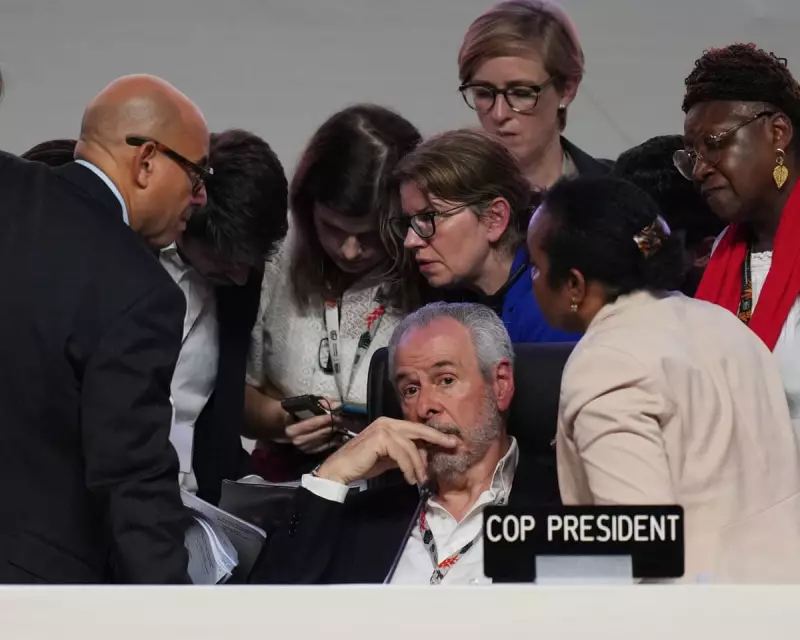
Cop30 Climate Talks Conclude with Fragile Consensus but Lack Major Breakthroughs
The latest round of United Nations climate negotiations, Cop30, has drawn to a close in the Brazilian city of Belém, leaving a trail of unmet expectations and postponed decisions. While the multilateral system managed to hold together, the final agreement failed to secure a crucial deal to transition away from fossil fuels. The conference also delayed vital financial commitments and produced a decision on deforestation, known as the 'mutirão', that lacked a concrete roadmap for action.
A Stark Divide Between Rich and Poor Nations
The global south presented a largely united front on a fundamental principle: their nations must receive the financial resources necessary to survive a climate emergency they did not create. This includes cash to build flood defences, create resilient agricultural systems, protect coastlines, and rebuild after disasters strike. They are also demanding front-loaded finance to enable a transition to clean, green economic growth.
However, this demand for climate finance faces significant political headwinds in the global north. Right-wing populists frequently rail against spending on climate action and foreign aid, creating a difficult political landscape. Furthermore, the clean industrialisation of developing nations is viewed by some in the rich world not as a priority, but as an economic threat.
Finance Shortfall Leaves Vulnerable Nations Exposed
The chasm between needs and reality was starkly highlighted by the latest UN adaptation report. It suggests that developing countries require more than $310 billion per year by 2035 for climate adaptation. In a devastating contrast, they received only $26 billion in 2023, a figure that actually fell from $28 billion the year before. This means needs are rising far faster than the finance being provided.
This urgency explains why African negotiators are so insistent that adaptation finance must come from state sources, preferably as grants. They argue it is delusional to rely on the private sector, which currently contributes a mere 5% of adaptation cash, most of it philanthropic. Private capital will not build sea walls, restore mangroves, or protect subsistence farmers.
The absence of the United States was particularly notable, marking the first time since 1995 that the nation was not officially represented at the annual climate summit. As the country with the largest climate debt in the world, its continued blocking of meaningful finance deals and its reshoring agenda have significantly hindered progress.
As Evans Njewa, chair of the Least Developed Countries (LDC) group, stated bluntly, the world's most vulnerable nations came to Cop30 seeking protection but left with promises postponed. The disappointment, however, serves as a spur for greater action, with hopes now turning to the upcoming Cop31 in Turkey and Cop32 in Ethiopia to finally change minds and secure a liveable future for all.



