
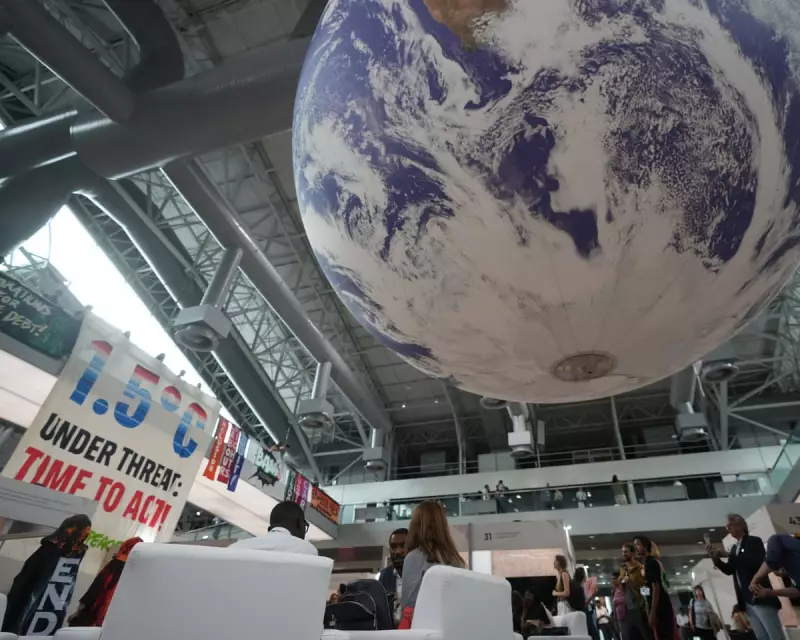
Climate Summit Reaches Critical Impasse Over Fossil Fuels
The Cop30 climate conference in Belém, Brazil, appears headed for overtime as participating countries remain deeply divided on the crucial issues of phasing out fossil fuels and reducing carbon emissions. With talks likely to extend into the weekend, the prospect of a meaningful agreement seems increasingly distant.
Growing Division Between Blocs
André Corrêa do Lago, the Cop30 president, has made an urgent appeal to ministers and high-ranking officials from more than 190 countries to find common ground. He emphasised the need to preserve the Paris climate agreement framework through cooperation rather than confrontation, warning that failure to strengthen climate commitments would result in universal losses.
The conference has split into two major blocs with fundamentally different positions. More than 80 developed and developing nations have called for establishing a roadmap to transition away from fossil fuels, which would allow governments to pursue individually chosen measures and timetables toward this ultimate goal.
However, this proposal faces strong opposition from another group of over 80 countries, including Saudi Arabia, Russia, and other petrostates, along with nations heavily dependent on fossil fuel use. Their resistance led to the removal of references to a transition roadmap from a draft text published early Friday morning.
European Leaders Express Deep Concern
The European response to the stalled negotiations has been particularly stark. Wopke Hoekstra, European Commissioner for Climate, described the current deal as unacceptable and raised the alarming possibility of countries leaving without any agreement. He stated bluntly that the negotiations are far from where they need to be, creating a real risk of complete breakdown.
Bas Eickhout, a member of the European Parliament's delegation to Cop30, reinforced this position, suggesting that no deal would be preferable to a bad agreement. He argued that failure to establish a fossil fuel phase-out roadmap would represent a significant victory for petrostates and hard-right political figures like Donald Trump.
Alternative Initiatives Emerge
In response to the slow progress, Colombia and the Netherlands announced they would organise a separate but complementary conference on transitioning away from fossil fuels for high-ambition countries next year. This move reflects growing frustration with the pace of multilateral negotiations.
Pacific island nations, whose very existence is threatened by rising sea levels, expressed particular disappointment. Tuvalu's environment minister, Maina Talia, declared that vulnerable nations cannot afford to wait any longer, noting that the current text fails to even acknowledge the existential threat facing his country.
Tina Stege, climate envoy for the Marshall Islands, maintained that a transition roadmap remains inevitable, emphasising the urgency for nations situated just two metres above sea level.
Broader Negotiation Challenges
Beyond the fossil fuel debate, delegates face additional critical issues. Current national climate plans would lead to approximately 2.5°C of warming, far exceeding the 1.5°C limit established by the Paris Agreement. The draft text offers only options for continued discussion about this dangerous gap between targets and necessary carbon reductions.
Some civil society groups attribute the impasse to wealthy nations failing to provide sufficient financial support to help poorer countries address climate breakdown. Harjeet Singh of the Satat Sampada Climate Foundation described the current draft as potentially creating the deadliest talkshow in history if accepted, criticising negotiators for avoiding concrete action on both fossil fuels and climate finance.
As the summit enters its final stages, all eyes remain on whether Brazil can bridge the deep divisions between nations or whether Cop30 will conclude without the strong commitments needed to address the escalating climate crisis.



