
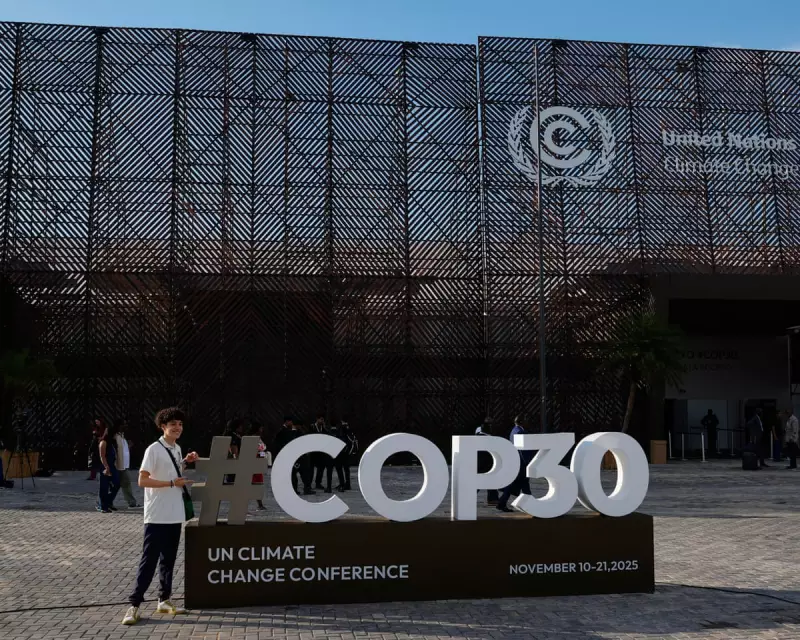
World Leaders Converge on Amazon for Critical Climate Talks
Government ministers and senior officials from nearly 200 countries have assembled in the Brazilian city of Belem for the Cop30 UN climate summit, with the urgent mission of addressing the escalating climate crisis before catastrophic global heating becomes irreversible.
The conference centre in the Amazonian city buzzed with final preparations as carpenters and builders worked through Sunday, unpacking materials and constructing pavilions where nations will demonstrate their commitment to reducing greenhouse gas emissions and transitioning to low-carbon economies.
A Different Approach to Climate Negotiations
Brazil is breaking from tradition by rejecting the protracted negotiation style that has characterised UN climate conferences over the past three decades. Instead of endless discussions about future commitments, this summit is being branded as "the Cop of implementation" - focusing on tangible actions already being taken to combat climate change.
Andre Correa do Lago, president of Cop30, explained the shift in approach: "Negotiations need consensus. But implementation is countries choosing what they want to do and executing what they have said they are going to do."
This fresh strategy does present challenges, particularly regarding how to address countries that choose minimal action without facing consequences.
From Pledges to Roadmaps: The New Climate Framework
The expected outcomes of Cop30 mark a significant departure from previous summits. Rather than producing the usual list of pledges, delegates are working toward creating comprehensive "roadmaps" covering crucial climate issues:
- A finance roadmap that has already been published
- A strategy for transitioning away from fossil fuels
- A plan for scaling up low-carbon energy while reducing emissions to meet the 1.5C global heating target
Some roadmaps, particularly concerning the fossil fuel transition, may require multiple conferences to complete, with potential forums established to continue work across several Cop meetings.
Comprehensive Agenda Addresses Multiple Crises
The summit's agenda spans an enormous range of interconnected issues over its two-week duration. Discussions will encompass:
- The future of energy systems and climate finance
- Social justice considerations within climate action
- Health, biodiversity, nature conservation and wildlife protection
- Water resources, ocean health and transportation systems
- Migration patterns, food security and gender equality
- Technological solutions and their implementation
The gathering brings together an diverse group of participants including ministers, diplomats, local government representatives, scientists, business leaders, Indigenous communities and civil society organisations from virtually every nation.
Leadership Presence and Notable Absences
The conference follows a leaders' summit held on November 6th and 7th that saw participation from more than 50 heads of state and government or their deputies. Attendees included UK Prime Minister Keir Starmer, European Commission President Ursula von der Leyen, and Germany's Friedrich Merz.
Several prominent leaders were notably absent, including former US President Donald Trump, who withdrew America from the Paris climate agreement, along with Russia's Vladimir Putin. China's Xi Jinping and India's Narendra Modi also skipped the summit but have extended friendly gestures toward Brazil regarding Cop30.
The Urgent Context: Racing Against Climate Tipping Points
The summit convenes amid increasingly dire warnings from scientists. With temperatures rising faster than at any point in at least 24,000 years, the world stands perilously close to multiple climate "tipping points" that could trigger accelerated, irreversible heating and climate catastrophe.
The fundamental question dominating proceedings remains whether sufficient collective will exists to address this existential threat. Can global unity overcome geopolitical tensions, armed conflicts, populist divisions and climate disinformation to deliver the cooperation desperately needed to confront the climate crisis?
As negotiations proceed in Belem, the world watches to see if this implementation-focused approach can produce the concrete results needed to avert climate disaster.



