
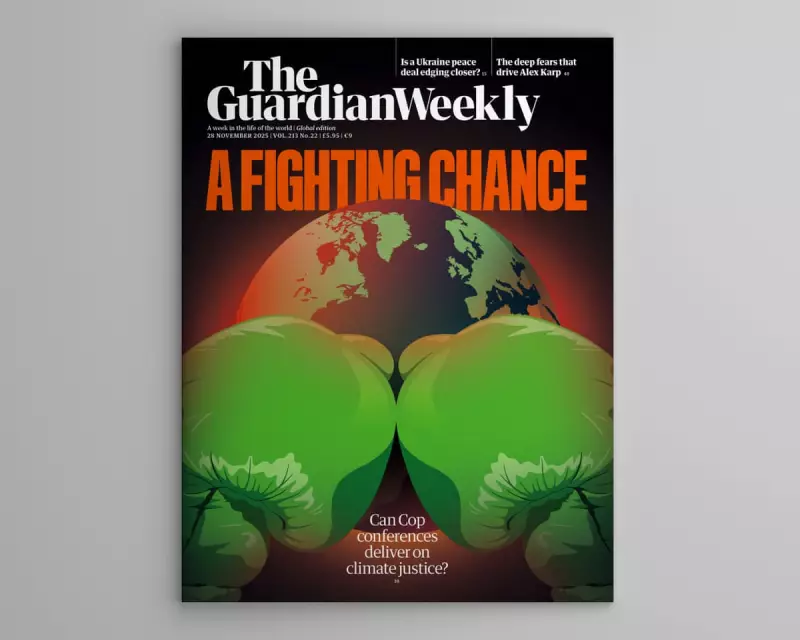
The latest United Nations climate summit, Cop30, concluded last Saturday in Belém, Brazil, following a familiar pattern of bitter disputes and last-minute negotiations. Despite the growing urgency of the climate crisis, the conference struggled to achieve significant breakthroughs.
A Fragile Climate Consensus
Environment editor Fiona Harvey details how a weak consensus was painfully forged between nations on the frontline of climate change and petrostates that sought to roll back commitments to "transition away from fossil fuels". This commitment was originally agreed upon two years ago in Dubai.
The summit was characterised by implacably opposed delegations, threatened walkouts, and intense fear of failure. A final statement only emerged hours after the planned deadline, following immense pressure on recalcitrant countries to agree.
Geopolitical Headwinds Hinder Progress
Jonathan Watts analyses the powerful geopolitical forces that made this Cop especially challenging. A US president committed to oil and coal, the global rise of right-wing populism, ongoing conflicts in Ukraine and Gaza, and widespread economic uncertainty created a perfect storm that prevented major advancement.
Despite these obstacles, the summit demonstrated that international cooperation remains an essential tool for addressing global challenges, even if the resulting deal was deeply flawed.
Other Highlights from This Week's Edition
The Guardian Weekly's 28 November edition also features several other critical stories. Luke Harding and Pjotr Sauer examine the whirl of international diplomacy sparked by a US-Russian 'peace plan' for Ukraine. Julian Borger explores how Washington's regional loyalties in the Middle East may be shifting away from Israel and towards the Gulf, following pageantry and trillion-dollar promises involving Donald Trump and Saudi Arabia.
In a revealing feature, Steve Rose profiles Alex Karp, the CEO of data analytics company Palantir, questioning if he is the world's scariest CEO as his company develops what could become the ultimate state surveillance tool.
Simon Tisdall outlines an improbable new adversary for the Trump administration: the Catholic church, which is fighting the government on issues of inequality, immigration, and civil rights.
The culture section features celebrated ceramicist Edmund de Waal explaining to Charlotte Higgins his decades-long fixation with the unsettling stoneware of maker Axel Salto.
Additional investigations include a year-long look into the Free Birth Society by Sirin Kale and Lucy Osborne, and Helena Horton's feature on an ambitious proposal to build a pedestrianised, affordable 'forest city' within an English nature reserve.



