
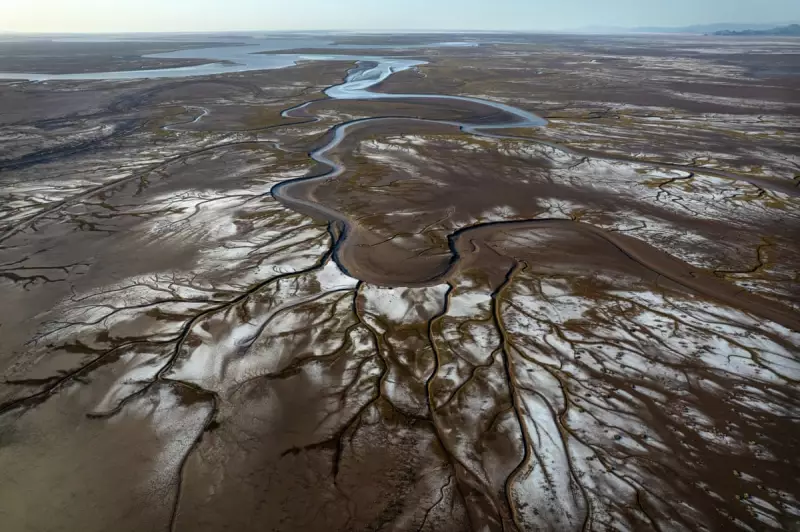
Negotiators from seven western US states have failed to reach a crucial agreement on managing the Colorado River's dwindling water supplies, missing a federal deadline that threatens the stability of water distribution across the region.
Deadline Passes Without Consensus
The Tuesday deadline set by federal officials came and went without a consensus among state representatives who have spent months attempting to resolve contentious disagreements over water distribution from the Colorado River basin. This vital waterway supplies approximately 40 million people across seven states, supports 5.5 million acres of farmland, and provides water to dozens of tribal communities and parts of Mexico.
According to a joint statement from federal officials and state representatives, enough progress was made to warrant an extension of discussions. However, time remains critically short, with current guidelines expiring and a new agreement required by October 2026, marking the start of the 2027 water year.
Climate Crisis and Overuse Take Their Toll
The Colorado River system faces unprecedented challenges from long-term overuse and the accelerating impacts of climate change. The basin has experienced what experts describe as a "one-two punch" that has pushed the system into crisis.
The river loses approximately 3.5 million acre-feet annually to overuse – equivalent to more than a quarter of its average annual flow. To put this in perspective, one acre-foot equals roughly 326,000 gallons, enough water to supply three families for a year.
Meanwhile, rising temperatures have dramatically reduced the river's flow. Shrinking mountain snowpacks provide less meltwater each year, while increased evaporation claims a growing share. The Colorado River has lost more than 10 trillion gallons of water in just the past two decades.
Upper vs Lower Basin States Divided
The closed-door negotiations have been marked by significant tension between upper basin states – Colorado, Utah, Wyoming, and New Mexico – and lower basin states – California, Arizona, and Nevada. Key sticking points include the specific terms of any new agreement, how to measure shortages and conservation efforts, and determining which states should bear the brunt of necessary water cuts.
Anne Castle, a water policy expert and former chair of the Upper Colorado River Commission, highlighted the fundamental challenge: "They had to reach an agreement that almost by definition is going to result in hardship to some of those water users. That was the crux of the problem."
Castle emphasised that even without an agreement, water users will still face cuts. "We know water use has to be reduced – and reduced substantially. The issue is how," she stated.
Ecological and Economic Consequences
The Colorado River's decline has already had severe environmental impacts. Fourteen native fish species are now endangered or threatened, while the once-lush wetlands in Mexico's river delta have been dry for decades. California's Salton Sea, fed by the river, has turned toxic due to drought conditions.
The river's water has been fundamental to developing thriving western cities including Los Angeles, Phoenix, and Las Vegas, while transforming arid landscapes into agricultural heartlands. Roughly 80% of the Colorado River's water goes to agriculture, primarily supporting thirsty crops like alfalfa and hay used for livestock feed.
With the two largest reservoirs projected to reach historic lows within the next two years, the urgency for a solution continues to mount. If states cannot reach a compromise, the federal government may intervene – an outcome experts warn could lead to litigation and further delays that would benefit no one.



