
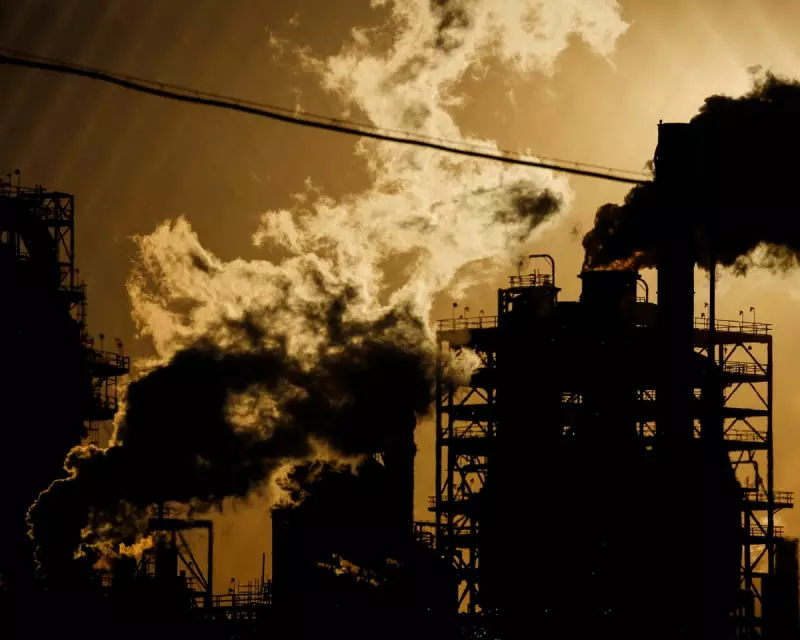
The world remains on a dangerous trajectory towards catastrophic global heating, with new reports revealing that national climate plans submitted for this year's Cop conference are overwhelmingly inadequate to address the escalating climate emergency.
Insufficient Commitments and Record Emissions
According to the latest Climate Action Tracker update, only approximately 100 countries have submitted their emission-cutting plans for the Cop30 climate talks currently underway in Belém, Brazil. These nationally determined contributions (NDCs) have been described as 'very much insufficient' to prevent dangerous levels of global heating, marking the fourth consecutive year of inadequate climate commitments.
The analysis projects that global temperatures will rise by 2.6C above pre-industrial levels by the century's end - matching last year's forecast and representing a catastrophic breach of the Paris Agreement thresholds that every nation previously agreed to uphold.
The Dire Consequences of Inaction
Bill Hare, CEO of Climate Analytics, delivered a stark warning about the implications of such warming. 'A world at 2.6C means global disaster,' he stated, explaining that this level of heating would likely trigger critical climate tipping points including the collapse of Atlantic Ocean circulation, loss of coral reefs, and the conversion of the Amazon rainforest to savannah.
The consequences would be devastating for global agriculture and weather patterns. 'That all means the end of agriculture in the UK and across Europe, drought and monsoon failure in Asia and Africa, lethal heat and humidity,' Hare emphasised. 'This is not a good place to be. You want to stay away from that.'
Simultaneously, a separate report from the Global Carbon Project (GCP) found that fossil fuel emissions are projected to rise by approximately 1% in 2025, reaching a new record high. However, there is a glimmer of hope as the rate of increase has more than halved in recent years, dropping from 2.0% annually in the previous decade to 0.8% currently.
Progress and Setbacks in Climate Efforts
The reports highlighted several concerning developments, including a worrying weakening of the planet's natural carbon sinks. Scientists noted that combined effects of global heating and deforestation have turned tropical forests in southeast Asia and parts of South America from carbon absorbers into sources of climate-heating gases.
Professor Corinne Le Quéré of the University of East Anglia, one of 130 GCP scientists involved in the research, offered a measured perspective. 'We're not yet in a situation where emissions are going down as rapidly as they need to to tackle climate change, but at the same time emissions are growing much less rapidly than before because of the extraordinary growth in renewable energy,' she explained.
The analysis projects atmospheric CO2 levels will reach 425 parts per million in 2025, compared to 280ppm in preindustrial times. This would have been 8ppm lower if natural carbon sinks hadn't been compromised.
Despite the grim outlook, there has been significant progress since the Paris Agreement was signed in 2016, when projections indicated 3.6C of heating by 2100. The improvement stems from rapid clean energy deployment and reduced coal use. Additionally, 35 countries representing a quarter of global GDP now have growing economies alongside falling emissions.
Former US vice-president Al Gore delivered an impassioned address to delegates, describing the continued global heating as 'literally insane' and questioning how long humanity would continue 'turning the thermostat up' while using the sky as 'an open sewer'.
The political landscape remains challenging, with Donald Trump's administration withdrawing from the Paris Agreement and the US absent from Cop30 for the first time. Meanwhile, the G77 nations plus China, representing 80% of the world's population, have supported establishing a process for a just transition away from fossil fuels, though several developed nations including the UK, Australia, Canada and Japan have not endorsed this approach.



