
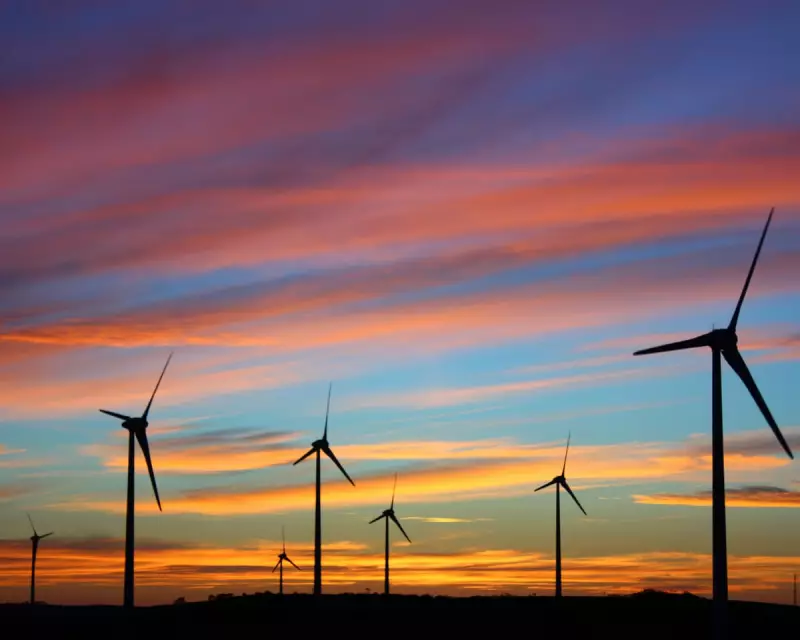
A disturbing pattern of coordinated climate misinformation is derailing renewable energy projects across Australia, a Senate inquiry has heard, as the country grapples with political backsliding on climate commitments.
Facebook Groups Derail Community Battery
The inquiry heard compelling evidence about how local community projects are being sabotaged by online misinformation campaigns. In the regional town of Narrabri, plans for a community battery that had secured a $500,000 federal government grant were thrown into limbo after false claims spread through local Facebook pages.
Sally Hunter, founder of not-for-profit Geni.Energy which proposed the battery project, told senators that community Facebook pages had become "the castle of propagandised misinformation." False claims that the battery posed a fire risk and could "shut down the town for days" reached local councillors, who subsequently voted to rescind their agreement for the project.
Hostilities and Intimidation Tactics
The inquiry heard alarming accounts of how misinformation is creating dangerous divisions within communities. Evidence included stories of a windfarm worker being threatened in the street, a farmer's daughter accosted outside a pub, and a member of an anti-offshore wind group finding maggot-infested dead rats on his driveway.
Ika Trijsburg, director of urban analytics at the Institute for Infrastructure in Society at ANU, warned that "it is hard to overstate just how dangerous mis- and disinformation is." She explained that misinformation makes people increasingly polarised in their decision making and drives hostility within local communities.
Political Connections and Coordinated Opposition
The inquiry revealed concerning links between political figures and anti-renewable groups. Grant Piper, a farmer who chairs the National Rational Energy Network (NREN), testified that the group's first Zoom meeting in 2023 was hosted by Barnaby Joyce's office.
According to Piper, Joyce "had a vision for a group" connecting opponents of renewable projects. NREN, which now claims about 160 member groups, went on to host a "Reckless Renewables" rally in Canberra and seconded a member to work with Advance Australia, a well-funded rightwing activist group.
The timing of the inquiry coincided with significant political developments, as the Liberal party followed the Nationals in abandoning Australia's net zero greenhouse gas emissions target.
Funding Sources Remain Shadowy
Questions about funding for anti-renewable campaigns remained largely unanswered. The Institute of Public Affairs (IPA), which claimed credit for the abandonment of net zero targets, refused to disclose its donors when questioned at the inquiry.
The rightwing institute, known for promoting climate science denial, wouldn't confirm whether billionaire Gina Rinehart remains a major funder, despite court proceedings in 2018 revealing her company provided between one-third and half of the IPA's revenue in 2016-2017.
The Municipal Association of Victoria, representing all 79 councils in the state, reported that local governments are dealing with widespread misinformation about supposed health impacts of wind turbines, non-existent transmission line deals, and exaggerated fire risks from electric vehicles.
As Australia confronts this challenge, a new international initiative was launched at UN climate talks in Brazil, backed by 10 countries, specifically designed to tackle climate mis- and disinformation on a global scale.



