
As Britons face another expensive Christmas food shop, the rising cost of festive staples like cranberry sauce reveals a deeper, more troubling story about climate change and fragile global supply chains.
The Cranberry Conundrum: A Festive Bellwether
Have you felt the pinch at the supermarket checkout? The price of ingredients for a traditional Christmas meal has risen sharply this year, adding pressure during an ongoing cost of living crisis. To understand why, we need to look beyond simple economics to the climate scientists.
Professor Sarah Bridle, a food, climate and society expert at the University of York, suggests a single Christmas ingredient—the cranberry—can illuminate the broader pressures on our food system. Most cranberries eaten in the UK are imported from the United States and Canada, making prices highly sensitive to disruptions overseas.
Analysis shows own-brand cranberry sauce prices rose by 37% in 2022, driven by the war in Ukraine, energy costs, and supply chain issues. This year, prices are up another 25% compared to last. While some of this may be a market correction after supermarket price wars, the underlying vulnerability remains.
Climate Threats From Bog to Breadbasket
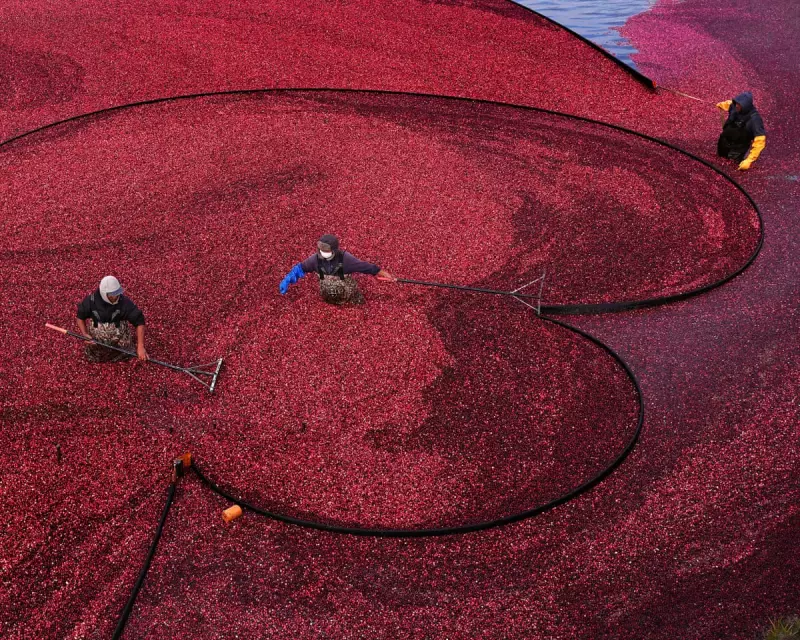
Cranberries are fussy crops. They require cold weather and abundant water, harvested in flooded autumnal bogs. Heatwaves can damage the fruit, while droughts force growers to use intensive irrigation. Farmers in places like Massachusetts are already adapting with new sanding techniques and smarter irrigation, but the climate crisis is a persistent threat.
However, Professor Bridle warns that the greater risk to UK food security isn't the cranberry on the Christmas table, but the wheat in our Christmas cakes and daily bread. UK wheat output decreased by 20% between 2023 and 2024 after the wettest 18 months on record, which rotted crops in waterlogged fields.
The situation has worsened. By 2025, heat and drought slashed over £800m from production, resulting in one of the worst harvests on record. Notably, three of the five worst UK wheat harvests have occurred since 2020. For shoppers, this means a staple ingredient is becoming less available and more expensive, with the average branded loaf now costing £1.43, up from £1.10 in April 2021.
The End of Abundance and Risks Ahead
Professor Bridle's research, which surveyed 58 UK food experts, paints a sobering future. 80% of those experts believe civil unrest due to food crises is likely in the UK within the next 50 years. The era of permanent supermarket abundance, where we expect strawberries in winter, is ending.
"We are going to have shortages of things more frequently in the future," Bridle warns. In the next decade, the greater risk may not be an overall food shortage but a breakdown in distribution—the UK may have enough food, but not the robust systems to get it to everyone.
Bridle argues that responsibility cannot rest solely with consumers. She calls for systemic change in the "food environment," pointing to policies like the sugary drinks tax as a model. She is now part of a Defra advisory group exploring climate impact labelling for food, a potential first step towards accounting for environmental costs.
"We’ve become quite disconnected from where our food comes from. And that causes several problems, most notably food waste," Bridle notes. For now, reducing waste is one actionable step most can agree on.
So, as you sit down to your Christmas dinner, the cranberry sauce embodies more than a festive condiment. It represents a complex web of climate volatility, global trade, and a UK food system facing unprecedented pressures. The message is clear: the climate crisis is already on our plates.



