
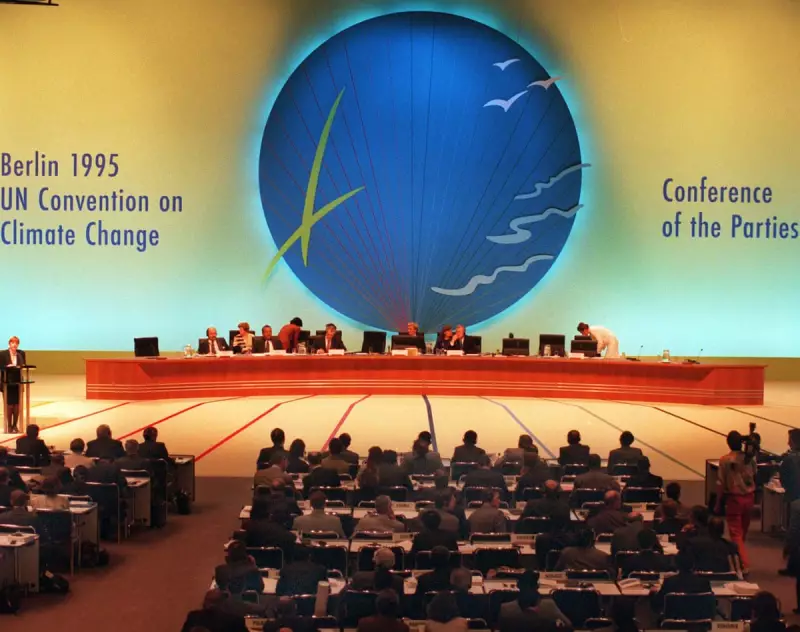
Three decades of international climate negotiations have failed to prevent a dramatic rise in atmospheric carbon dioxide, with levels jumping from 360.67 parts per million in 1995 to 426.68 ppm today.
The Beginning of Climate Diplomacy
In 1995, the first Conference of the Parties (COP) of the UN's climate change convention gathered in Berlin with urgent warnings about planetary overheating. German Chancellor Helmut Kohl delivered a passionate plea for reducing greenhouse gases to save the planet, while a relatively unknown East German environment minister named Angela Merkel chaired the proceedings with notable efficiency.
British journalists covering the event predicted a bright future for Merkel, whose organisational skills impressed observers. The conference immediately inspired climate journalism, including a book titled Global Warming: Can Civilization Survive? that found receptive audiences concerned about the growing environmental threat.
Three Decades of Repeated Warnings
Through subsequent climate milestones including the Kyoto Protocol, Paris Agreement, and nearly 30 annual COP meetings, the same essential message Kohl delivered has been recycled by prime ministers, presidents and campaigners year after year. Despite the ritual of climate diplomacy and repeated commitments to action, the atmospheric carbon concentration has continued its relentless climb.
The current reading of 426.68 ppm far exceeds what scientists consider the safe limit of 350 parts per million, placing the planet on what experts describe as a path toward oblivion. Throughout this period, news editors frequently encouraged climate reporters to maintain optimism rather than focus on the increasingly dire scientific projections.
A Final Assessment
As one veteran climate journalist writes their final column after witnessing the entire arc of international climate negotiations, the data requires no embellishment. The increase of approximately 66 parts per million since those first tentative discussions in Berlin represents a failure of global cooperation on an unprecedented scale.
The facts indeed speak for themselves, presenting a sobering legacy of three decades of climate diplomacy that has thus far proven inadequate to the accelerating crisis. With carbon levels continuing to rise despite repeated warnings and international agreements, the planetary emergency Kohl identified in 1995 has only intensified.



