
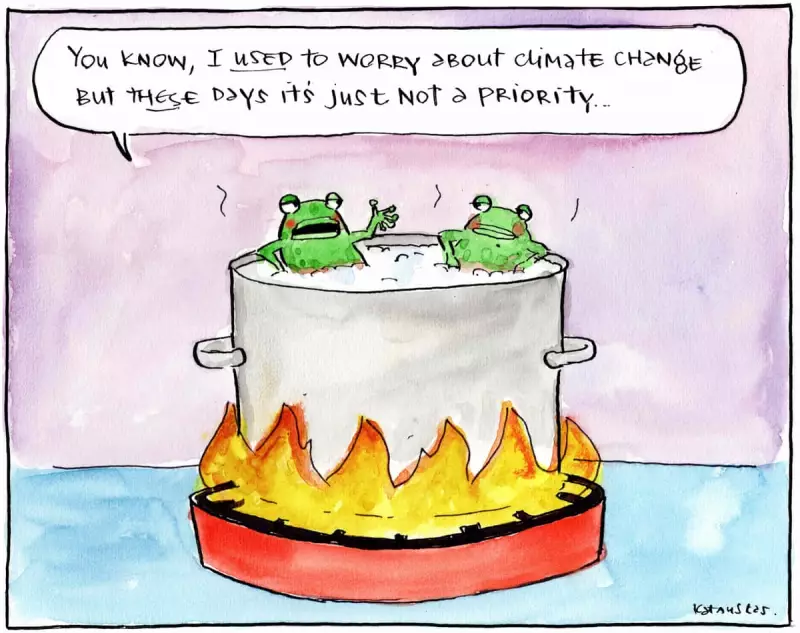
In an era where climate scepticism occasionally surfaces, the stark reality of our planetary crisis demands urgent attention and decisive action. Recent discussions have questioned whether climate change deserves the widespread concern it receives, but scientific evidence and global weather patterns tell a very different story.
The Unignorable Evidence
Climate scientists worldwide continue to document accelerating changes to our planet's systems. Rising global temperatures, melting polar ice caps, and increasingly extreme weather events provide undeniable proof that climate change represents one of humanity's greatest challenges. The data shows consistent warming trends across decades, with recent years repeatedly breaking temperature records.
From devastating wildfires consuming communities to unprecedented flooding displacing millions, the impacts are no longer distant threats but present-day realities. Coastal communities face existential threats from sea-level rise, while agricultural regions struggle with changing growing seasons and water scarcity.
Why Complacency Poses the Greatest Danger
The most significant risk we face isn't the climate crisis itself, but the temptation to downplay its severity. When we question whether climate change deserves our concern, we undermine the collective action required to address it. Every moment of delay increases the costs and challenges of mitigation while reducing our options for adaptation.
Economic analyses consistently demonstrate that early climate action proves far less costly than dealing with the consequences of inaction. The notion that we can postpone addressing climate change represents a dangerous misunderstanding of both the science and the economics involved.
The Path Forward Requires Unified Action
Addressing climate change demands coordinated efforts across governments, businesses, and individuals. Transitioning to renewable energy sources, implementing sustainable agricultural practices, and redesigning our transportation systems all form crucial components of an effective response. The technology and knowledge needed already exist; what we require is the political and social will to implement solutions at scale.
Individual actions, while important, must be supported by systemic changes. Policy decisions, corporate responsibility, and international cooperation will determine whether we succeed in limiting the most catastrophic impacts. The choice isn't between action and inaction, but between controlled transition and chaotic disruption.
The conversation should never be about whether climate change warrants our concern, but rather how we can most effectively address the challenges it presents. The science is clear, the impacts are visible, and the solutions are within reach. What remains in question is our collective determination to act before the window of opportunity closes completely.



