
On a windy day, the surface of a lake is not a continuous pattern of ripples but instead marked with patches of disturbance, as though a giant cat were patting the water. These surface patterns, known as cat's paws, are caused by turbulent airflow in the atmosphere.
What Causes Cat's Paws?
Wind is caused by changing pressure at different spots on Earth's surface but does not simply rush in a single mass from one place to another. The chaotic nature of the airflow, with slight differences between adjacent sections, breaks it up and splits out smaller swirls. This continues with large eddies breaking down into smaller ones, which break down further, a process known as turbulence cascade. At the lowest level, we get cat's paws, which are usually a few metres across and last a few seconds.
Historical Significance for Sailors
Sailors long regarded these markings as a sign of good fortune. Cat's paws show where the best winds are in relatively still conditions, and may appear where cliffs or other features channel winds, so ships would chase them to catch the breeze. According to superstition, rubbing the backstay, the line that goes from the top of the mast to the stern, was a way of bringing cat's paws closer.
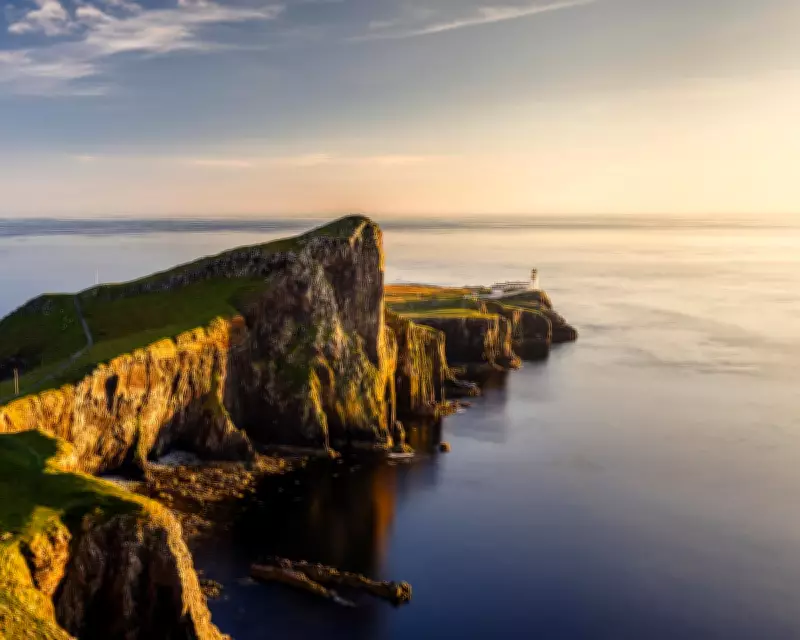
The Isle of Skye at sunset often features cat's paws where cliffs channel winds, providing a beautiful and practical phenomenon for those at sea.



