
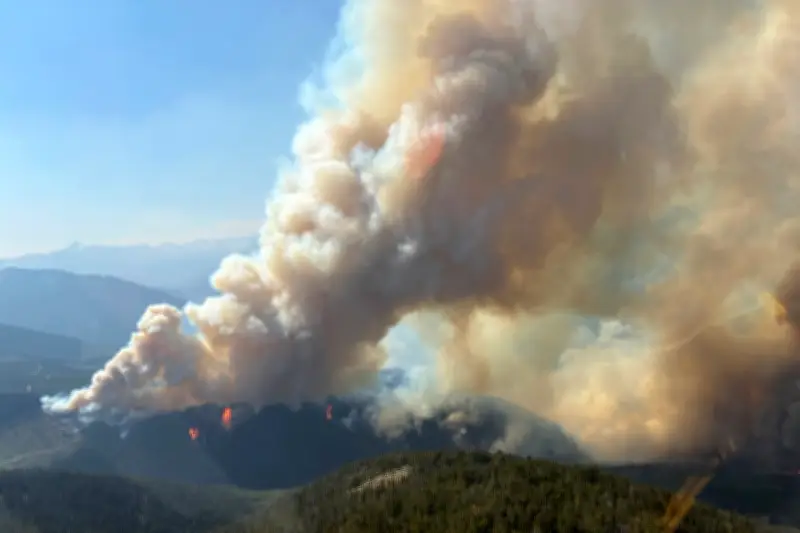
As more than 900 wildfires burn across Canada, prompting evacuation orders and pushing Ontario into its worst wildfire season on record, officials are renewing calls for the country to develop a national wildfire strategy through the creation of a federal agency. Canada is the only G7 country that does not have a national emergency agency mandated to respond to wildfires.
Record-breaking fire seasons
After a disastrous July for wildfires that razed First Nations communities in northeastern Ontario and sent poisonous smoke southward through the US, provincial premier Doug Ford called for a countrywide response to the wildfire threat. “We need a large national fire strategy. We seem to be going through this every single year,” Ford told reporters.
In 2023, Canada’s worst wildfire season on record burned through a staggering 15m hectares of land, an area larger than England, according to the federal government. That catastrophe prompted the federal government, led then by Justin Trudeau, to consider the creation of a national disaster response agency. Yet such a body was never created. Summer 2024 was another destructive season, now the fourth worst on record. Then, 2025 ended up ranking only behind 2023 as the worst wildfire season in Canadian history, with 8.3m hectares burned.
Climate change driving worse fires
“Never in our modern record have we had three bad fire years,” said Mike Flannigan, a professor of wildland fire at Thompson Rivers University in Kamloops, British Columbia. Climate change, caused by the burning of fossil fuels, has led to warming that is fuelling calamitous fire seasons, he said. A national wildfire strategy through the creation of a federal emergency agency, he said, would help Canada be more prepared. “We definitely need one, and not just for fires, but for floods, earthquakes, hurricanes,” he said.
Current response structure
In Canada, provinces and territories are responsible for managing wildfires and the federal government offers support as needed. That’s in contrast to the US which has the Federal Emergency Management Agency (Fema) that organizes the national response to disasters through working with states. However, the Fema model is under threat as the Donald Trump administration has been accused of castigating the agency and politicizing disaster aid. But in principle, a group like Fema that could quickly alert provinces and territories to resources in advance would help Canada put out fires faster, said Flannigan.
Political and legislative moves
A June report from the Canadian senate also recommended Ottawa create a federal coordinating office for wildfires and emergency response. On Friday, the prime minister, Mark Carney, convened a cabinet-level emergency committee to organize the federal response to the wildfires, but fell short of creating a national wildfire strategy. However, Canada’s ministry of emergency management and community resilience told the Guardian it’s considering “the potential creation of a federal emergency management agency”, as it reviews feedback from recent public engagement sessions.
Economic and health benefits
The costs of creating such an agency would be offset by the palpable savings that come with preventing community destruction and mitigating the negative health impacts of fires, said Flannigan. “We’re going to see more fire, more smoke and more impacts…. that’s our new reality,” he said. “We’re going to have to adapt faster.”



