
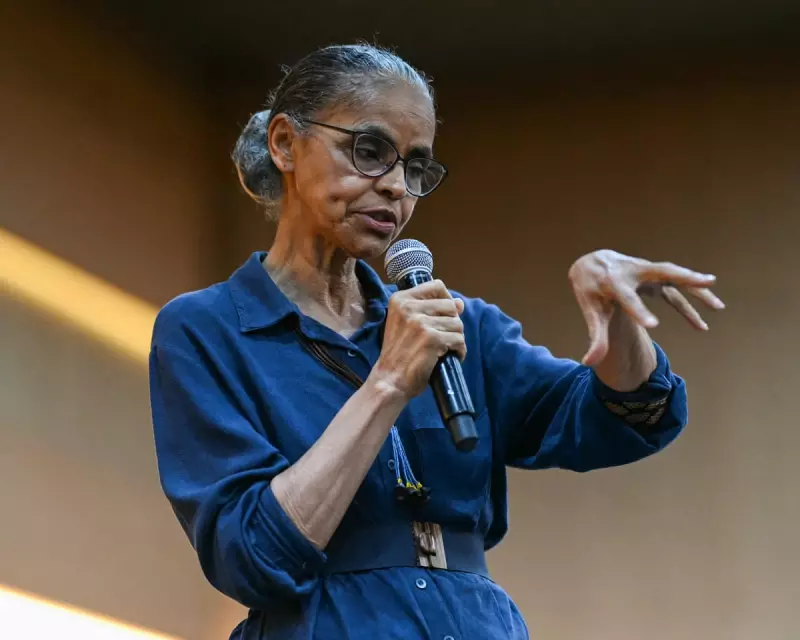
Brazil's Environment Minister Marina Silva has made an impassioned plea for nations to demonstrate courage in addressing the urgent need for a global fossil fuel phaseout, describing the creation of a detailed roadmap as an essential ethical response to the escalating climate crisis.
Voluntary Approach to Contentious Issue
Speaking exclusively during the UN climate summit in Belém, Silva emphasised that any participation in developing such a roadmap would be entirely voluntary and self-determined by individual governments. The proposal represents one of the most divisive topics at COP30, with nations deeply divided over whether and how such discussions should proceed.
As the host country, Brazil has maintained careful neutrality regarding the formal agenda items. Silva expressed support for the potential development of a phaseout roadmap while stopping short of making any firm commitment from Brazil itself.
"When we have a terrain or environment that is quite grim, it is good that we have a map," Silva told the Guardian. "But the map does not force us to travel, or to climb. The map is an answer to our scientific knowledge of the climate crisis. It is an ethical answer."
Building on Previous Climate Commitments
Dozens of countries gathered in Belém for the summit's second week are pushing to establish concrete mechanisms for achieving a global transition away from fossil fuels. Their efforts build upon the historic resolution made two years earlier at COP28 in Dubai, where nations unanimously agreed to "transition away from fossil fuels".
However, that landmark agreement lacked both a specific timetable and detailed implementation plans. Despite unanimous passage, several countries have since attempted to distance themselves from the pledge. Subsequent efforts to elaborate on practical implementation were blocked last year by opposition from petrostates during COP29 in Azerbaijan, a nation heavily dependent on oil and gas exports.
The resulting absence of any mention of fossil fuel transition in the COP29 outcome documents has made Brazilian officials cautious about calls to include the topic on the formal COP30 agenda. Nevertheless, Silva has engaged in extensive behind-the-scenes diplomacy to ensure the issue can be discussed through alternative summit channels.
Brazil's Delicate Balancing Act
Silva successfully persuaded Brazil's President, Luiz Inácio Lula da Silva, to address the issue publicly. The president referenced the need to "move away from dependence on fossil fuels" on three separate occasions during both the world leaders' summit preceding COP30 and the conference's opening ceremony.
"This is something that we know at some point had to be put forward, because it is the only way to face the problem from the root," Minister Silva explained. "We recognise that it is not easy, and we cannot sell false hopes. Raising the subject is courageous, and I hope to see this courage from all, from producers and consumers."
Brazil has deliberately avoided initiating the call for a phaseout, Silva noted, as that responsibility had already been undertaken at COP28. Instead, the South American nation is facilitating discussions according to the wishes of participating countries. "We know these topics are delicate. We will give the opportunity to discuss it," she affirmed.
Complex Road Ahead for Global Agreement
Experts acknowledge that insufficient time remains during COP30 to develop a comprehensive roadmap. Silva suggested the process could extend over several years, given the complex challenges many nations face regarding fossil fuel dependence or their reliance on fuel revenues to finance development.
"Brazil raises the subject, because Brazil is both a producer and consumer," Silva stated. "But Brazil is different, because Brazil, if it wants to, need not depend on fossil fuels. We have to understand that there are some that depend on fossil fuels in their economies and don't have easy solutions, and others where fossil fuels are the basis of their economy."
She emphasised the need for fairness while maintaining planetary priorities: "To be fair is to be fair to everyone, but the essential, primordial justice is not to be unfair to the planet, because it is our home."
Should the proposal gain sufficient support, COP30 could establish a forum to begin developing a phaseout roadmap. Silva outlined that the process would require comprehensive dialogue with all signatory countries to the UN Framework Convention on Climate Change (UNFCCC), alongside clearly defined criteria for implementation.
"Once we have criteria, a governance structure can be drawn up; once we have a strategy, and create safeguards to be able to establish trust in the process, I believe that with these elements we can transform good ideas into steps that are clearer, and more concrete," she elaborated.
International Response and Negotiation Challenges
No guarantee exists that a proposal to begin roadmap development will secure approval at COP30, even without requiring formal conference consent. The UN climate process operates through consensus, creating vulnerability to obstruction by special interests.
Climate experts estimate potential support from approximately 60 countries, with at least 40 nations likely opposed. With 195 countries participating in the talks, achieving consensus remains challenging.
Leo Roberts from the E3G thinktank commented: "Despite being the root cause of climate change, fossil fuels are about the most contentious subject there is within the UN negotiations, so to see a chunky group of countries openly backing a route to achieving global phaseout is in itself pretty groundbreaking."
"In simple terms, there's no route to a world where warming stays below 1.5C in which countries aren't able to discuss fossil fuel phaseout," Roberts added.
Juan Carlos Monterrey, Panama's climate negotiator, expressed frustration with current discussions: "We need this language for real in this conversation. It's quite stupid that we talk about everything but that when fossil fuels are the actual problem."
As negotiations continued through Saturday, four critical issues remained unresolved for inclusion in the formal agenda: trade, transparency, finance, and addressing the emissions reduction gap between current national plans and those required to maintain the 1.5°C temperature limit.
COP30 President André Corrêa do Lago promised a comprehensive note addressing these outstanding matters after week-long consultations proved inconclusive. He urged countries to embrace the "mutirão" spirit of cooperation and constructive discussion.
Brazil's chief negotiator, Liliam Chagas, confirmed that technical discussions were nearing completion, with the political phase beginning as ministers with authority to alter national positions arrive at the summit.



