
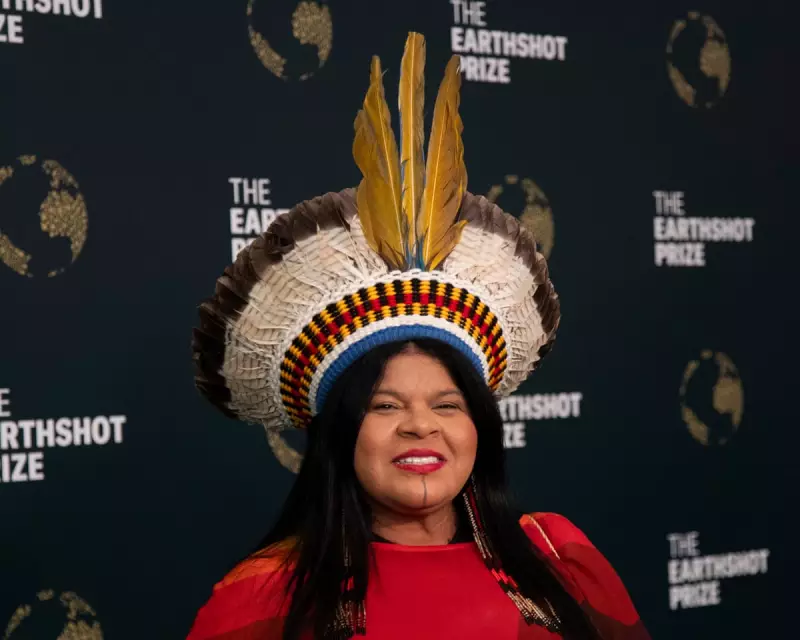
Brazil's minister for Indigenous peoples has issued a powerful call for countries to acknowledge the demarcation of Indigenous territories as a crucial element in combating the climate crisis.
Protests Disrupt Climate Talks
Sonia Guajajara, speaking to the Guardian at the COP30 summit in Belém, emphasised that civil society must join the fight to protect these lands from expanding mining interests. Her comments came just before peaceful protests by Indigenous groups temporarily halted conference proceedings on Friday morning.
Demonstrators gathered outside the main entrance, effectively blocking delegates' access for approximately two hours. Despite a significant police and military presence, the disruption remained peaceful, with attendees eventually using a side entrance until normal access resumed.
Mining Threat to Indigenous Territories
Guajajara, a longtime Indigenous activist appointed by President Lula da Silva, warned that the very minerals needed for renewable energy technology are putting Indigenous communities at risk. The Tapajós and other major Amazon rivers have already suffered mercury contamination from gold extraction, while concerning moves are underway to open up Yanomami territory - Brazil's largest Indigenous lands - to industrial mining.
"We are working hard here to prevent the exploitation of these territories," Guajajara stated. "Our federal constitution guarantees the exclusive right to the territories of Indigenous peoples... We have to talk and persuade congress not to approve these plans."
Tropical Forest Fund Faces Funding Challenges
The minister highlighted the Tropical Forest Forever Facility (TFFF) as one of the summit's potential major achievements for the Amazon and its inhabitants. This innovative fund aims to support countries with extensive forested areas in keeping them intact, addressing a critical gap in current forestry finance that typically only assists areas already experiencing deforestation.
Brazil hopes the COP30 summit will significantly boost the TFFF, which has currently secured about $5.5bn (£4.2bn) in pledges. President Lula aims to raise $25bn from public funds, potentially leveraging an additional $100bn from financial markets.
However, the initiative has faced setbacks, particularly from the United Kingdom. Despite helping design the Brazilian scheme and having City of London consultants develop initial financial models, the British government decided against becoming an initial investor.
"It is regrettable that Britain is not contributing resources," Guajajara commented. "They were signalling, before the Cop, that they would certainly contribute resources."
Climate summit veterans noted this decision has cooled relations between Brazil and the UK, complicating cooperation between two nations that should be collaborating closely for a successful COP30 outcome.
Environment minister Marina Silva struck a more diplomatic tone, expressing hope that the UK would eventually recognise the TFFF as a worthwhile investment.
China, another expected contributor, has expressed support but hasn't quantified its commitment. Silva suggested this hesitation might stem from China's longstanding position that industrialised nations bear primary financial responsibility for addressing the climate crisis.
"For a long time we have had to fight developed countries to fulfil their obligations under the Paris agreement, which has not happened until today," Silva noted. However, she emphasised that the TFFF represents not a donation but an investment opportunity.



