
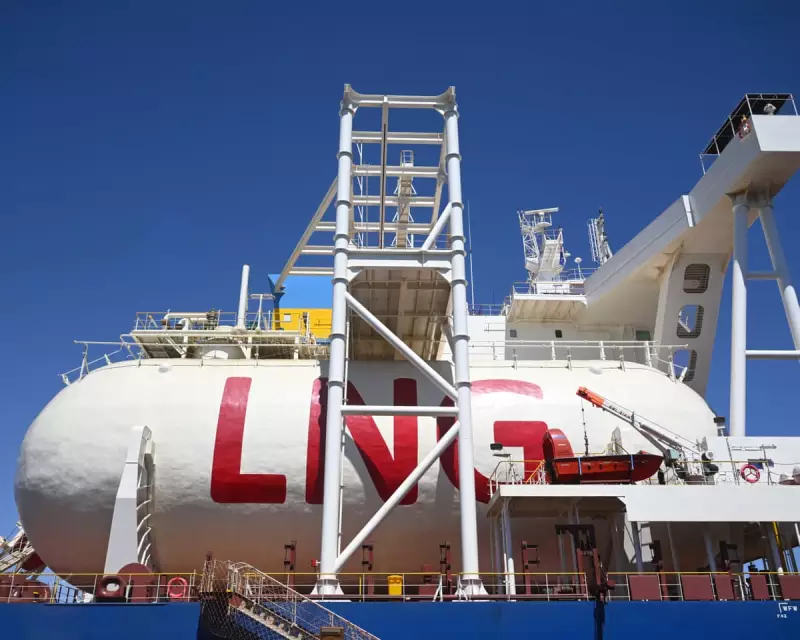
The Australian government faces mounting pressure over its contradictory energy policies as it prepares to lead crucial global climate negotiations next year. Prime Minister Anthony Albanese's continued support for fossil gas expansion directly conflicts with international climate targets and warnings from the International Energy Agency.
Global Climate Momentum Meets Australian Contradictions
Following the recent COP30 climate talks in Belém, Brazil, Australia is set to take over negotiations at next year's COP31 in Turkey under a deal with the host nation. While the Belém conference fell short of delivering a bold fossil fuel phase-out roadmap, it did secure endorsements from more than 80 countries - including Australia - for the "Belém declaration" on transitioning away from fossil fuels.
Brazilian President Luiz Inácio Lula da Silva has committed to advancing this declaration throughout the year before handing over to Australia. However, serious questions emerge about whether the Australian government possesses the willingness to maintain this momentum given its domestic energy stance.
IEA Report Exposes Gas Expansion Risks
During COP30, the International Energy Agency released its annual report containing alarming findings about global gas markets. The agency's net zero emissions pathway clearly states that no new long-lead oil and gas projects are needed and fossil gas use must decline rapidly to 40% below current levels by 2035.
Most concerning is the IEA's warning about a massive glut of liquefied natural gas supply developing worldwide, consistent with a policy scenario that would heat the planet by 3°C by 2100. This contradicts Australian government claims that gas is essential for the energy transition.
Adding to concerns, a leaked Deloitte draft report to the Western Australian government warned that Australia's gas export boom to Asia would crowd out renewable energy development and lock in carbon emissions for decades.
Albanese's Contradictory Statements
Prime Minister Anthony Albanese recently made conflicting statements about Australia's gas future. He claimed Australian gas would be needed as backup for renewables while simultaneously suggesting this "firming" wouldn't require new gas fields and should lead to phasing out massive export programs approved until 2070.
These contradictory positions create significant credibility problems for Australia's international climate leadership. The reality, according to energy experts, is that much less gas will be needed for grid stability as battery technologies rapidly take over the market.
Carbon capture and storage, often touted as a solution for fossil fuel emissions, has also been exposed as inadequate by the IEA. Research indicates that if Australia and Asian countries proceed with CCS expansion plans, they could add an extra 25 billion tonnes of CO2 emissions to the atmosphere by 2050.
Climate Impacts Already Visible
The urgency of phasing out fossil fuels is underscored by recent climate impacts across Australia. Reports have emerged of massive coral mortality at Ningaloo Reef caused by climate change-fueled marine heatwaves.
Scientists emphasize that preserving Australia's unique ecosystems - including bushland, forests, coral reefs and marine life - depends entirely on limiting warming to 1.5°C. Achieving this requires reaching net zero CO2 emissions globally within approximately 25 years, which physics dictates can only happen through rapid fossil fuel phase-out.
As climate catastrophe intensifies globally, the Albanese government's contradictory energy policies are likely to face increasing scrutiny from citizens witnessing both environmental breakdown and political failure on the world stage.



