
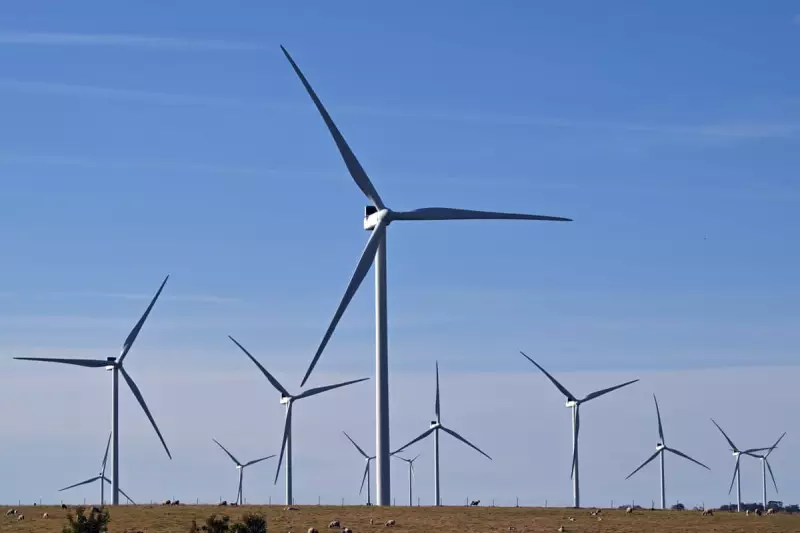
New government data reveals Australia achieved a significant reduction in greenhouse gas emissions during the last financial year, largely driven by renewable energy displacing coal-fired power.
Renewables Lead the Charge in Emissions Reduction
Official figures show Australia's greenhouse gas emissions fell by 2.2% or 9.9 million tonnes last financial year. The Albanese government has labelled this the largest annual drop linked to reduced fossil fuel use outside of the Covid-19 pandemic period.
Approximately half of this reduction is attributed to the rapid expansion of solar and wind generation, which is systematically pushing coal power out of the national electricity market. This shift resulted in a 3.3% decrease, or 5 million tonnes, in pollution from the power generation sector alone.
A landmark achievement was recorded as the proportion of electricity derived from renewable sources across the entire year surpassed 40%. This successfully reversed a brief rise in climate pollution from the power sector witnessed the previous year.
Mixed Results Across Other Sectors
While the energy sector showed promising progress, the report presented a varied picture across the economy. Further emissions reductions were recorded from underground coalmines, heavy industry, farming, and households using less gas for heating and cooking.
However, not all trends were positive. Pollution from the transport sector continued its upward trajectory. This increase is linked to greater use of diesel-powered vehicles and a rebound in domestic air travel as pandemic restrictions eased.
Climate Change and Energy Minister Chris Bowen is expected to argue that these figures demonstrate the impact of Labor's policies since its 2022 election. This stance is contested by both the Coalition and the Greens, who claim pollution has either increased or stagnated under the current government.
The Uphill Battle to Meet Future Climate Targets
Despite the progress, the annual emissions total of 437.5 million tonnes leaves Australia 28.5% below 2005 levels. Analysts suggest this rate of reduction is insufficient to comfortably meet the nation's ambitious climate targets.
An accompanying emissions projection report is expected to indicate that the government's current policies will leave it short, though still within reach, of its 2030 target of a 43% cut compared to 2005 levels. The Climate Change Authority has previously stated that reaching this goal requires emissions to be cut by 15 million tonnes annually over the next five years.
The challenge is even greater for the recently announced 2035 target, which demands a reduction of 62% to 70%. Meeting even the lower end of this commitment will require a significant revamp of existing policies and the introduction of new, robust measures.
In a statement, Minister Bowen pointed to policies like the renewable energy underwriting program and home battery subsidies, asserting the government is on track to meet its targets "if we stay the course and continue to lift our efforts." He highlighted that renewable energy provided more than half of the electricity in the national grid in October, signalling the ongoing transformation of Australia's energy landscape.



