
Australian Think Tank Proposes Major Fossil Fuel Levy to Fund Climate Action
A groundbreaking report from the Superpower Institute has outlined a comprehensive plan to introduce a "polluter pays levy" on fossil fuel companies operating in Australia. The proposal, backed by prominent economists and former public servants, suggests this could generate more than $35 billion annually while providing substantial compensation to households.
Economic Heavyweights Back Transformative Climate Policy
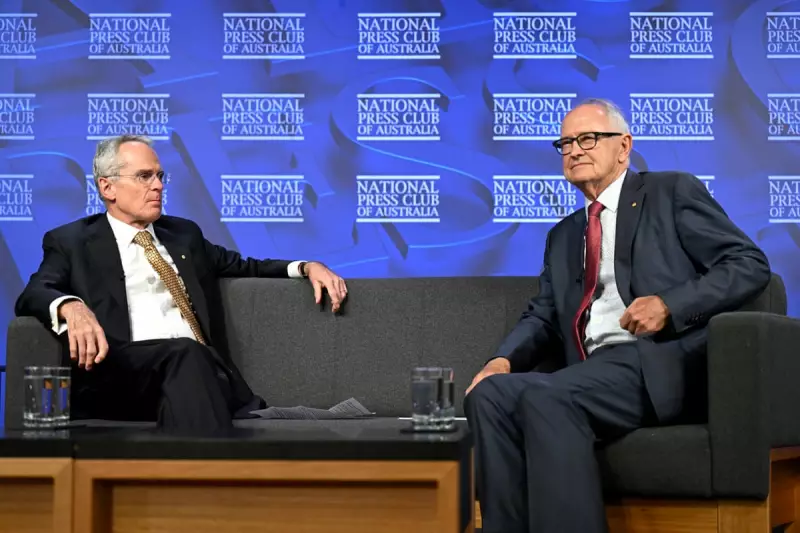
The analysis has been overseen by Ross Garnaut, a longtime Labor adviser and director of the Superpower Institute, alongside Rod Sims, former chair of the Australian Competition and Consumer Commission. The report also enjoys support from Ken Henry, who led federal Treasury for a decade until 2011, lending significant credibility to the proposed financial mechanisms.
According to the institute's detailed modelling, the dual levy system would consist of two main components. First, a "polluter pays levy" would apply to companies that extract or import fossil fuels consumed within Australia. Second, a "fair share levy" would substantially increase the tax paid by local gas producers, raising their effective tax rate from approximately 30% to just under 60%.
Household Compensation and Budget Restructuring
The proposal includes significant compensation mechanisms for Australian households, who would receive hundreds of dollars through two primary channels:
- A universal energy compensation payment available to all households
- A targeted additional household support package for those most affected
These payments would be frontloaded over the next decade, gradually declining as households transition from fossil fuel dependence to clean electricity for their homes and vehicles. The report suggests that after this transition period, households would actually face lower energy costs than when they relied on traditional fossil fuels.
Rod Sims emphasised that approximately $5 billion annually should be dedicated specifically to household cost-of-living relief, with the remaining revenue addressing what he described as a "long-term structural budget deficit" that is more severe than commonly recognised. Additional funds could support social policies and green industry development.
Political Context and Public Support
The report represents a significant development in Australia's long-running debate about carbon pricing, which was abolished twelve years ago by then Prime Minister Tony Abbott. Despite Labor's historical reluctance to revisit emissions pricing due to political concerns, the institute argues that the economic and climate landscape has fundamentally changed.
Sims outlined three possible paths forward for Australia:
- Missing emissions targets under current policies
- Ramping up existing policies while increasing consumer costs
- Implementing the polluter pays approach to accelerate emissions reductions
The institute commissioned polling from Redbridge Group that revealed 68% of Australians support introducing a polluter levy on major greenhouse gas emitters, suggesting potential public backing for such a policy shift.
Implementation Details and Revenue Projections
The proposed pollution levy would initially start at $17 per tonne of carbon dioxide, gradually increasing until it aligns with the European Union carbon price by 2034. The institute estimates that about 60 companies would be affected, covering approximately 80% of Australia's emissions.
Revenue projections indicate the two levies would collect an average of $35.6 billion annually between 2026 and 2050, starting at less than $20 billion in early years and rising to over $40 billion after 2030. The modelling suggests the gas levy would be economically neutral, not affecting industry investment returns or export prices.
Ken Henry, while not directly involved in the analysis, endorsed the report's credibility and recommendations. He noted that current political conditions present an opportunity for major policy change, with many Australians recognising that "some big things need to happen" and that national benefits have been "overly concentrated in a few hands."
The Superpower Institute's proposal represents one of the most comprehensive attempts to revive carbon pricing in Australia since its abolition, combining climate action with economic restructuring and household support in a politically sensitive package.



