
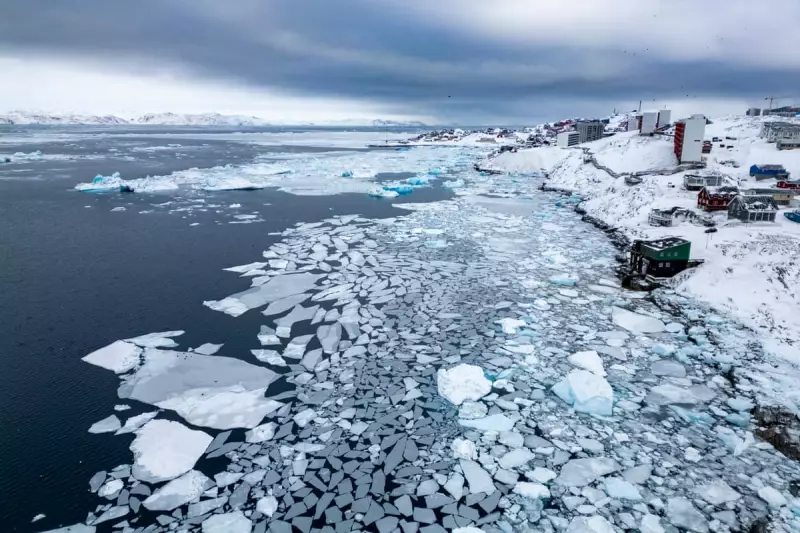
The Arctic, a critical global climate regulator, has just endured its hottest year in modern history, with scientists warning that the very concept of winter is being transformed in the planet's northernmost region.
A Year of Unprecedented Heat and Rain
According to the US National Oceanic and Atmospheric Administration (Noaa), temperatures across the entire Arctic from October 2024 to September 2025 were the highest in 125 years of record-keeping. This period marks the latest milestone in a stark trend, with the last decade now ranking as the ten warmest on record for the Arctic.
The region is warming at an alarming rate, heating up as much as four times faster than the global average, a direct consequence of fossil fuel burning. This year was also a record for precipitation, but much of it is falling as rain rather than snow. The extent of snow cover in the Arctic in June is now half of what it was sixty years ago.
Sea Ice in Steep Decline
Noaa's annual Arctic report card delivered more sobering news: the maximum extent of sea ice in 2025 was the lowest in the 47-year satellite record. This continues a longer, devastating trend that has seen the oldest and thickest Arctic ice decline by more than 95% since the 1980s.
Scientists note that exceptional warmth, once confined to summer, is now evident in the heart of winter, severely impacting annual sea ice growth. In recent weeks, sea ice extent has again been the lowest on record, setting the stage for another diminished maximum next year.
"We are seeing changes in the heart of winter, when we expect the Arctic to be cold. The whole concept of winter is being redefined in the Arctic," said Matthew Langdon Druckenmiller, an Arctic scientist at the National Snow and Ice Data Center and an editor of the report card.
Cascading Impacts for Wildlife and the World
The consequences of this rapid transformation are profound and immediate for Arctic ecosystems and communities. Rain falling on snow can freeze into a hard barrier, preventing animals like caribou from foraging and creating hazardous travel conditions for people. Retreating glaciers also pose a direct threat, as seen with dangerous flooding in Juneau, Alaska, this year.
On a global scale, the loss of reflective sea ice opens up vast areas of dark ocean that absorb more heat, accelerating global warming. While melting sea ice doesn't directly raise sea levels, the loss of land ice does. Noaa reported that the Greenland ice sheet lost a staggering 129 billion tons of ice in 2025, contributing directly to sea-level rise that will threaten coastal cities worldwide for generations.
"We are seeing cascading impacts from a warming Arctic," said climate scientist Zack Labe of Climate Central. "Coastal cities aren't ready for the rising sea levels... We can point to the Arctic as a far away place but the changes there affect the rest of the world." The transformation of the 'world's refrigerator' is a clear and present signal of the escalating climate crisis, with impacts that will resonate far beyond the polar circle.



