
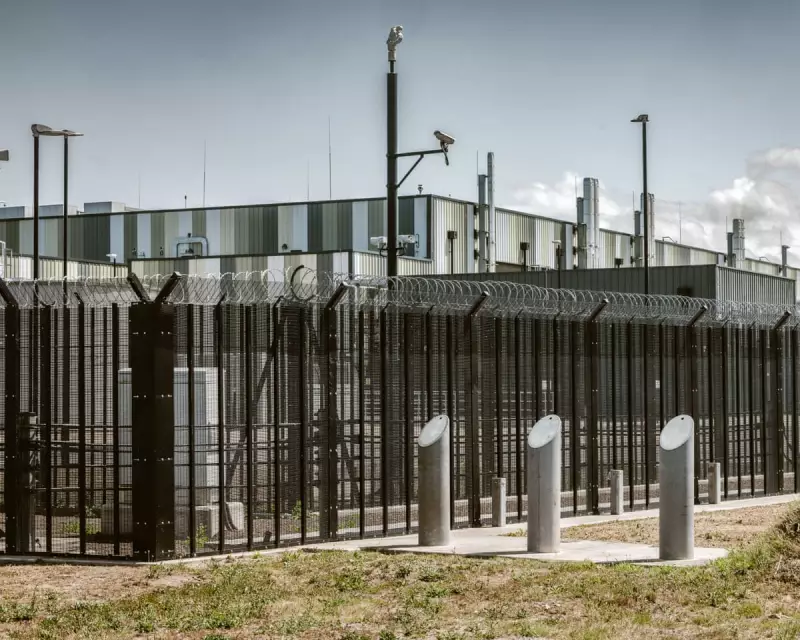
The explosive growth of artificial intelligence in 2025 has come with a staggering environmental price tag, according to new research. The technology's carbon dioxide emissions last year were equivalent to the entire output of New York City, while its thirst for water now exceeds global demand for bottled water.
The Staggering Scale of AI's Environmental Footprint
The figures, compiled by Dutch academic and Digiconomist founder Alex de Vries-Gao, represent the first attempt to measure the specific impact of AI systems, rather than datacentres in general. This distinction has become crucial as the use of chatbots like OpenAI's ChatGPT and Google's Gemini soared in 2025.
De Vries-Gao's study, published in the journal Patterns, estimates that the 2025 carbon footprint of AI systems could be as high as 80 million tonnes of greenhouse gases. This is also equivalent to more than 8% of global aviation emissions.
Perhaps more startling is the water consumption. The research found AI-related water use could have reached 765 billion litres in 2025. De Vries-Gao stated this is the first time AI's water impact has been estimated, showing it alone is more than a third higher than previous estimates for all datacentre water use combined.
Society Footing the Bill, Campaigners Warn
The academic raised urgent questions about who bears the cost of this environmental damage. "At the moment society is paying for these costs, not the tech companies," he said. "The question is: is that fair? If they are reaping the benefits of this technology, why should they not be paying some of the costs?"
His call for stricter transparency requirements is echoed by advocacy groups. Donald Campbell, director of advocacy at the UK non-profit Foxglove, said: "This is yet more evidence that the public is footing the environmental bill for some of the richest companies on Earth." He warned the problem is escalating, with a "datacentre construction frenzy, driven by generative AI" only just beginning.
Campbell highlighted the UK situation, noting an estimated 100-200 new 'hyperscale' facilities in the planning system. Just one such facility can generate climate emissions matching several international airports.
Global Datacentre Demand Set to Skyrocket
The research adds weight to warnings from the International Energy Agency (IEA). The IEA has said AI-focused datacentres already draw as much power as energy-intensive aluminium smelters. It projects that global datacentre electricity consumption is expected to more than double by 2030.
The largest AI datacentres being built today will each consume electricity equivalent to 2 million households. The United States accounts for the largest share of this consumption at 45%, followed by China (25%) and Europe (15%).
Specific projects underscore the scale. In the UK, the largest planned datacentre, at a former coal power station site in Blyth, Northumberland, is expected to emit over 180,000 tonnes of CO2 annually at full operation – equal to the output of more than 24,000 homes.
Globally, the picture is complex. In India, where $30 billion (£22.5bn) is being invested in datacentres, fears are growing that unreliable grid power will lead to massive diesel generator farms for backup, creating what consultancy KPMG called a "massive ... carbon liability".
De Vries-Gao criticised the current state of environmental reporting by technology firms, noting it is often impossible to isolate AI's impact from general datacentre operations. He pointed out that when Google reported on its Gemini AI's impact, it did not account for water used in generating the electricity needed to power it.
Google has reported reducing its datacentres' energy emissions by 12% in 2024 through new clean energy. However, the company admitted this summer that achieving its climate goals has become "more complex and challenging" and cited the slow deployment of carbon-free energy as a key hurdle.
The research presents a stark contradiction: as AI propels society into a new digital age, its foundational infrastructure is creating an environmental burden of historic proportions, currently borne not by its corporate architects but by the public and the planet.



