
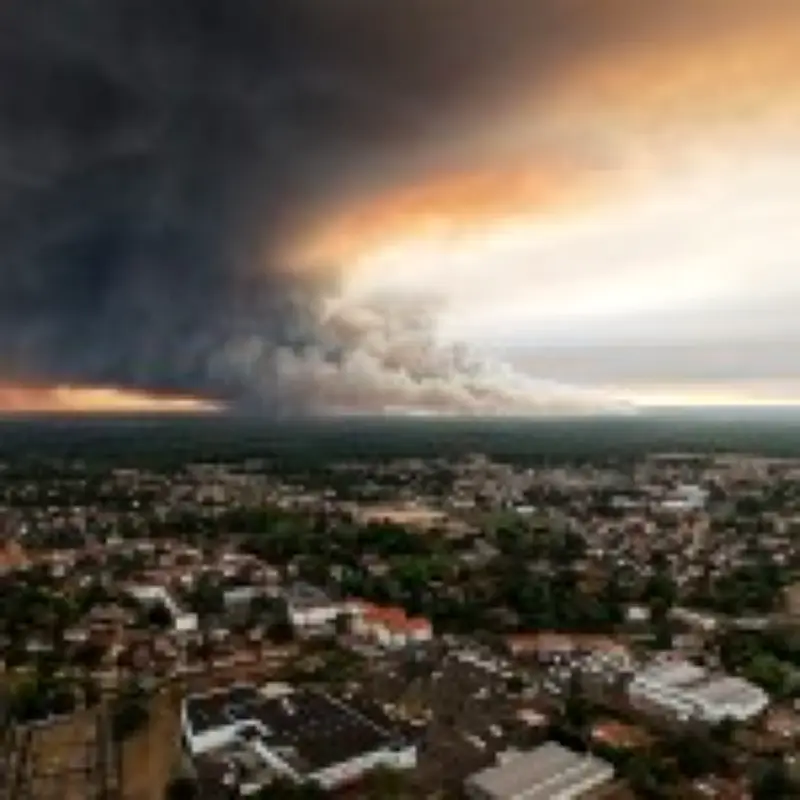
Raging wildfires have forced more than 80,000 people to flee their homes in France and Spain, with some residents escaping by boat as flames swept through the Cap Ferret peninsula on France's Atlantic coast. The fires, described as 'apocalyptic,' prompted authorities to order a total evacuation of the peninsula, a popular tourist destination during the summer season.
Mass Evacuations in France
Around 63,000 people were evacuated from the Cap Ferret area alone, according to French officials. France's Interior Minister Laurent Nunez stated that 40,000 people were evacuated in the Gironde department and 23,000 in the Landes. Both France and Spain have requested assistance from fellow European Union members to combat the blazes.
Laurent Moretti, a resident in the town of Arès, described the situation: 'It's quite impressive and even frightening. An evacuation on this scale has never happened before. All we really hope is that the firefighters can quickly get it under control.'
Firefighting Efforts and EU Reinforcements
Hundreds of firefighters have been deployed, with additional ground and aerial reinforcements sent Friday to tackle the blaze. Another major wildfire further south down the coast remained uncontained due to strong winds. Authorities believe both fires were accidental. French President Emmanuel Macron announced that France will receive EU reinforcements, including two Croatian Canadair firefighting aircraft, two Portuguese Air Tractor aircraft, and two heavy-lift Black Hawk helicopters from the Czech Republic and Slovakia.
Spain Declares National Emergency
In Spain, more than 10,000 people were evacuated from towns in the mountains west of Madrid as firefighters worked to prevent three fires in the region and neighboring Avila province from merging, Interior Minister Fernando Grande-Marlaska said. The area, densely populated with many second homes belonging to Madrid residents, prompted the government to declare a national emergency for the first time due to a wildfire. 'The aggressive nature of the fires and hot, windy weather also prompted the move,' Grande-Marlaska added. The last time Spain declared the same level of emergency alert was during a massive nationwide power blackout last year. Spain has also sought assistance from the EU, the Interior Ministry confirmed.
Climate Change Context
Southern Europe has experienced multiple large fires this summer. Europe is the world's fastest-warming continent, with temperatures increasing twice as quickly as the global average since the 1980s, according to the European Union's Copernicus Climate Change Service. Scientists warn that climate change is exacerbating the frequency and intensity of heat and dryness, making the region more vulnerable to wildfires.



