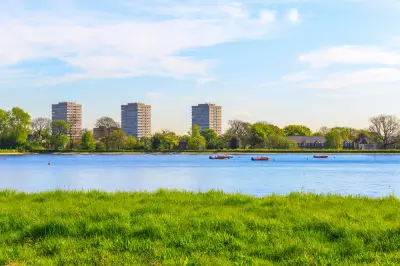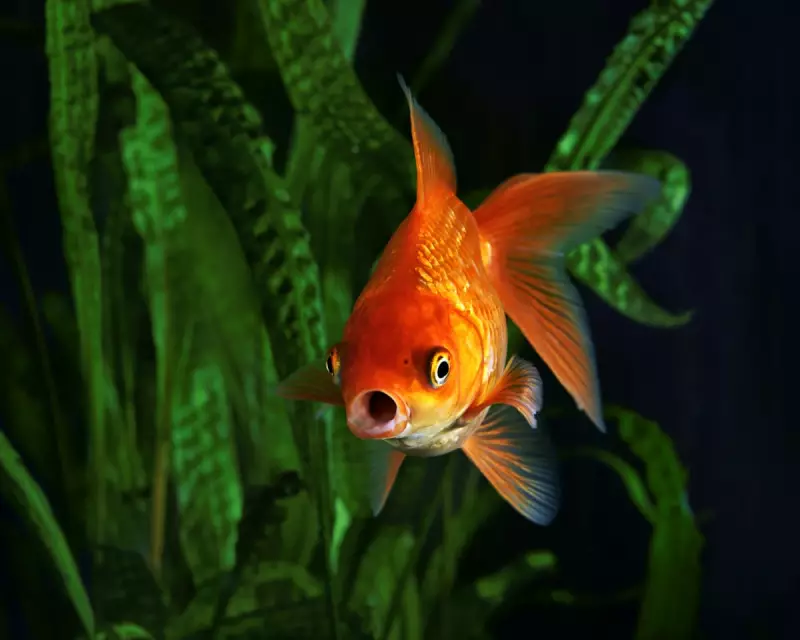
Authorities in Ottawa are confronting what they describe as a 'mindblowing' ecological crisis, as thousands of feral goldfish have completely taken over a city stormwater pond.
The Canadian capital's officials have announced plans to cull the invasive species from Celebration Park, where the situation has escalated dramatically. This decision highlights the pervasive spread of goldfish throughout the region's waterways.
The Scale of the Invasion
Earlier this year, city staff undertook a massive removal operation, extracting approximately 5,000 goldfish from Celebration Park. Despite this effort, officials believe as many as 1,000 more fish remain in the water, with the true population potentially being far higher.

Councillor Riley Brockington, who represents the area, expressed his astonishment to CBC News: 'The fact that we've had approximately 6,000 fish in this pond, in this year, is mind-blowing. It's just a number that's difficult for me to wrap my head around.'
Breeding Out of Control
The goldfish population explosion is driven by their remarkable reproductive capacity. A single mature female goldfish can lay more than 100,000 eggs, creating the potential for exponential population growth.
Carleton biology professor Steven Cooke suggested the actual population could dwarf official estimates. He speculated that there might be millions of tiny young goldfish in the pond that haven't been detected, indicating the problem could be far worse than currently understood.
Ecological Consequences and Climate Impact
The goldfish scourge originates from pet owners deliberately releasing their aquarium fish into local waters. Native to Asia, these fish transform dramatically when introduced to natural environments.
Goldfish can grow to immense sizes in large bodies of water, sometimes reaching over 1ft long after being released at just two or three inches. They have few natural predators, reproduce rapidly, and severely damage their new ecosystems by:
- Displacing native species
- Harming plant growth by churning up pond waters
- Thriving in turbid, low-oxygen environments where other species cannot survive
Climate change has exacerbated the problem, as warming water temperatures create more hospitable environments for goldfish populations to spread through local waterways and into the Great Lakes.
Shelby Riskin, an ecologist at the University of Toronto, noted that stormwater ponds have increasingly become breeding grounds for released pet fish. She described one pond in Toronto's Don Valley that 'at times seems no larger than a puddle - and yet at certain times of the year it's just filled with goldfish.'
The situation has become so extreme that Riskin compared it to 'that Jeff Goldblum quote from Jurassic Park - life really does always find a way,' noting the fish's ability to survive even in polluted waters with 'toxic vape packets floating by.'
Authorities across Canada and the United States are pleading with aquarium owners to stop releasing pet fish into waterways. Minnesota officials recently removed nearly 50,000 goldfish from local waters, indicating this is a widespread North American problem requiring immediate attention and public awareness.