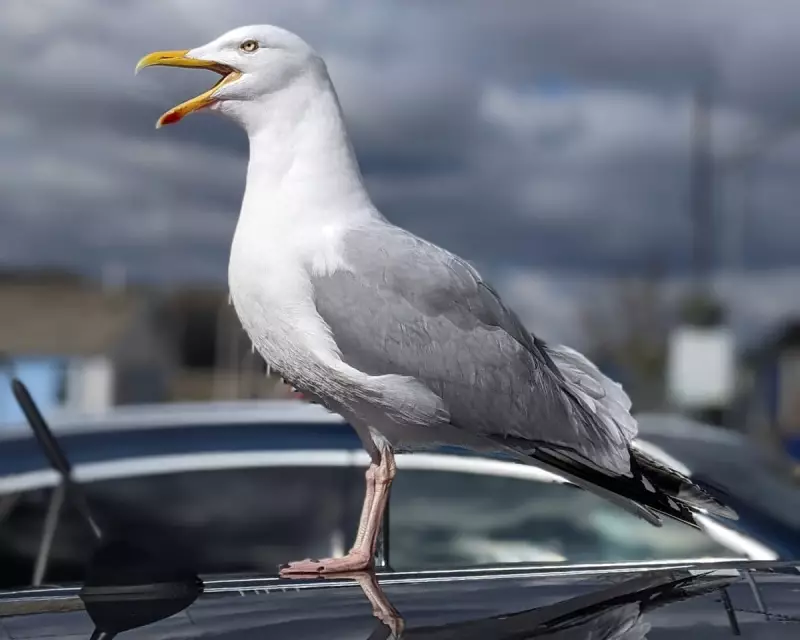
If you've ever had a seaside picnic ruined by a bold seagull eyeing your chips, scientists may have found the perfect solution. Forget frantic hand-waving or a hasty retreat – a firm shout is your best defence, according to new research.
The Science Behind the Scare
Animal behaviourists from the University of Exeter conducted a unique experiment to establish the most effective method for countering the feathery threat of herring gulls. The team placed a tempting portion of chips in locations frequented by the birds across nine seaside towns in Cornwall.
When a gull approached the food, researchers played one of three recordings: a male voice shouting aggressively, the same male voice speaking calmly using the same words, or the neutral birdsong of a robin. The volume for the human voices was kept identical, isolating the tone as the key variable.
Shouting Versus Speaking: The Results
The study, which tested 61 gulls, yielded clear results. When faced with the shouting voice, nearly half (almost 50%) of the gulls flew away within one minute.
In contrast, only 15% of gulls exposed to the speaking voice took flight, though most of the others did walk away from the food, suggesting they still sensed a potential danger. The robin song had almost no effect, with a striking 70% of gulls staying put by the chips.
Neeltje Boogert, from the University's Centre for Ecology and Conservation, explained the nuance: "We found that urban gulls were more vigilant and pecked less at the food container when we played them a male voice, whether it was speaking or shouting. But the difference was that the gulls were more likely to fly away at the shouting and more likely to walk away at the speaking."
A Breakthrough in Animal Communication
This research is believed to be the first of its kind to demonstrate that wild, non-captive animals can perceive differences in the acoustic properties of human speech, even when the volume remains the same.
"Normally when someone is shouting, it's scary because it's a loud noise," said Boogert. "But in this case all the noises were the same volume and it was just the way the words were being said that was different. It seems that gulls pay attention to the way we say things."
This ability has previously been observed mainly in domesticated species like dogs and horses, making the gull findings particularly significant.
The study also highlights a peaceful method of deterrence. Herring gulls are a species of conservation concern, and this research shows that physical contact or harm is not necessary to protect your lunch. The team now plans to investigate whether a woman's voice has a similar effect.
Interestingly, the research challenged assumptions about gull boldness. Contrary to expectations, gulls in smaller, highly touristy towns like St Ives were keener to approach the chips than those in more populated areas like Penzance, possibly because they are more accustomed to foraging for human food.