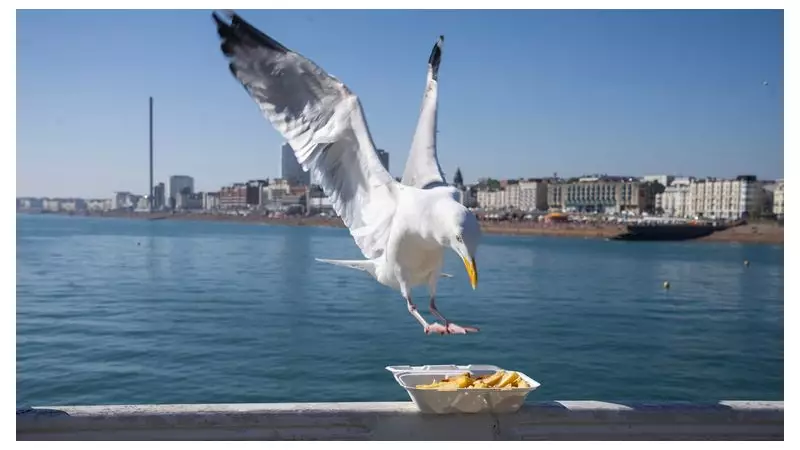
Scientists believe they have solved a perennial problem for residents and visitors to British coastal towns: how to stop seagulls from pinching your food. The surprisingly simple solution, according to new research, is to raise your voice.
The Chip Box Experiment
Researchers from the University of Exeter conducted a study involving 61 herring gulls across nine seaside towns in Cornwall. The team aimed to find reliable methods to protect a tempting box of chips left on the ground. To do this, they played different recorded sounds to the birds, all adjusted to the same volume.
The sounds included a male voice shouting the phrase, "No, stay away, that's my food," the same voice speaking the words calmly, and the neutral birdsong of a robin. The results were striking.
Shouting vs. Speaking: What Worked?
The experiment revealed a clear winner in the battle against avian food thieves. When exposed to the shouting recording, half of the gulls flew away within one minute.
In contrast, only 15% of gulls left the area when they heard the same phrase spoken in a normal tone. While the remaining gulls in this group didn't fly off, they did walk away from the food, suggesting they still sensed a potential threat.
The robin's song proved to be the least effective deterrent, with a significant 70% of gulls choosing to stay near the food for the entire duration of the experiment.
Why Human Tone Matters to Gulls
Dr. Neeltje Boogert from the University of Exeter's Centre for Ecology and Conservation explained the key finding. "The difference was that the gulls were more likely to fly away at the shouting and more likely to walk away at the speaking," she said.
She added a practical tip for anyone facing a hungry gull: "So when trying to scare off a gull that's trying to steal your food, talking might stop them in their tracks, but shouting is more effective at making them fly away."
Since all noises were played at an identical volume, the study suggests that gulls can detect subtle differences in the acoustic properties of human voices. This ability to interpret the *way* we say things was previously thought to be limited to domesticated animals like dogs and horses, not wild birds.
The research, which utilised five male volunteers for the recordings, also highlights that physical aggression is not needed to effectively scare the birds off, offering a humane solution to a common seaside nuisance.