Rio's Banana Growers Preserve World's Largest Urban Forest Through Agroforestry
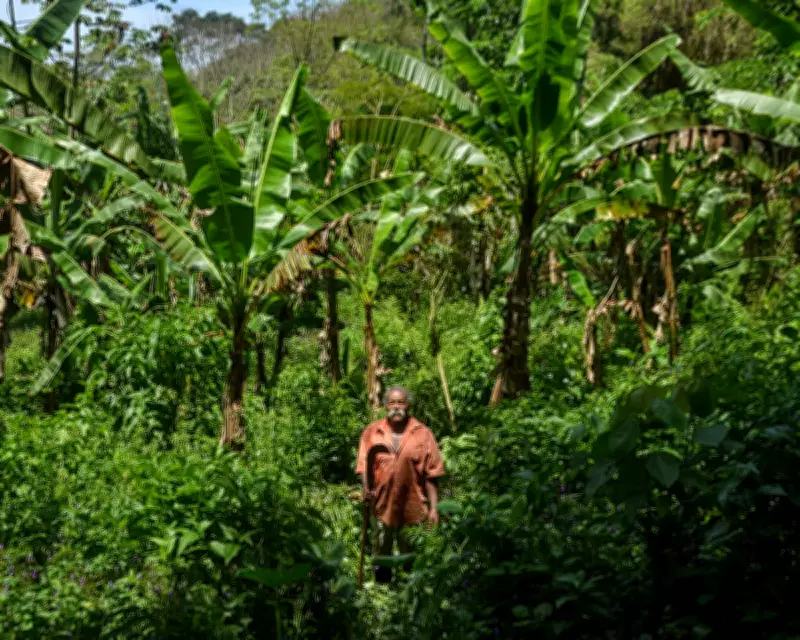
In the hills of Vargem Grande, within Rio de Janeiro's southwest zone, the rhythmic sound of scythes wielded by brothers Jorge and Ubirajara Cardia echoes through the forest. These quilombola farmers from the Cafundá Astrogilda community harvest bananas using methods passed down through generations, maintaining ancestral traditions while protecting one of the world's most significant urban ecosystems.
The Living Tapestry of Pedra Branca State Park
Every week, the Cardia brothers carefully select bunches of prata, maçã, and Cavendish bananas, cutting them down and transporting their harvest on muleback along 5-kilometer forest paths originally opened by Indigenous Tupinambá people and enslaved African workers. Their abundant banana groves form part of the designated Pedra Branca state park conservation area, where traditional farming practices guarantee both financial stability and food security for local communities.
Through an agricultural culture refined over centuries and gradually evolving into a sophisticated agroforestry system, these banana growers actively restore and preserve the park's biodiversity. As part of Unesco's Atlantic Forest Biosphere Reserve, this 12,500-hectare forest spans 17 Rio neighborhoods and holds the distinction of being the world's largest urban forest.

"In agroforestry, banana crop management requires less labor, and we save time since we only need to prune the banana plants," explains Jorge Cardia. "Nature, following its own rhythm, handles everything else."
From Colonial Import to Conservation Tool
Originally from Southeast Asia and the western Pacific, bananas arrived in Brazil with Portuguese colonizers during the 16th century. Today, within Pedra Branca state park, banana plants have become so numerous and robust they resemble a living green tapestry, weaving among native and foreign tree species including embaúba, carrapeta, jacatirão, and jabuticaba.
This remarkable landscape exists exclusively because of agroforestry, an agricultural system that promotes deep integration of crop species, animals, and trees, operating in direct opposition to industrial agribusiness and monoculture practices. "I call it 'agriculture of life' because this method of growing food cherishes the forest, the water, and the spaces we inhabit," says Jorge, surrounded by flavorful organic bananas.
Community Markets and Sustainable Living
Sarah Rubia Nunes, who comes from a family of banana growers, manages AgroVargem, an organization of small-scale farmers living and producing within the state park area. They operate a local street market where they sell approximately 250-300 kilograms of bananas weekly. "Agroecology has evolved beyond mere crop cultivation; it represents a complete lifestyle choice," Nunes emphasizes. "It's about consciously selecting the world we want to inhabit."
If the landscape once featured distinct separation between banana groves and forest areas, as Ubirajara recalls, "everything has gradually blended" over time. Today, banana growers serve as genuine caretakers of the urban forest, though they haven't always been recognized as conservation allies.
From Conflict to Recognition
When Pedra Branca state park was established as a conservation area in 1974, its environmental management plan initially prohibited farmers from using the land or planting exotic species like bananas, which were considered potentially harmful to native flora. Authorities planned to relocate residents outside the park boundaries, but communities remained, gradually adapting their practices to the protected environment.
Over decades, the ecosystem itself adjusted. Shade-intolerant species such as embaúba and grandiúva thrived alongside light-demanding banana plants, giving rise to the region's distinctive agroforestry systems.

Annelise Fernandez, an environmental sciences professor at the Rural Federal University of Rio de Janeiro, explains that tension between authorities and park residents stems from reluctance to acknowledge traditional communities' role in ecosystem preservation. "Parks are typically created unilaterally, often causing forced eviction and community displacement," Fernandez notes. "A more effective approach reconciles land rights with environmental conservation. Frequently, these areas remain preserved enough to become parks precisely because communities have lived harmoniously with ecosystems for generations."
Nunes highlights traditional banana growers' conservation contributions: "They have never destroyed the forest. Quite the opposite—through subsistence management, they actively preserve it."
Scientific Validation and Ongoing Challenges
According to the United Nations Food and Agriculture Organization, agroforestry systems can achieve up to 80% of natural forest biodiversity while improving soil health, water management, and livelihood resilience, contributing significantly to climate change mitigation.
After decades advocating for land rights, the State Institute of the Environment recognized traditional farmers as conservation agents in 2010. In November 2023, President Luiz Inácio Lula da Silva issued a national decree establishing a framework for coexistence between conservation efforts and quilombola communities' ways of living, culture, and land integrity.
Nevertheless, banana growers face mounting challenges from real estate speculation around Pedra Branca's borders, where new middle-class condominiums pressure forest resources and threaten Atlantic Forest remnants along with Rio's west zone waterways.
"If asked what most harms the forest, I'd identify real estate speculation surrounding the park, which drains water resources," states Luz Stella Rodríguez Cáceres, an anthropology and geography specialist from Rio de Janeiro Federal University. "Condominiums literally canalize the park's rivers."
Global Recognition and Future Resistance
To better protect Pedra Branca farmers, Rodríguez Cáceres advocates for their inclusion in the FAO's Globally Important Agricultural Heritage Systems (GIAHS), which would grant formal recognition as income-generating communities and forest guardians. "This represents a crucial framework for food heritage and agroforestry systems," Rodríguez emphasizes.
For Nunes, preserving land and sustainable community lifestyles constitutes an act of resistance. "Agro-ecological family farming resists the delusional expansion of agribusiness and monoculture," he asserts, recalling pandemic-era market shortages and highlighting pesticide abuse in industrial agriculture. "During crises, it's family farming that feeds cities."
Through their dedication to ancestral practices adapted for modern conservation, Rio's banana growers demonstrate how traditional knowledge and sustainable agriculture can protect vital urban ecosystems while maintaining cultural heritage and community resilience against mounting environmental and development pressures.