In a race against time to document Earth's vanishing biodiversity, scientists have unveiled a list of ten "weird and wonderful" new species of plants and fungi discovered in 2025. The Royal Botanic Gardens, Kew, and its international partners named a total of 125 new plants last year, highlighting both the wonder of discovery and the urgent threat of extinction.
A Catalogue of Curiosities: From Zombies to Fire Demons
The newly described species read like a page from a fantasy novel. A zombie fungus (Purpureocillium atlanticum) was found in the Atlantic rainforests of Brazil. This gruesome organism infects trapdoor spiders in their burrows, envelops them in white threads, and then sprouts a fruiting body that pushes up through the spider's own trapdoor to release its spores.
From Peru comes a spectacular, flame-like shrub named Aphelandra calciferi, after Calcifer, the fire demon in the beloved Studio Ghibli film Howl's Moving Castle. Scientists believe its bright orange-red flowers give it great potential as a future ornamental plant.

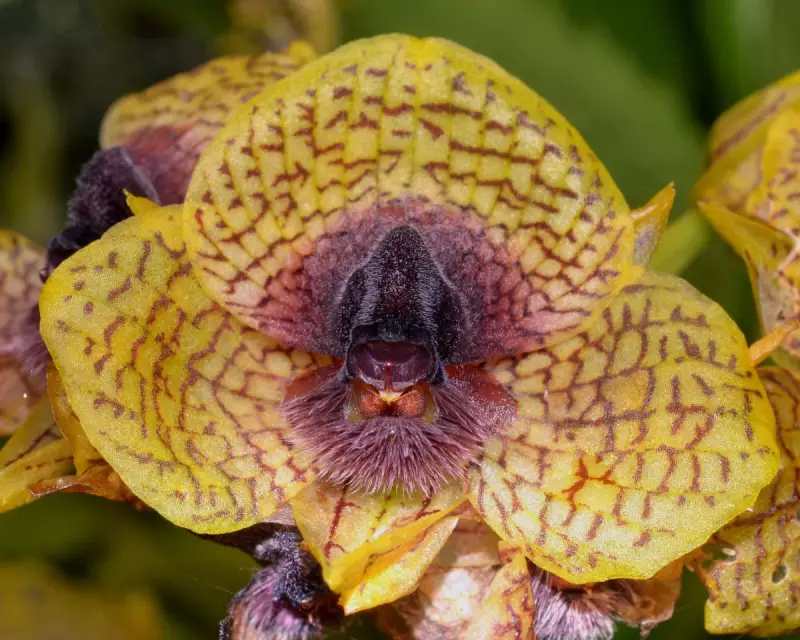
Perhaps most striking is the bloodstained orchid, Telipogon cruentilabrum, discovered in Ecuador's high Andes. Its showy yellow flowers are stained a deep red at the lip, an adaptation that mimics female flies to attract and deceive sexually aroused male flies for pollination. Tragically, more than half of its habitat has already been destroyed.
Hidden in Plain Sight: Overlooked Treasures Close to Home
Not all discoveries require journeys to remote jungles. A delicate new species of snowdrop, Galanthus subalpinus, was identified despite being widely grown in UK gardens. Researchers traced its origins to Mount Korab, straddling North Macedonia and Albania. In the wild, it is already critically endangered due to over-collection, overgrazing, and fires.
Other notable finds include a fruit from the forest floor of Papua New Guinea that tastes of banana mixed with guava, with a eucalyptus aftertaste. Named Eugenia venteri, it grows on whip-like stems along the ground, possibly evolved for pollination and seed dispersal by giant ground rats. An elegant new red-fruited Christmas palm from the Philippines, Adonidia zibabaoa, was also named, already prized by local communities and palm enthusiasts.
A Race Against Extinction: The Urgent Need for Taxonomy
These discoveries underscore a critical paradox. While scientists estimate there may be 100,000 unknown plant species and up to 3 million unknown fungi globally, they are describing them amid an extinction crisis. Researchers name about 2,500 new plants annually, but it is not enough.
Dr Martin Cheek of RBG Kew warned, "Wherever we look, human activities are eroding nature to the point of extinction, and we simply cannot keep up with the pace of destruction." Alarmingly, as many as three-in-four undescribed plants are already threatened, and even among named species, about 40% face extinction from habitat loss, climate change, and pollution.
"Describing new species is essential," Cheek stressed. "It is difficult to protect what we do not know, understand and have a scientific name for. If we fail to invest now, we risk dismantling the very systems that sustain our life on Earth."
The work continues, with scientists aiming to protect these species in their habitats or conserve their seeds in banks like Kew's Millennium Seed Bank, preserving genetic blueprints for an uncertain future.