
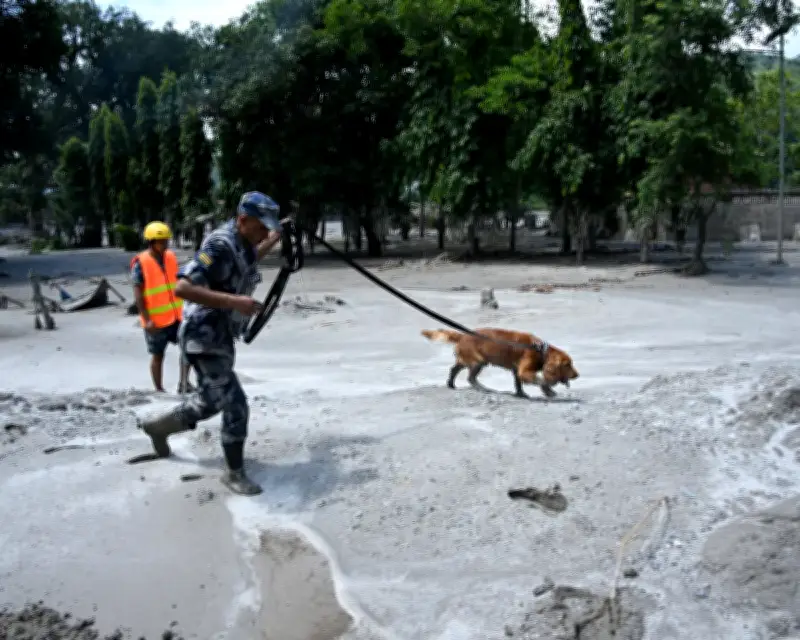
Rescue operations have resumed in Nepal and Tibet after a pause when a lake at the border began to overflow, as the death toll from catastrophic flash floods reached 469 on Friday, with more than 1,300 people still missing. The floods, triggered by a glacier collapse high in the Himalayas, obliterated villages and swept through valleys, leaving a trail of destruction across the region.
Rescue efforts resume after lake overflow pause
The pause in rescue work came after a lake formed at the border began to overflow, posing an additional threat to already devastated communities. The lake was created when a wall of mud and debris hit the border hub of Gyirong in Tibet on Wednesday, causing the flash floods that thundered down valleys and destroyed villages. According to police and tourism officials, more than 500 foreign citizens were among 826 people missing in Nepal. Chinese state media reported that at least 260 of the 558 missing people on the Tibet side of the border were foreign nationals.
Glacier collapse identified as primary cause
Satellite imagery suggests that a glacier collapse high in the Himalayas was the primary cause of the deadly flash floods, raising concerns that the climate crisis is destabilizing the geology of mountain and polar regions. The incident highlights the growing risks posed by climate change to vulnerable mountainous areas, where glacial lakes and unstable terrain can lead to catastrophic events. As rescue teams continue their search for survivors, the full scale of the disaster is still unfolding, with many families awaiting news of their loved ones.
The floods have also drawn international attention, with foreign nationals among the missing, prompting diplomatic efforts to account for citizens from various countries. The Nepalese government, along with international aid agencies, is coordinating relief and rescue operations in the affected areas, while the Tibetan side has also mobilized resources to assist in the search and recovery efforts.
Impact and next steps
The disaster underscores the urgent need for improved early warning systems and disaster preparedness in the region, as climate change continues to increase the frequency and intensity of such events. As the death toll rises and the number of missing remains high, the focus is on continuing the search and providing support to the thousands of displaced families. The international community is closely monitoring the situation, with offers of aid and assistance coming in from around the world.



