Moss Proves Its Mettle in the Vacuum of Space
Forget Matt Damon's potato-growing exploits in The Martian—real-world scientists are turning their attention to a far humbler plant with potentially giant implications for space exploration. Researchers have discovered that spores of a common moss, Physcomitrella patens (spreading earthmoss), can survive an incredible nine-month stint attached to the outside of the International Space Station and still successfully reproduce upon their return to Earth.
The Rigours of Space Exposure
The groundbreaking study, led by Dr Tomomichi Fujita of Hokkaido University in Japan, began with rigorous Earth-based simulations. The team exposed three different moss structures to a simulated space environment. They found that spores encased in a protective structure called a sporangium demonstrated remarkable resilience, germinating even after exposure to extreme UVC radiation levels exceeding 100,000 joules per square metre.
Further laboratory tests confirmed these encased spores could withstand a host of space-like conditions, including:
- Deep vacuum
- Intense freezing and high temperatures
- High radiation levels within a vacuum

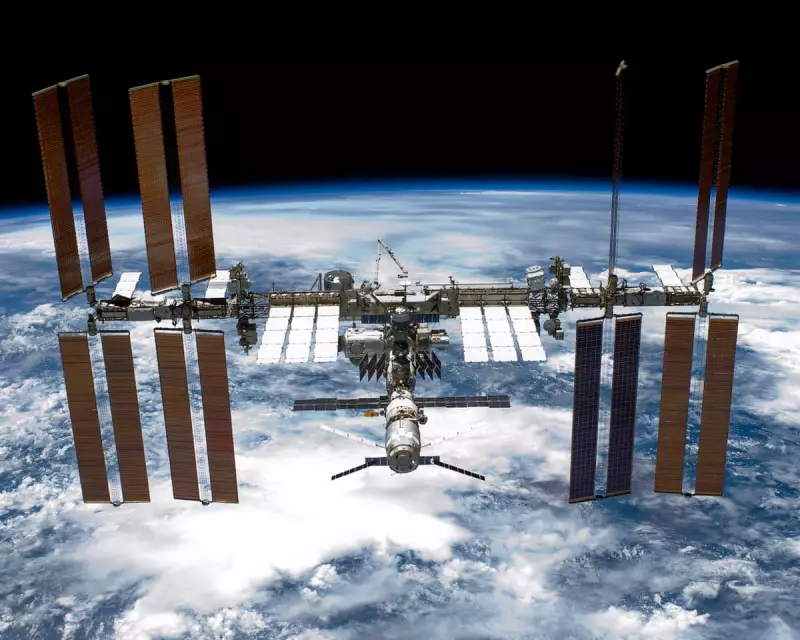
The real test came when researchers sent these hardy spores to the ISS aboard the Cygnus NG-17 spacecraft. The samples were mounted on the station's exterior in special holders with different filter settings and left exposed to the harsh space environment for nine months.
Remarkable Results and Future Potential
Upon the samples' return to Earth, the results were astonishing. All space-exposed spores showed high germination rates, with those fully exposed to cosmic UV radiation achieving an 86% success rate—only slightly lower than the 97% rate for Earth-bound control samples. The main sign of their ordeal was some degradation of a type of chlorophyll.
Dr Fujita emphasised the implications: "While moss may not be on the menu, its resilience offers insights into developing sustainable life-support systems in space. Mosses could help with oxygen generation, humidity control or even soil formation." He noted that if such spores can endure long-term interplanetary travel and revive upon reaching new worlds, they could play a crucial role in establishing basic ecosystems beyond Earth.
However, experts like Dr Agata Zupanska of the Seti Institute, who was not involved in the study, offered cautious perspective. She noted that dormant, desiccated biological forms like spores are known to be far hardier than hydrated tissues. She also highlighted that the ISS environment doesn't fully replicate deep space or planetary conditions like those on Mars or the Moon.
Dr Zupanska stressed: "The value of space plants is realised only if they can actively grow and thrive away from Earth. While spore resilience is important, it represents only an initial step toward the broader goals of growing plants in extraterrestrial environments."
The research, published in the journal iScience, opens exciting new avenues for using pioneering plant species to support humanity's future among the stars, proving that sometimes the smallest organisms might hold the biggest keys to our cosmic future.