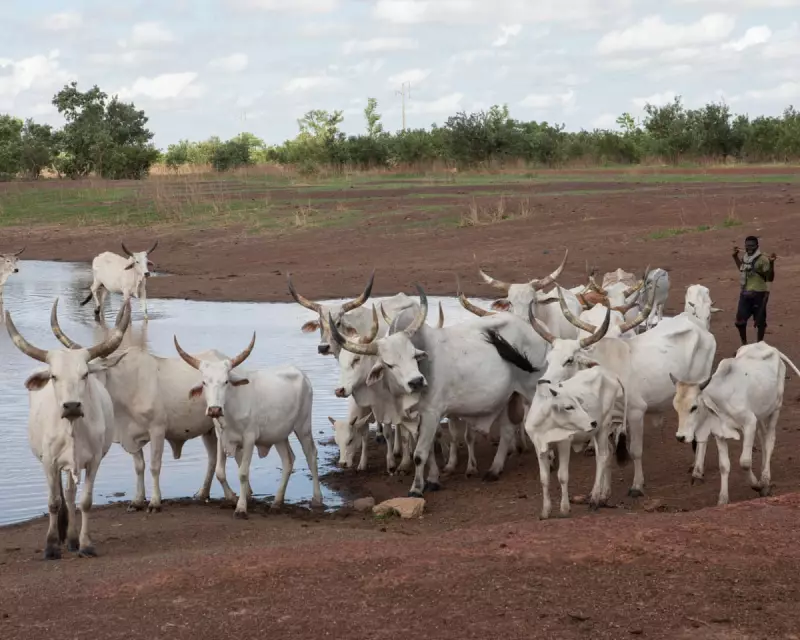
In the heart of Senegal's vast grasslands, a revolutionary approach to livestock management is taking root. Ibrahima Ka, the village chief of Thignol, stands watch over 350 zebu cows gathered behind a wire perimeter, their collective energy palpable as they prepare to graze in a manner that breaks with centuries of tradition.
The Scale of Senegal's Pasture Crisis
Alarming new data reveals that approximately one-third of Senegal's precious pastures have become degraded, victims of both overgrazing and increasingly erratic rainfall patterns driven by climate change. Dr Tamsir Mbaye, who leads the Pastoralism and Dryland Centre in Senegal, confirms the severity of the situation, noting that across Africa, an astonishing 75% of drylands - representing nearly two-thirds of the continent - now exist in poor condition according to United Nations assessments.
The degradation manifests as sparse, patchy grass coverage, extensive areas of bare soil, and dwindling tree populations. For communities like Ka's, where wealth and survival depend entirely on livestock, the consequences are dire. Thinner cattle produce less milk and fetch lower prices at market, creating a cycle of poverty that threatens traditional ways of life.

Mob Grazing: A Controversial Solution
Ka's community has become the testing ground for Senegal's first 'mob grazing' pilot project. The technique involves concentrating large herds together and moving them through designated plots in short, intensive bursts, rather than allowing animals to roam freely across the landscape. The approach aims to mimic natural grazing patterns seen in ecosystems like the Serengeti, where wildebeest move in large groups to evade predators.
Joaquín Cadario, an agronomist with Action Against Hunger - the NGO supporting the pilot - explains the flaws in traditional methods. "When animals roam freely, they selectively eat their preferred grasses, eventually wiping out certain species entirely. Once their favourite vegetation disappears, they turn to young trees, preventing forest regeneration".
Cadario draws a powerful analogy: "Look around - there are only old trees here. If you had a village with just old people, it would die out eventually. It's the same with trees."
Early Signs of Success
After just eighteen months of implementation, the experimental 127-hectare plot is showing promising results. Ka reports witnessing the return of grass species, insects, and young trees that haven't been seen in the area for decades.
The science behind mob grazing's potential success lies in several key mechanisms. When concentrated together, animals are less selective about their grazing, consuming whatever vegetation lies before them. Their hooves break up the thick, dry soil crust that forms in arid environments, creating space for new seeds to germinate and significantly improving water absorption. Recent testing confirmed that the experimental plot absorbs 60% more water than conventionally grazed areas.
Perhaps most importantly, each grazed section receives a full year of rest before animals return, giving grasslands adequate time to recover and trees opportunity to mature.
Scientific Perspective and Challenges
While early results are encouraging, scientists caution that mob grazing represents no universal solution. Dr Cecilia Dahlsjö, a senior researcher at the University of Oxford's Leverhulme Centre for Nature Recovery, emphasises the nuanced nature of the approach.
"The scientific consensus on mob grazing recognises its complexity," explains Dahlsjö. "Myriad factors - including geography, herd sizes, rest periods, and rainfall patterns - determine whether the method enhances or further damages biodiversity. When properly managed, it can benefit biodiversity, soil structure, and water absorption. However, excessive implementation can lead to over-trampling and soil compaction."
Craig Morris, a livestock lecturer at the University of KwaZulu-Natal in South Africa, adds context: "Semi-arid grasslands like those found in Senegal show the greatest promise for mob grazing applications, particularly where pastures are already degraded and rainfall remains scarce."

The human element presents another critical challenge. Another pilot project located just thirty kilometres from Ka's community failed when local herders ignored rest period requirements, highlighting the necessity of strong community leadership and buy-in. Ka's ability to mobilise ten neighbouring families to participate in the collective herd of 350 cows and 2,000 sheep has been instrumental to the project's early success.
The method has already generated significant interest, with herders from across the 80,000-hectare reserve where Ka lives, other Senegalese regions, and even neighbouring Mauritania visiting to observe the results firsthand.
A Community Transformed
On a typical morning, the gathering of 350 cows and their owners creates an unexpected social benefit. Young shepherds, usually isolated during their long days tending animals, now enjoy companionship, sharing jokes and music from Bluetooth speakers while managing the concentrated herd.
At precisely 10 AM, the animals surge into their designated grazing area, consuming the fresh pasture while shepherds use whistles and calls to maintain the tight formation. Moustapha Ka, Ibrahima's brother, proudly displays a fibrous green plant that has reappeared - a species he remembers from his youth but hasn't seen in years.
"These might seem like small changes," Moustapha acknowledges, "but in five or six years, we expect many more species of plants, insects, and trees to return."
For communities facing the harsh realities of climate change and land degradation, these small changes represent hope - not just for environmental restoration, but for the preservation of cultural traditions and economic stability in an increasingly challenging landscape.