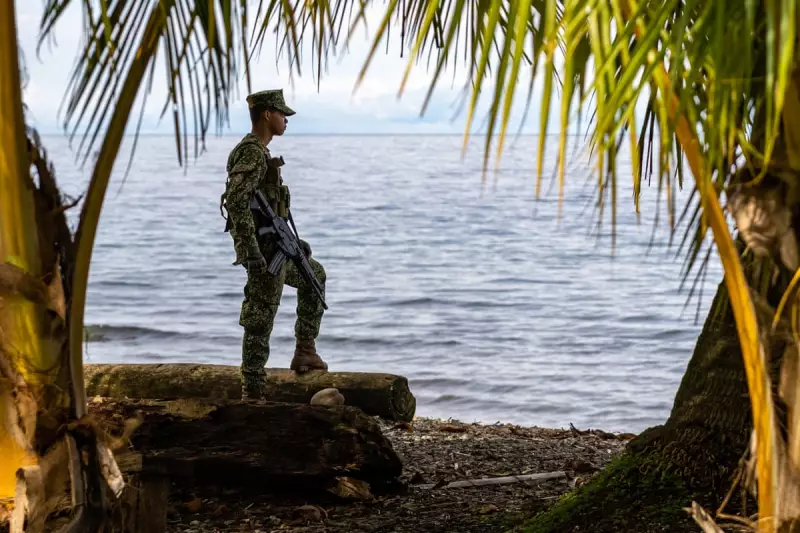
Can a wildlife paradise on a Colombian island survive the arrival of a military base? This is the critical question facing conservationists as a new coastguard station takes root on Gorgona Island, threatening to undo four decades of environmental progress.
A Sanctuary Under Threat
Gorgona Island represents one of Colombia's greatest conservation success stories. Transformed from a high-security prison into a national park in 1984, this marine protected area spans more than 60,000 hectares - equivalent to a third of Greater London. For forty years, dedicated efforts have turned it into a biodiversity haven, home to species like the marbled poison frog and boasting the most extensive coral reef system in the eastern tropical Pacific Ocean.
The island serves as a crucial breeding ground for humpback whales migrating from the Antarctic between June and October. Strict conservation measures, including complete fishing bans and restrictions on tourist activities, recently earned Gorgona the prestigious Blue Park award from the Marine Conservation Institute in June.

The Military Expansion
Now, a £1.4 million project financed by the United States government is threatening this delicate balance. The installation includes a coastguard station, radar facility, pier, and barracks for navy personnel. The Colombian government maintains that this infrastructure is crucial for combating drug trafficking and illegal fishing in the region.
However, the project's environmental impact assessment acknowledges significant risks, including the potential loss of soil structure and stability, harm to fish, turtles and marine mammals, and the transportation of a 20,000-litre fuel tank that could spill into the ocean. During construction alone, the project is expected to produce 587kg of waste, with a substantial portion classified as hazardous.
Professor Alan Giraldo, a biologist at Valle University who first visited the island in 1989, expresses grave concerns: "The purpose of this area is protection - and having military personnel beside researchers and tourists contradicts this idea."
Community Concerns and Security Risks
Local communities feel completely excluded from the decision-making process. Mercedes Colorado, government secretary of El Charco municipality near Gorgona, states: "This project to set up a military base was not consulted with any of the municipal authorities, Indigenous territories or the community councils."
The security situation adds another layer of concern. In September, prominent human rights leader Luis Fernando Sánchez Caicedo was killed when the boat carrying him and the mayor of Mosquera came under fire, reportedly from the Colombian navy. This incident has heightened fears that the military presence could make Gorgona a target in a region already experiencing armed conflict.
Fishermen like Espaciano Aguirre voice practical worries: "This base could mean the death of fishers" who fear being mistaken for military targets when fishing at night or facing new restrictions on their movements.
International Implications
The project arrives amid growing tensions between Colombia and the United States. The US has imposed sanctions on Colombia, accusing President Gustavo Petro of allowing drug cartels to flourish, while Petro views this as interference in Colombia's forthcoming elections.
US naval forces have increased their presence in the southern Caribbean Sea, and under President Trump's authorisation, attacks on boats allegedly carrying drugs have killed more than 80 people since early September according to Pentagon figures.
The potential consequences extend beyond immediate ecological damage. Dr Sarah Hameed, director of Blue Parks at the Marine Conservation Institute, reveals they were completely unaware of the coastguard project and warns that any threat to biodiversity conservation could trigger early re-examination of Gorgona's Blue Park status.

If Colombia loses this international recognition, it would undermine the country's progress toward the "30x30" global agreement to conserve 30% of land, water and ocean by 2030. While Colombia officially conserves 41% of its marine territory, only 6.7% receives full or high protection according to the Marine Conservation Institute - a category that includes Gorgona's carefully restored ecosystem.
As construction proceeds despite whale breeding seasons and environmental concerns, the future of this wildlife paradise hangs in the balance, caught between security interests and hard-won conservation achievements.