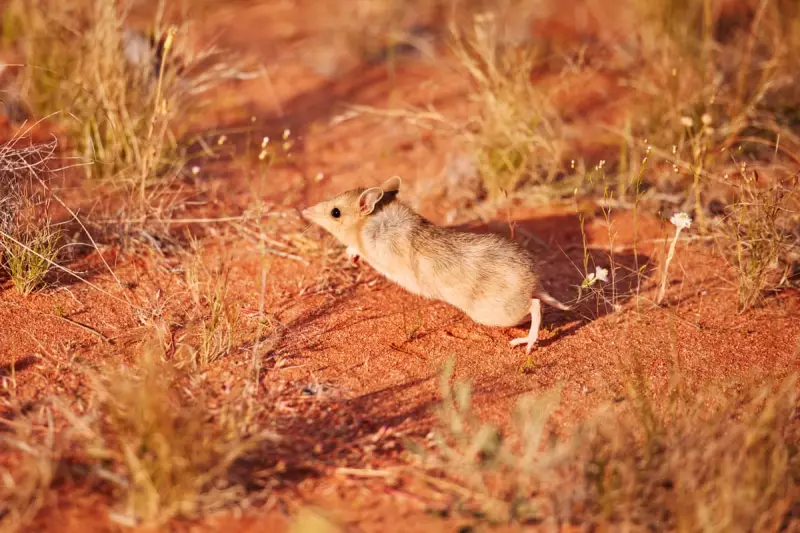
‘Taking Back the Desert’: Australia's Bold Predator Experiment
In the vast, arid expanses of the Australian outback, a profound silence has lingered for over a century. The distinctive small marsupials – the bilbies, bandicoots, and quolls – were largely wiped out, victims of land clearing and the devastating hunting prowess of the feral cat. Introduced by European settlers, Felis catus proved too fast and adaptable for native mammals that had never evolved alongside such a voracious predator.
While complete eradication of these cats has so far proven impossible, a team of determined scientists is conducting a bold and grand experiment to see if native species can be trained to survive alongside the very animals that pushed them to the brink of extinction.
The Wild Deserts Training Zone
The heart of this experiment is the Wild Deserts project, located within the sprawling 3,200 square kilometre Sturt National Park in north-west New South Wales. Here, scientists have established a unique 100 square kilometre ‘training zone’.

As explained by Professor Richard Kingsford, Director of the UNSW Centre for Ecosystem Science and project leader, the goal is ambitious. “It’s a grand experiment. So far, we’re getting success with animals breeding in there. Numbers are building up,” he says. The central question is: “How do we get these native species to smarten up to a new predator in the landscape that they didn’t evolve with?”
This training area is strategically bordered by dingo fences that help restrict, though not completely eliminate, cat movement. Inside, the feral cat population is meticulously controlled through targeted shooting and innovative devices that can distinguish a native animal from a cat before firing a lethal toxin onto the feline's fur. This concerted effort has dramatically reduced cat density to just three cats per square kilometre, a fraction of the estimated thirty cats per square kilometre found outside the zone.
Early Signs of Success as Marsupials Breed and Spread
Dr. Bec West, the principal ecologist for Wild Deserts, has lived on-site in the national park for eight years, closely monitoring the project's progress. Since the beginning of 2024, a significant number of nationally threatened species have been released into the training zone:
- 51 western quolls
- 305 bilbies
- 234 golden bandicoots
Burrowing bettongs are scheduled for release soon. Dr. West acknowledges that some predation is inevitable and natural, but the results are encouraging. A recent survey caught 57 quolls, bilbies, and bandicoots inside the zone, with the bilbies and quolls having survived for at least a year.
Perhaps the most compelling evidence comes from the project's 50 motion-activated cameras. “In the last few months, we have been seeing more bilbies and quolls than cats. That is such a win. They are taking back the desert,” Dr. West states excitedly. The reintroduced species have not only survived but have bred and spread across the entire training zone.
How Do Marsupials Learn to Coexist with a Predator?
The mechanism behind this potential adaptation is a key focus. Scientists believe the marsupials may be learning through observation, becoming warier and more vigilant. Supporting evidence comes from other experiments in South Australia, where bettongs demonstrated increased alertness in the presence of cats.
Another revealing study monitored two groups of bilbies: one exposed to cats and one living without them. After five years, the cat-exposed bilbies and their offspring had developed larger feet and would flee from approaching humans much earlier. This suggests a rapid evolutionary response, where larger feet could aid in escape, and behaviour shifts towards greater caution.
Dr. West, who has been involved in such studies, highlights the potential of these “predator-smart” animals. “They’re spreading out and we hope in the future we can use these predator-smart animals to establish them further afield,” she says.

The benefits of this project extend beyond species survival. These small marsupials are ecosystem engineers. Their constant digging overturns soil, creating pools for water and helping seeds germinate, which encourages the growth of native plants. In the cat-free fenced zones adjacent to the training area, this transformation is already visible, with the ground cover flourishing in a way that is, as Dr. West notes, “unrecognisable now.”
The Wild Deserts project represents a paradigm shift in conservation. Instead of just creating predator-free havens, it is testing a more dynamic and hopeful solution: empowering native wildlife with the skills and traits needed to reclaim their ancestral home, even in the presence of a formidable foe.