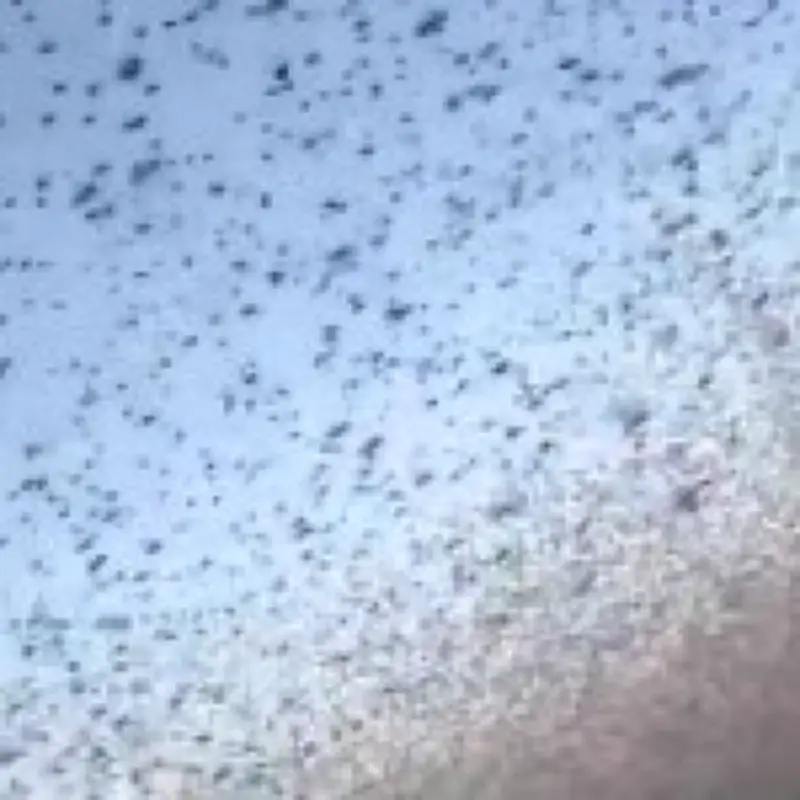
Residents of the Kizlyar district in Dagestan, Russia, took cover in their cars as a massive swarm of locusts darkened the sky on Sunday, turning a peaceful day into an apocalyptic scene. The swarm, consisting of millions of insects, swept across a field, nearly blocking out the sun as it passed overhead.
Locals Fear for Nearby Towns
Locals filmed the event, expressing concern that the swarm might be heading toward populated areas in the North Caucasus region. One resident, filming the swarm, said, 'Where are they heading? What on earth is this? Thank goodness they're not heading towards the town! They are going to eat us alive!'
While the locusts are not directly harmful to humans, they pose a severe threat to agriculture, as they can devastate crops. They are considered one of the world's most destructive agricultural pests.

Pest Control Measures Underway
Dagestan's ministry of agriculture and food has announced that active pest control measures are being taken. Several large swarms have already been dealt with, according to the ministry. However, the situation is complicated by the fact that migratory locust swarms often originate from nature conservation areas and reserves, where chemical treatment is strictly prohibited by law.
'The situation is complicated by the fact that migratory locust swarms travel from nature conservation areas and reserves, where chemical treatment is strictly prohibited by law,' the ministry stated. 'However, as soon as the pests move into areas where treatment is permitted, all available equipment is deployed.'
Threat to Food Security
Locusts and grasshoppers are a serious threat to food security and livelihoods in the Caucasus and Central Asia, as they can destroy crops in their path. These insects are capable of traveling up to 93 miles per day, making them difficult to contain.
The UN Food and Agriculture Organisation (FAO) has reported that up to 20 million people and 25 million hectares of cultivated land are at risk from locusts in the region. Three species are particularly problematic: the Italian (Calliptamus italicus), Moroccan (Dociostaurus maroccanus), and Asian Migratory (Locusta migratoria) locusts.
Drones Used in Fight Against Locusts
In response to the biblical-scale swarms, countries like Kazakhstan and Uzbekistan have recently cooperated on the use of unmanned aerial systems (drones) for locust management, according to the FAO. These technological measures are being deployed to monitor and combat the pests more effectively.
The situation in Dagestan remains under monitoring as authorities work to prevent the swarm from spreading further and causing widespread agricultural damage.