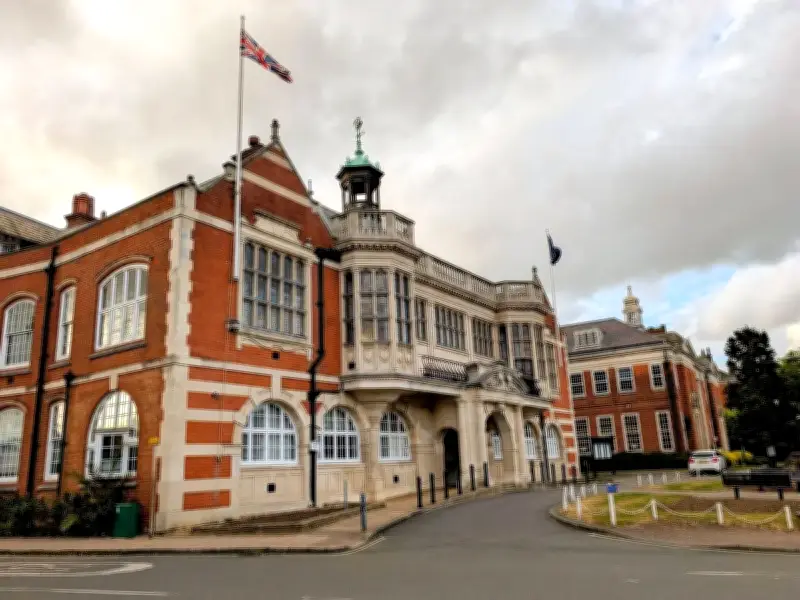
Barnet Council is projected to have the largest budget deficit of any London local authority by 2028, with a shortfall of nearly £113.5m, according to a government-commissioned report that has prompted the council to accept all 18 recommendations for improvement.
MHCLG report highlights financial risks
The external assurance review, conducted by the Ministry of Housing, Communities and Local Government (MHCLG), was a condition of the 'exceptional financial support' (EFS) granted to the council. The report, based on desktop research and interviews with councillors in April, aimed to assess the council's financial position and provide a roadmap for improvement.
The report identified "the absence of a credible and deliverable savings plan" and "ongoing reliance on EFS and weakening financial resilience" as key concerns. Nearly half of the 18 recommendations received a risk rating of nine out of ten.

Borrowing and budget shortfalls
For the 2026/27 financial year, the council borrowed £79.3m through EFS to manage budget shortfalls. This followed £55.7m of EFS in 2025/26, although the council states that only £45.9m of that allowance was actually required. EFS allows councils to treat some day-to-day spending as capital spending, typically funded through borrowing.
According to analysis by KPMG for neighbouring Haringey Council, each £1m of EFS borrowing could cost town halls approximately £62,000 per year in borrowing costs at current rates.
Council leader responds to report
Barry Rawlings, leader of Barnet Council's Labour minority administration, said at a cabinet meeting last week that the MHCLG report "did not take full account of the work being done", including measures implemented since its completion. Nevertheless, he confirmed the council accepted all 18 recommendations, adding: "Our priority is reaching financial sustainability because everything else we want to do fails without that."
Simon Radford, the council's cabinet member for financial sustainability, is due to submit progress reports to the MHCLG by the end of September. Peter Zinkin, leader of the Conservative opposition, questioned why draft indications of this update were not available at the cabinet meeting, calling the decision "completely strange" given the deadline. Radford responded that it was important to use "the latest possible data" and to act as the government had requested, adding: "Authorising people to do what MHCLG asked them to do is hardly revolutionary – in fact it's rather sensible."
Future steps
At the meeting, it was agreed that the council's "very detailed" Plan for Financial Sustainability will be shared with members at a cabinet meeting next month. The council is expected to provide further updates on its progress towards financial sustainability.