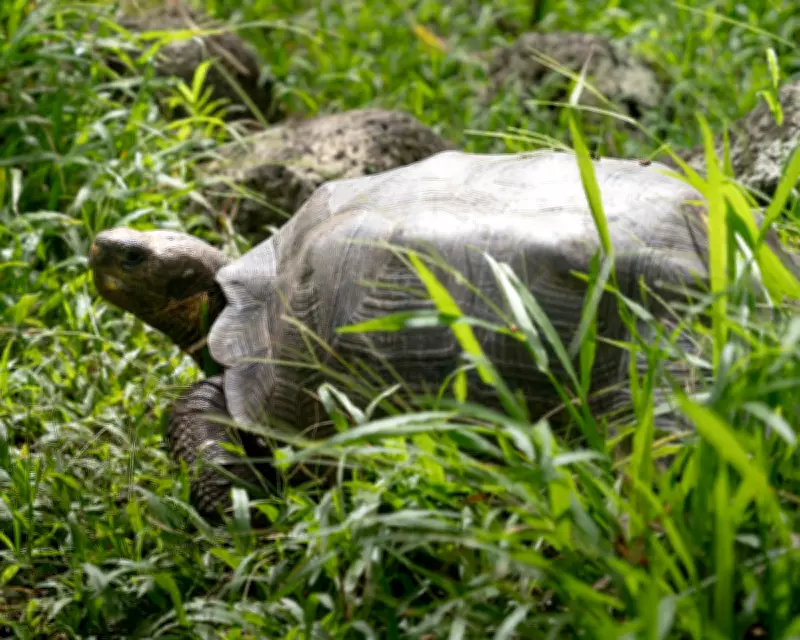
Floreana Giant Tortoise Reintroduced to Galápagos Island After Nearly Two Centuries
The Floreana giant tortoise, a subspecies driven to extinction in the 1840s, is once again plodding across its native Galápagos island for the first time in over 180 years. This remarkable comeback is the result of an intensive back-breeding program using partial descendants discovered on Wolf volcano.
Extinction and Rediscovery
By the time Charles Darwin visited Floreana in 1835, the giant tortoise population was already in its death throes. Whalers had removed thousands of these tortoises as a living food source during hunting voyages, leading to their extinction within a decade. However, in 2008, a relic population on Wolf volcano in Isabela Island was found to include tortoises with saddleback shells, a trait typical of the Floreana subspecies, indicating partial ancestry.
Back-Breeding Program Success
In 2017, a captive breeding initiative began, selecting 23 hybrid tortoises most closely related to the original Floreana lineage. By 2025, over 600 hatchlings had been born, with several hundred growing large enough for reintroduction. Recently, 158 juvenile tortoises were returned to Floreana, a critical milestone in the largest ecological restoration project ever undertaken in the Galápagos archipelago.

Ecological Impact and Community Benefits
The reintroduction is part of the Floreana Ecological Restoration Project, a collaboration between the Galápagos National Park Directorate and various charities, working closely with the island's 160 residents. An invasive species eradication program, started in 2023, has removed most rats and feral cats, paving the way for the tortoises' return and leading to improved agricultural harvests and the rediscovery of species like the Galapagos rail.
Giant tortoises are keystone species, essential for maintaining open habitats, dispersing seeds, and supporting biodiversity. Their presence helps restore ecological processes that benefit native plants, reptiles, invertebrates, and birds.
Future Restoration Efforts
Conservationists plan to reintroduce other native species, including the Floreana mockingbird, Floreana racer snake, vegetarian finch, and little vermilion flycatcher. This effort underscores the importance of collaborative conservation in reversing human-caused extinctions and restoring fragile island ecosystems.