Across Europe's cities, rivers, and countryside, a quiet invasion is underway. A new photographic project by Erik Irmer, titled Aliens and published by Fotohof, casts a stark spotlight on the spread of non-native plants and animals that are fundamentally disrupting local ecosystems. The work focuses on the complex and often unintended interactions between humans and these invasive species.
From Fur Farms to Flourishing Pests
The visual journey reveals how human activity is the primary vector for these ecological shifts. A striking example is the nutria, or coypu, a large South American rodent. First imported to German fur farms in the 1920s, escaped or released animals have established wild populations. Though no official count exists, hunters in Germany culled more than 100,000 nutria in the 2020-21 season alone. The species has been on the EU's invasive alien species list since 2016.
Similarly, the now-ubiquitous raccoon population in Germany, estimated at over a million, originated from fur farming introductions in the 1930s. These adaptable mammals now thrive in both woodland and urban settings across the country.

Global Trade and Climate Change Accelerate Spread
Irmer's photographs illustrate how global connectivity fuels the problem. The Asian tiger mosquito, a daytime biter capable of carrying dengue and chikungunya viruses, first reached Europe in Albania in the late 1970s via travel and trade. Its expansion is now being accelerated by climate change.
Waterways tell a similar story. The Chinese mitten crab, likely a stowaway in merchant ship ballast water, now inflicts millions of euros in damage in Germany. It damages fishing gear, undermines riverbanks, and transmits diseases to native wildlife. In the Mediterranean, the venomous common lionfish, native to the Indian Ocean, is rapidly colonising waters around Crete, threatening local fish stocks due to its lack of natural predators and high reproduction rate.
Ornamental Origins and Ecological Consequences
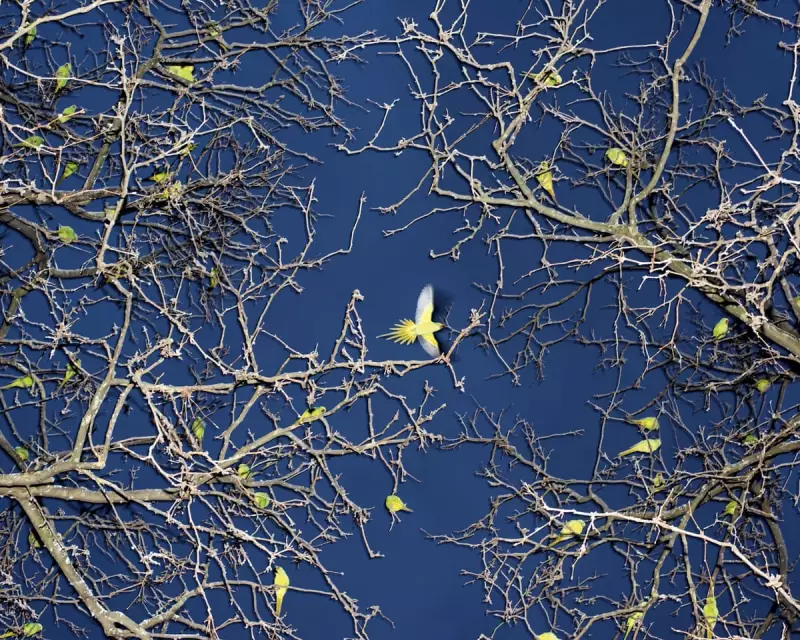
Many invasions began with aesthetic appeal. The ring-necked parakeet, native to Africa and India, is now a common sight roosting in trees in London, Amsterdam, and Cologne, its success bolstered by warmer temperatures. The Egyptian goose, introduced as an ornamental bird, has spread aggressively from the Netherlands across Germany, often bullying native waterfowl.
Perhaps one of the most destructive plant arrivals is Japanese knotweed. Brought to Europe in the 1820s for its appearance, it can grow up to 30cm a day, its roots capable of breaking through concrete, paving, and building foundations, dominating landscapes and obliterating other flora.
The project serves as a powerful visual record of a growing environmental challenge, showing how species from around the globe, once moved by human hands, are now rewriting the ecological rules of the continent.