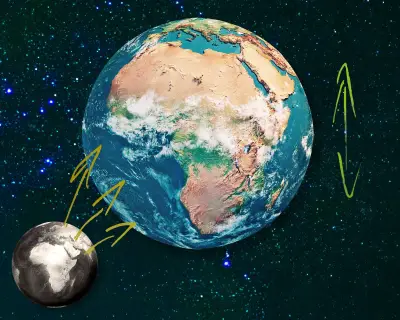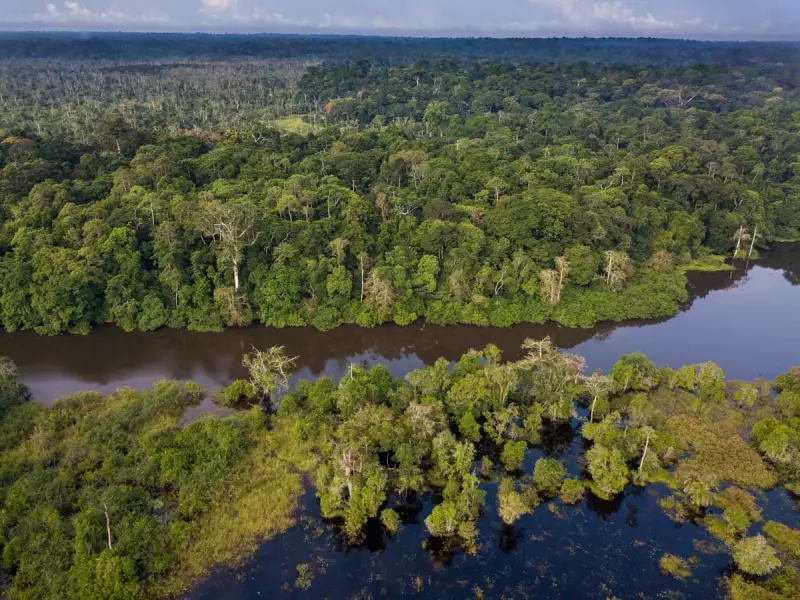
While global attention focuses on Amazonian deforestation, the Congo Basin - Earth's second-largest tropical rainforest and one of its most vital carbon sinks - faces a critical crisis of neglect in both climate policy and scientific funding.
The Forgotten Lungs of Africa
Spanning six countries across central Africa, the Congo Basin serves as the continent's ecological heart. Home to approximately 130 million people, this vast expanse is often called the 'lungs of Africa' for its crucial role in regional climate regulation.
Dr Yadvinder Malhi, a leading ecologist at Oxford University, emphasises its unique biodiversity: "It contains about 10,000 plant species, with 30% found nowhere else on Earth." Unlike the heavily damaged Amazon, the Congo's forests remain largely intact, providing sanctuary for endangered species including forest elephants, okapis, mountain gorillas and bonobos.

Critical Role in Continental Climate Systems
The basin's significance extends far beyond its borders. Its rainfall patterns feed major river systems across Africa, sustaining life as far away as the Sahel and even contributing to the Nile's flow. This hydrological system supports millions of people across the continent, making the Congo Basin's health a matter of pan-African importance.
Most crucially, while logging and mining encroachments are increasing, much of the forest remains untouched. This makes the Congo Basin the last major rainforest still functioning as a strong carbon sink - absorbing more carbon than it emits.
However, Professor Simon Lewis from the University of Leeds sounds a note of caution: "We believe it remains a carbon sink, but we lack recent data to confirm this. While carbon absorption rates have declined in the Amazon, we're uncertain about current Congo basin trends."
Stark Funding Imbalance Revealed
A recent report from the Centre for International Forestry Research and World Agroforestry exposes dramatic financial disparities. Between 2008 and 2022, the world's three main rainforest regions received £15 billion in international funding, distributed as follows:
- Amazon basin: 47% (£9.3 billion)
- Southeast Asia: 37% (£7.4 billion)
- Congo Basin: just 16% (£3.2 billion)
Germany emerged as the leading donor for central Africa, providing 24% of total funding, followed by the Global Environment Fund (12%), the World Bank (9.4%), and the United States (8.8%). Alarmingly, only 0.1% of funding supported scientific research.
This financial neglect translates directly into a knowledge gap. A 2023 study found approximately 2,000 published academic papers for the Congo basin compared to 10,611 for the Amazon - a five-fold difference in research attention.
Urgent Calls for Scientific Investment
The consequences of this research deficit are profound. As deforestation accelerates, scientists lack the data to understand how the basin's carbon absorption capacity is changing. A report released as the Cop30 climate conference began revealed the Congo basin absorbs 600 million tonnes of carbon dioxide annually, but this number is falling due to increasing deforestation.
Professor Lee White, former environment minister in Gabon, highlights the human resource challenge: "You've got this critical ecosystem, but there just aren't enough local scientists working to understand it."
Experts have recommended training at least 1,000 PhD-level scientists over the next decade to strengthen regional expertise. Professor Raphael Tshimanga from the University of Kinshasa stresses the urgency: "We don't want to wait 10 years. It needs to start happening now through mobilising human resources and attracting funding."
Beyond the 'Heart of Darkness' Perception
Part of the funding challenge stems from enduring perceptions of central Africa as a region of instability and corruption. Professor White acknowledges this reputation but suggests it's sometimes used as "an easy excuse for lack of investment."

Arlette Soudan-Nonault, Environment Minister for the Republic of Congo, challenges this narrative directly: "It's very easy and lazy to say that Africans are corrupt. Supporting the Congo basin isn't charity - it's recognising its role in protecting Earth through its carbon sink. The people of the Congo basin have tightened their belts so the world can breathe, yet we receive no compensation."
As deforestation rates begin to rise in this last great climate frontier, the international community faces a critical choice: continue overlooking the Congo Basin or recognise its indispensable role in global climate stability and invest accordingly.