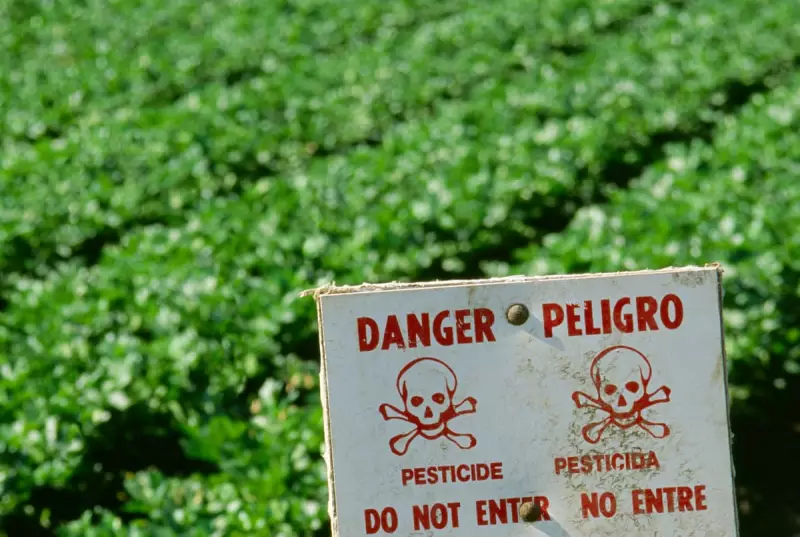
A disturbing new analysis has uncovered that agricultural operations in California applied approximately 15 million pounds of PFAS 'forever chemicals' to key food crops over a five-year period, raising significant concerns about food safety and environmental contamination.
Millions of Pounds of Toxic Chemicals
According to a comprehensive review of California Department of Pesticide Regulation records, farms across the state sprayed an average of 2.5 million pounds of PFAS annually on cropland between 2018 and 2023. The total reached approximately 15 million pounds during this period, with the chemicals being added to pesticides applied to popular food items.
The Environmental Working Group (EWG), the nonprofit organisation that conducted the analysis, identified that these forever chemicals were being sprayed on crops including almonds, pistachios, wine grapes, alfalfa and tomatoes.

Heightened Risks for Consumers and Workers
Research indicates that the risk of PFAS uptake is particularly high in water-rich fruits and vegetables because water attracts these persistent chemicals. Studies have shown that PFAS may concentrate at dangerous levels in certain types of produce, creating direct exposure pathways for consumers.
The contamination presents additional dangers to low-income and Latino farmworkers who face direct exposure during application, while the chemicals also pollute local water supplies, creating broader community health concerns.
Bernadette Del Chiaro, senior vice-president of California for EWG, described the findings as revealing an "obvious problem" that demands immediate attention. "We know that every pound of forever chemicals presents a risk of contamination of our food, water, and soil, so it doesn't make sense to deliberately be spraying these on California's food," Del Chiaro stated.
The Pervasive Nature of Forever Chemicals
PFAS represents a class of at least 16,000 chemical compounds commonly used to help products resist water, stains and heat. They've earned the nickname 'forever chemicals' because they don't break down naturally in the environment and accumulate over time.
These substances have been linked to numerous serious health conditions including cancer, kidney disease, liver problems, immune disorders, and birth defects, making their presence in food production particularly alarming.
EWG's review identified 51 different PFAS compounds being used across 58 California counties, with the highest concentrations found in Fresno, Kern, San Joaquin, Napa and Riverside counties.
The chemicals used in pesticides are primarily short-chain PFAS, which are smaller molecules that move widely throughout the environment. Many break down into Tfa, a type of PFAS that is accumulating globally at levels higher than any other PFAS compound.
David Andrews, an EWG co-author on the report, emphasised the significant risks involved. "There's absolutely a risk to the PFAS used in pesticides in the US," Andrews said. "There's a contribution to our total PFAS exposure and there's a lot of uncertainty."
While industry representatives and Trump administration officials have claimed that short-chain PFAS are safer than other variants, health data for many of these compounds is limited, and existing research points to serious health risks. These chemicals can still take hundreds or thousands of years to break down once they enter the environment.
The situation stands in stark contrast to regulatory approaches elsewhere. The European Union has already banned many PFAS in pesticides, including two of the chemicals most frequently used on California crops – bifenthrin and trifluralin.
Advocates first raised alarms about PFAS in pesticides in 2023, though the response from regulatory agencies has been concerning. The Biden EPA attempted to discredit authors of studies identifying PFAS in pesticides, while the Trump administration actually increased the number of PFAS proposed for use in pesticides.
A 2023 analysis of EPA data found that at least 60% of active ingredients approved for use in common pesticides at the federal level over the previous decade fit the most widely accepted definition of PFAS.

These chemicals serve dual purposes in pesticide formulations – either as active ingredients designed to kill weeds, insects or fleas, or as inert ingredients that enhance how effectively the pesticides function.