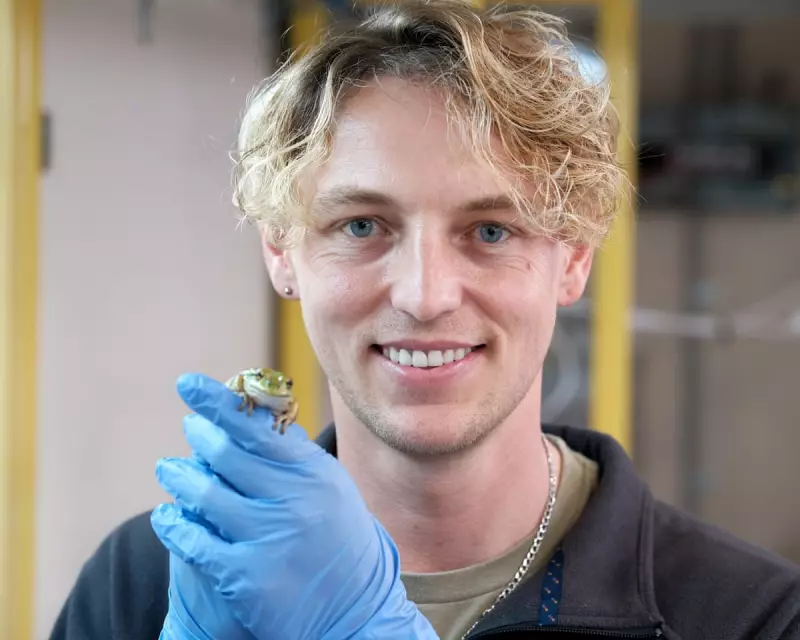
A conservation biologist in Australia, who once built miniature saunas to help frogs survive a devastating fungal pandemic, is now pioneering ambitious genetic techniques in a bid to save hundreds of amphibian species from extinction.
From Desert Tadpoles to a PhD
The story of Dr Anthony Waddle begins in the Mojave desert, where as an eight-year-old he was captivated by tadpoles in a reservoir. That childhood fascination with metamorphosis ignited a lifelong passion. Waddle, now 35, became the first in his family to earn a PhD, which he received from the University of Melbourne in 2022, and has transformed into an award-winning scientist confronting one of the worst wildlife diseases in history.
The threat is the chytrid fungus, a pathogen almost always lethal to amphibians. It has already wiped out 90 species globally and threatens more than 500 more. This crisis has profound ecological implications, as frogs play a critical role in controlling insect populations and their skin holds potential for new medical discoveries, including non-addictive painkillers.

The Innovative Frog Sauna Experiment
During the pandemic, Waddle embarked on a novel, low-tech intervention. Recognising that the chytrid fungus thrives in cooler conditions, he and a colleague constructed simple shelters for endangered green and golden bell frogs. Using masonry bricks stacked "like a Jenga tower" inside small greenhouses, they created warm microhabitats – effectively, frog saunas.
The experiment was a success. Frogs that spent winter in the saunas were significantly less likely to succumb to the infection and even developed resistance upon re-exposure. While this offered a lifeline for some local populations, Waddle knew a more scalable, global solution was needed.
Scaling Up: Vaccination and Synthetic Biology
Waddle's work has since expanded into two frontier areas of conservation science. One project involves raising and vaccinating hundreds of green and golden bell frogs for release into the wild, an effort he describes as "probably the largest input of frogs in that population in a decade".
For species that cannot be vaccinated, like the critically endangered southern corroboree frog which no longer breeds in the wild, his team is exploring gene replacement technology. "Yesterday we were making transgenic frogs together, the first ever experiment to make a transgenic frog in Australia," Waddle said with evident excitement. The goal is to edit the frogs' genetics to confer disease resistance.
This use of synthetic biology is innovative but not without controversy. While it promises to help species bypass genetic bottlenecks, critics raise ethical questions and warn of unintended consequences. The International Union for the Conservation of Nature's 2025 decision to permit its use for conservation opened the door for such research. Waddle advocates a cautious but proactive approach: "We can’t just be willy-nilly slapping genes into frogs, but at the research level we should be investigating synthetic biology."
Australian herpetologist Dr Jodi Rowley has hailed Waddle's multifaceted work as "a ray of hope in amphibian conservation", emphasising the dire need for innovative strategies when over 40% of amphibian species face extinction.
For Waddle, the immense challenge is a source of driven anticipation, not dread. His sleepless nights are filled with excitement for the next day's experiment. "I can’t wait to see what happens... if these frogs are going to have the gene," he says, his work standing as a testament to a childhood curiosity that evolved into a mission to safeguard global biodiversity.