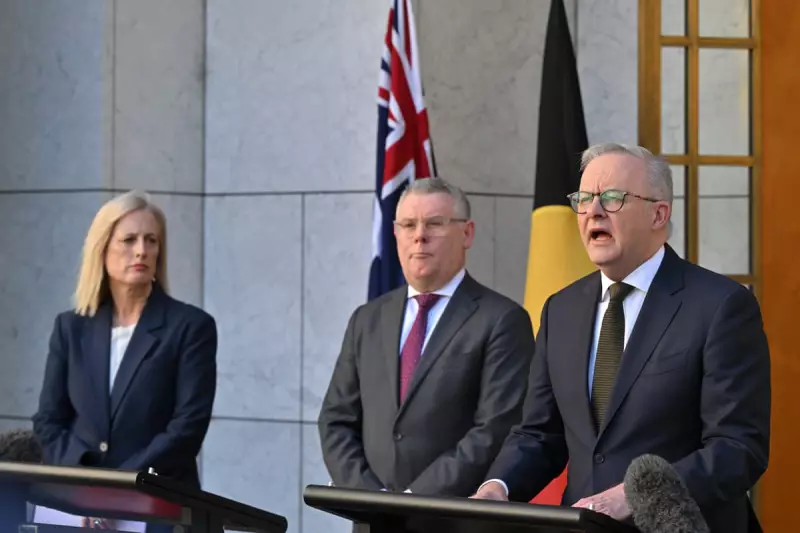
In a dramatic conclusion to a five-year political struggle, the Australian government has secured passage of its landmark environmental protection reforms following intense 72-hour negotiations with the Greens party.
The Breakthrough Deal
Prime Minister Anthony Albanese announced the agreement at 8am on Thursday, flanked by Environment Minister Murray Watt and Finance Minister Katy Gallagher. The deal marks the most significant overhaul of Australia's Environment Protection and Biodiversity Conservation (EPBC) Act in decades, implementing recommendations from Professor Graeme Samuel's comprehensive review.
The Greens secured several crucial concessions that transformed the legislation, including preventing fast-tracking of coal and gas projects, removing the exemption for native forest logging within 18 months instead of the initially proposed three years, and tightening loopholes for agricultural land-clearing.

Behind the Scenes Negotiations
The breakthrough followed three days of high-stakes negotiations that saw unusual political alignments. While the Coalition opposition publicly expressed outrage, claiming a "dirty deal" had been done, government sources revealed they had genuinely pursued agreements with both major parties until late Wednesday night.
The turning point came on Tuesday when Greens environment spokesperson Sarah Hanson-Young skipped her party's regular press conference to instead negotiate directly with Minister Watt. Meanwhile, Opposition Leader Sussan Ley was publicly criticising the government's offer as "totally insufficient" on Sky News.
By Wednesday morning, negotiations had escalated to involve Prime Minister Albanese himself, who met with Greens leader Larissa Waters, Hanson-Young, and Watt in his office. Albanese delivered an ultimatum: this was a "one-time" offer that would be withdrawn if not accepted before parliament rose on Thursday.
Political Calculations and Compromises
The Greens faced internal divisions about whether to support legislation that didn't directly address climate change through a "climate trigger." However, veteran party members recognised that delaying could allow well-funded industry groups, particularly miners, to weaken or kill the reforms entirely.
Labor's changed political circumstances also influenced the outcome. Having secured re-election in May and no longer fearing backlash in Western Australia, Albanese empowered Watt - known as his "Mr Fix It" - to negotiate whatever deal necessary to pass the laws.
Professor Samuel, whose review inspired the reforms, offered sharp criticism of the Coalition's approach, stating they had "manoeuvred themselves into irrelevance on this matter. Absolute irrelevance."
The legislation passed the Senate on Thursday night, though not without criticism. Independent Senator David Pocock decried the process, saying "the bills were rammed through with almost no time for scrutiny" and calling the package only a "partial" win for nature.
Despite the compromises, environmental advocates celebrated the reforms as the most significant step forward in Australian environmental protection in a generation, setting the stage for continued battles over climate policy and natural resource management.