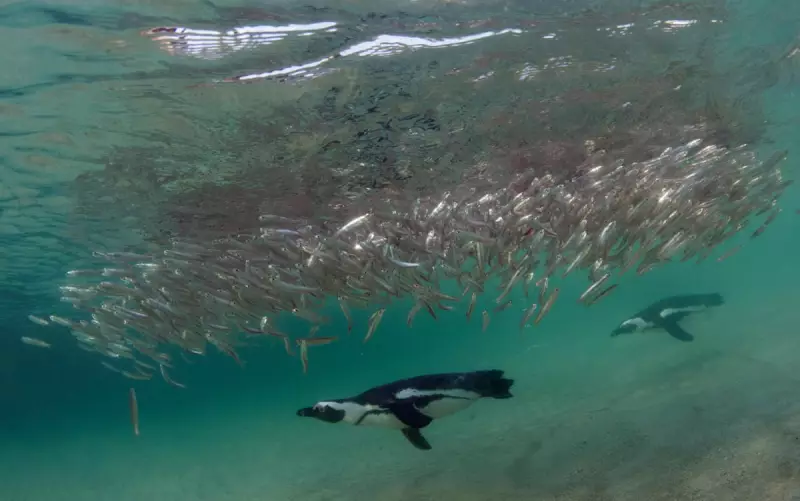
More than 60,000 African penguins have starved to death off the coast of South Africa following a devastating collapse in sardine numbers, a new scientific study has revealed.
A Catastrophic Population Crash
The research, published in Ostrich: Journal of African Ornithology, found that more than 95% of the African penguins in two key breeding colonies died between 2004 and 2012. The colonies on Dassen Island and Robben Island, crucial for the species' survival, were decimated.
Scientists believe the breeding birds starved during their annual moulting period. During this roughly 21-day process, penguins must remain on land to shed and replace their worn-out feathers, which is vital for maintaining their insulation and waterproofing. To survive this fasting period, they must build up substantial fat reserves beforehand.

"If food is too hard to find before they moult or immediately afterwards, they will have insufficient reserves to survive the fast," explained Dr Richard Sherley from the University of Exeter's Centre for Ecology and Conservation. He noted that the birds likely perish at sea, as large numbers of carcasses are not typically found on shore.
Climate Crisis and Overfishing: A Dual Threat
The study pinpoints the dramatic decline of the sardine species Sardinops sagax as the primary cause. For almost every year since 2004, the biomass of this key penguin prey fish has fallen to just a quarter of its maximum recorded abundance off South Africa's west coast.
This collapse is attributed to a dangerous combination of factors:
- Climate Crisis: Changes in ocean temperature and salinity have severely impacted the sardines' spawning success.
- Overfishing: Despite the declining fish stocks, fishing pressure in the region has remained persistently high.
Dr Sherley emphasised that the catastrophic losses recorded are not isolated incidents. "These declines are mirrored elsewhere," he stated. The African penguin species has suffered a population decline of nearly 80% over the past three decades.
A Critically Endangered Species Fights for Survival
In 2024, the African penguin was officially classified as critically endangered, with fewer than 10,000 breeding pairs remaining globally. Conservationists are engaged in a multi-front battle to prevent their extinction.
On-the-ground efforts include building artificial nests to shelter vulnerable chicks, managing predators, and hand-rearing both adults and chicks that require rescue. A significant regulatory measure has been the ban on commercial purse-seine fishing around South Africa's six largest penguin-breeding colonies.
Dr Azwianewi Makhado, a co-author of the study from South Africa's Department of Forestry, Fisheries and the Environment, expressed hope that this fishing ban would "increase access to prey for penguins at critical parts of their life cycle."
However, independent experts warn that the situation remains dire. Professor Lorien Pichegru, a marine biologist at Nelson Mandela University, called the study's results "extremely concerning" and highlighted decades of mismanagement of small fish populations. She stressed that the data, which runs only until 2011, reflects an ongoing crisis, noting, "The situation has not improved over time."
Professor Pichegru issued a urgent call for action to address the critically low levels of small fish stocks, not only for the survival of the African penguin but for the entire marine ecosystem dependent on these vital food sources.