
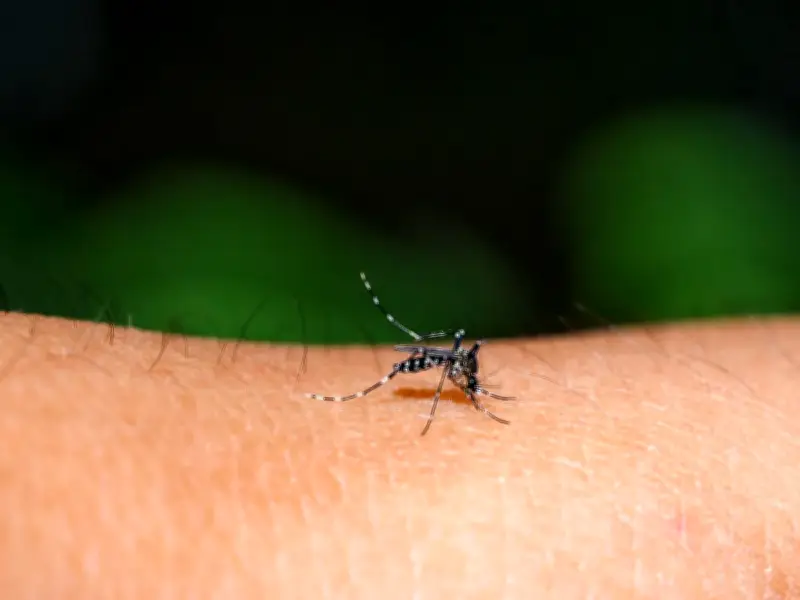
A mosquito species capable of spreading serious diseases, including Zika virus, has been discovered breeding in East London, marking the first time the insects have been found reproducing anywhere in the UK. The UK Health Security Agency (UKHSA) says the risk to the public is currently low, and there is no evidence that anyone in the UK has been infected as a result of these mosquitoes.
First confirmed breeding in the UK
The species, known as Aedes aegypti, is normally found in tropical and subtropical countries and is believed to have arrived accidentally, most likely via luggage, vehicles, or imported plants. While the mosquito has occasionally been detected in the UK before, this is the first confirmed instance of it breeding here.
Measures are under way to destroy the larvae, and surveillance and trapping have been stepped up across affected areas. The discovery was reported by MyLondon, with images showing the Aedes mosquito, a known vector for several viruses.
What is Zika virus and its symptoms?
Zika is a viral infection spread primarily through the bite of infected Aedes mosquitoes, and in very rare cases, through sexual contact. Most people who catch it experience only mild symptoms, or none at all. Those who do feel unwell typically experience symptoms such as a rash, fever, headache, joint pain, muscle pain, generalised itching and painful eyes, but usually recover within 2 to 7 days.
There is currently no specific treatment for Zika virus or a vaccine, so rest, fluids, and paracetamol are the main ways to manage symptoms.
Risk to pregnant women and unborn babies
While Zika is mild for most people, it poses a serious risk to unborn babies if a woman is infected during pregnancy. The virus can pass from a pregnant woman to her foetus and cause birth defects, most notably microcephaly, a condition where the baby is born with an abnormally small head and underdeveloped brain. Research suggests that between five and 15 per cent of mothers infected during pregnancy will experience complications, with these risks at their greatest if infection occurs in the first or second trimester.
Collectively, the range of complications caused by Zika in unborn babies is known as Congenital Zika Syndrome and can include problems with brain development, limb contractures, and hearing and visual disturbances. Infection during pregnancy also increases the risk of miscarriage and premature birth. In rare cases, Zika can trigger a neurological condition called Guillain-Barré syndrome in adults, which can cause muscle weakness and, in severe cases, paralysis.
Zika can also be transmitted sexually in rare cases, so pregnant women are advised to use barrier methods such as condoms for the remainder of their pregnancy if their partner has travelled to an area where Zika is circulating. Any pregnant woman who has recently travelled to an affected region, or whose partner has, should speak to their GP or midwife promptly.
Should Londoners be worried?
Health officials say there is no cause for alarm. Dr Jolyon Medlock, head of medical entomology at the UKHSA, said there was no evidence the mosquitoes had caused any human infections. He added: "There is no evidence that these mosquitoes have caused human infections and importantly, to date, there is no evidence of the mosquitoes or larvae being detected in nearby public areas."
Dr César López-Camacho, from the Nuffield Department of Medicine at the University of Oxford, described the discovery as an "important finding" but said it was not an occasion to be alarmed. Although recent hot summers have created temporary conditions in which the mosquito can survive, the UK climate is generally too cold for the species to establish itself long-term. The UKHSA said it expected to see more isolated cases as temperatures continue to rise, but emphasised that the fundamental environmental conditions in Britain remain unsuitable for a permanent population to take hold.



