
The UK Health Security Agency (UKHSA) has issued a yellow heat health alert for London and several other regions, as the Met Office forecasts another heatwave with temperatures potentially reaching 33C next week. The alert will be in force from 9am on Saturday, August 8, until 9pm on Tuesday, August 11, covering London, the East Midlands, West Midlands, South East, South West, East of England, Yorkshire and the Humber.
Weekend temperature rise
Temperatures in the capital had dropped closer to average for this time of year from Wednesday, but they are expected to rise again from Saturday, according to the Met Office. By next Tuesday, much of central and southern England, as well as parts of Wales, are set to see highs of 30C to 33C.
Honor Criswick, meteorologist at the Met Office, said Friday is set to be a "nice, dry, settled day with quite a bit of warm sunshine around." On Saturday, Northern Ireland and parts of Scotland can expect cloud and outbreaks of rain, while central and southern England and eastern Wales will see dry conditions with highs of about 29C.
Sunday and early next week
"Where we see the sunshine, it's going to start to turn quite increasingly warm on Saturday," Criswick added. "Saturday night going into Sunday, that's a slightly warmer day, so temperatures are already going to be that bit higher starting off the day, which is why we'll see a bit of an increase once again on Sunday – probably reaching between 30C and 32C, and that'll be somewhere across south or south-east England."
She noted that Sunday may bring some showery rain sinking south-eastwards, but "it's only just a few showers, and there's not much rain, really. It's not going to be enough to make any real difference to the dry summer we've had." A slight dip is expected on Monday, with temperatures around 27C to 29C across southern England, before rising again on Tuesday.
Health impacts and record-breaking summer
The yellow heat-health alerts warn that high temperatures may have a significant impact on health and social care services, with a possible rise in deaths, particularly among those aged 65 and over or with underlying health conditions.
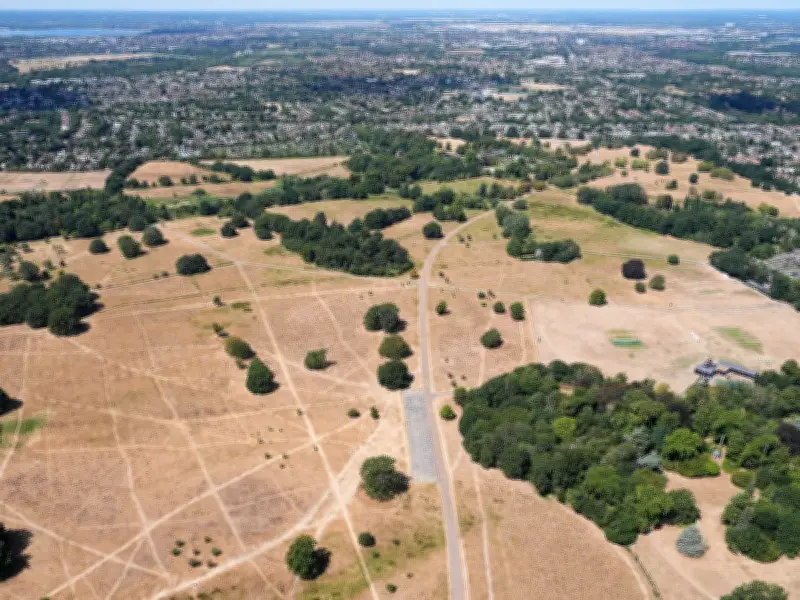
This summer has already seen two record-breaking heatwaves in May and June, leading to more than 2,800 excess deaths, and two more in July, which have fueled drought and wildfires. Last month was the driest July for England and Wales since records began in 1836, according to provisional Met Office figures.
Nineteen counties across England recorded effectively no rainfall – 1mm or less – across the whole month. England as a whole had just a tenth of the average rainfall for July, while Wales saw only 9% of the average, with both countries receiving less than half of the rainfall in the previous record dry July in 1911. The UK, England, and Wales all recorded their sunniest Julys on record, with England and Wales experiencing the sunniest calendar month ever observed.



