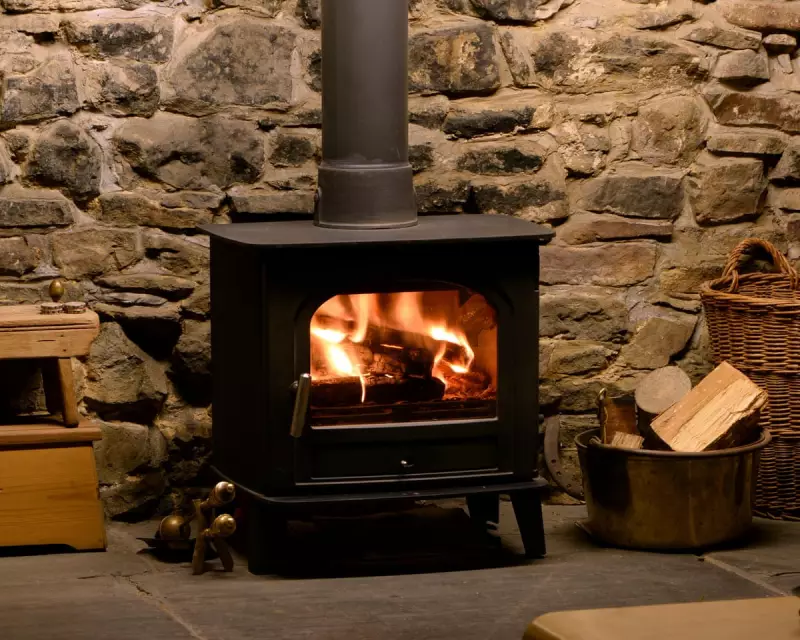
The UK government is set to impose tighter restrictions on wood-burning stoves in England as part of a major overhaul of its environmental strategy. The updated plan, released on Monday, aims to bring the country's air pollution targets in line with stricter European Union standards.
Stricter Pollution Targets and Stove Restrictions
Environment Secretary Emma Reynolds announced the revised Environmental Improvement Plan (EIP), which she stated would replace a previous version from the Conservative government that was "not credible." A central pillar of the new strategy is the alignment of UK limits for PM2.5 particulate matter with current EU targets, a move absent from the 2023 plan.
Sources within Reynolds' department confirmed this will trigger a consultation on measures to reduce PM2.5 emissions, specifically targeting domestic sources like wood-burning stoves and open fireplaces. This could lead to tighter pollution limits in existing Smoke Control Areas, potentially mandating that wood only be burned in approved, modern appliances and effectively banning older, more polluting models. In some areas, it may result in a complete prohibition on using wood-burning stoves.
The current UK annual limit for PM2.5 is 25 micrograms per cubic metre (ug/m3), with an ambition to reach 10ug/m3 by 2040. The EU's directive requires member states to achieve 10ug/m3 by 2030. The World Health Organization recommends an even lower limit of 5ug/m3. The new EIP commits to matching EU standards, with a long-term goal of meeting WHO guidelines.
Health Risks and Nature Recovery Funding
Exposure to PM2.5 particles, which penetrate deep into lung tissue, is linked to severe health conditions including asthma, lung and heart disease, cancer, and strokes. Domestic combustion was responsible for 20% of all PM2.5 emissions in the UK in 2023, producing more of this harmful pollution than traffic.
Beyond air quality, the EIP outlines a significant boost for nature. Reynolds confirmed that £500 million of existing departmental funding will be allocated to large-scale landscape recovery projects, working with farmers and landowners. The plan sets a specific target to restore or create 250,000 hectares (618,000 acres) of wildlife-rich habitats by 2030.
For the first time, the government will publish detailed Environment Act target delivery plans to track progress. Reynolds argued this strategic, landscape-level approach to nature restoration should alleviate concerns that housebuilding and infrastructure projects would lead to net environmental loss.
A Credible Plan for Development and Nature
"What we're talking about is restoring nature, not house by house, but at a more strategic level," Reynolds told the Guardian. "We can be both pro-development and pro-home-ownership and pro-nature." She expressed confidence that the new EIP was credible due to its built-in delivery mechanisms, a critique she levelled at the previous administration's plan.
The updated EIP also reaffirms a commitment from the previous government for every household to be within a 15-minute walk of green space or water. Additional measures announced include a new strategy to tackle "forever chemicals" (PFAS) and a crackdown on illegal waste dumping.
Ruth Chambers from the Green Alliance thinktank welcomed the plan as "an important milestone," but stressed it "must now be converted swiftly into the sustained action needed to restore nature, clean up our rivers and air, create a circular economy and help people reconnect with the natural world."